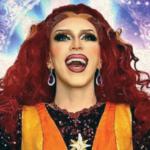

A controversial Christmas performance at York St John’s University has sparked backlash among Christian students and alumni, who argue that the production crosses the line from artistic expression into outright mockery of their faith.
The play, titled A Gay in a Manger, reimagines the Nativity story through a satirical, LGBTQ-themed lens. In the performance, Jesus is referred to as the coming “King of the Gays,” while His parents are portrayed as a lesbian couple named Mary and Jo. The university’s LGBTQ network has created the production, which is being staged with the approval of both the university and its student union.
According to a preview of the play, “Mary and Jo packed their pride flags and set off on the long journey to the best gay club this side of the Red Sea – Heaven. But when Queen Herod heard of the new King of the Gays, she began to plot for his downfall, for only she could be the Queerest Icon in the Land.”
For many Christians on campus, the language and premise feel less like satire and more like blasphemy. Several students have described the performance as offensive and discriminatory, arguing that it deliberately distorts sacred beliefs in a way that would not be tolerated if directed at other religions.
Josiah Diamond, 21, a student and former Muslim, voiced his concerns in comments to The Telegraph. “This portrayal is not only blasphemous in a direct sense, but of a particularly offensive and violating nature to adherents of the faith and openly opposing doctrine,” he said.
Diamond went further, accusing the university of applying a double standard when it comes to religious respect. “There cannot be a distinction between religious groups and between the rights and privileges of differing religious groups,” he said. “We are amazed that York St John supports such an approach. I am certain that you would not allow Muslims at the university to be so treated. I believe that you are discriminating against Christians.”
Despite objections, university officials and the student union have stated that they will not intervene to stop the performance. In a joint statement, they emphasized the importance of freedom of speech as a guiding principle. “We understand that it can be frustrating for students to face views and perspectives that do not reflect their own values or beliefs,” the statement read. “However, freedom of speech within the law is a core principle of university activity.”
The statement added that while the law prohibits speech that incites violence, terrorism, or hate, it does not ban speech simply because it may be “upsetting or offensive.” Officials stressed that York St John’s is “an inclusive university, welcoming students from all faiths and none,” and said it is not their role to censor lawful expression when disagreements arise.
Donna Smith, CEO of the student union, also declined to speculate on whether a similar production mocking Islamic beliefs would be allowed, calling it a “hypothetical scenario.” She insisted that “There is no differential treatment of religious groups.”
For Christian students, however, the issue is not hypothetical. As Christmas approaches, many say the heart of their faith is being treated as a punchline rather than a sacred story. While universities often champion inclusion and respect, critics argue that true inclusion should extend to Christians as well—especially when it comes to the central events of their belief.
The controversy has once again raised a difficult question facing many faith communities today: where does freedom of expression end, and where does respect for deeply held religious convictions begin?
 Read Previous Post