

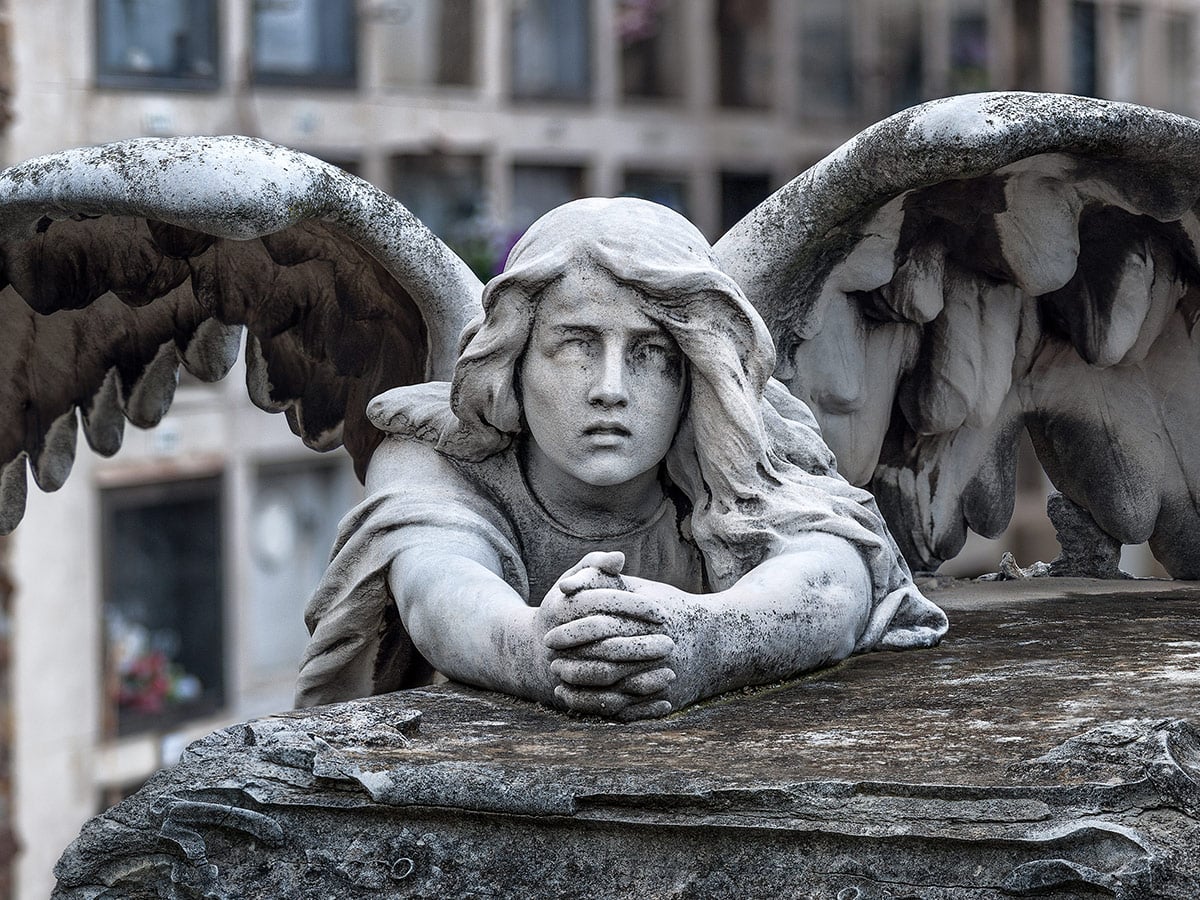
On June 26, 2026, the Archdiocese of Chicago blessed and dedicated the “At Peace” memorial at Queen of Heaven Cemetery in Hillside, Ill. The memorial honors lives lost to suicide, supports grieving families, and recognizes the decades of ministry carried out by Father Charles Rubey. According to the archdiocese, it is the first memorial created by a U.S. Catholic archdiocese in a Catholic cemetery specifically for those who died by suicide and their families.
Father Charles Rubey: The Story of Two Grieving Women.
Rubey has spent decades ministering to families affected by suicide. His ministry took a dramatic turn after he met two grieving women. According to Rubey, the women had asked a priest to pray for family members who had died by suicide. Instead of comforting them, the priest told them their loved ones were in hell. His comments left the women devastated.
Rubey strongly disagreed with that response. Rather than condemn the deceased, he assured the women that God is merciful and that their loved ones were with God. That moment changed his ministry. In 1979, he founded the LOSS program, or Loving Outreach to Survivors of Suicide, through Catholic Charities. For nearly five decades, he has helped families work through grief, guilt, anger, and many unanswered questions.
“Unforgivable Sin” and Catholic Burial.
Some Catholics believed suicide was essentially an unforgivable sin. Because suicide involved taking one’s own life, people assumed the person died without an opportunity for repentance. As a result, families often faced both the loss of a loved one and public shame.
Historically, Catholic authorities denied Church funeral rites and burial in “consecrated ground” to those who died by suicide. The Church defines consecrated ground as land that has been formally blessed and dedicated to God for a sacred purpose, such as a cemetery. Families were already devastated, and then they encountered rejection from the very community that should have comforted them. Family members felt isolated and wondered whether the Church had abandoned their loved ones.
A Major Shift: From the 1917 Code to the Catechism.
A major shift occurred during the 20th century as the Church deepened its understanding of psychology, mental illness, trauma, and human responsibility.
The 1917 Code of Canon Law generally prohibited Catholic burial for those who deliberately ended their lives. The law reflected a long-standing approach that emphasized the seriousness of suicide.
The 1983 Code of Canon Law adopted a more pastoral framework. Rather than automatically excluding people from Catholic funeral rites, the revised code emphasized individual circumstances and pastoral judgment.
The Catechism of the Catholic Church continued this direction. While the Church still teaches that suicide is gravely against God’s plan for life, the Catechism recognizes that psychological suffering can diminish personal responsibility.
The “At Peace” Memorial’s Design and Meaning Inside a Catholic Cemetery.
The memorial’s location carries powerful symbolism. It sits near the main entrance of Queen of Heaven Cemetery, making it highly visible. Reports say the memorial includes an “Embracing Angel” sculpture whose wings surround a granite bench. Visitors can physically sit within the angel’s embrace. A second sculpture, “Ascending Doves,” features bronze doves rising toward the sky, symbolizing hope, peace, and eternal life.
Pope Leo XIV and the Church as a “Safe Space.”
The dedication of the “At Peace” memorial closely reflects Pope Leo XIV’s pastoral focus. The Chicago-born pope has repeatedly encouraged Catholics to show greater concern for people facing mental health struggles, loneliness, depression, and suicidal thoughts. Reports say Pope Leo XIV has urged the Church to become a “safe space where everyone has a place,” a community that ministers to people, listens without judgment, and refuses to exclude those who are suffering.
The memorial represents that vision. It does not erase Catholic teaching about the value of human life. Instead, it applies teaching through mercy, care, and compassion. For families devastated by suicide, the memorial declares that the Church wants to walk with them rather than condemn them. For those wrestling with mental illness, it communicates that they are not alone. For Catholics more broadly, it serves as a reminder that authentic Christian witness combines truth with mercy.
The “At Peace” memorial is more than a monument. It publicly expresses the Church’s growing commitment to healing wounds, welcoming the grieving, and reflecting Christ’s compassion.
The Catholic Church’s historical approach to suicide often added pain to the suffering of grieving families. For generations, many people believed that those who died by suicide were automatically condemned and unable to receive God’s mercy. As a result, countless families carried not only the burden of loss but also the wounds of shame and misunderstanding. Yet the heart of the Christian faith proclaims that God is loving and merciful, and that He always desires communion with His children. He does not want to be separated from us in this life or in eternity. Over time, the Church came to recognize more fully that serious mental illness, psychological anguish, trauma, and other grave circumstances can diminish personal responsibility. This deeper understanding led to important changes in Church teaching and pastoral care.
Today, the Catholic Church teaches that while suicide remains a tragic violation of the gift of life, we should not despair of the salvation of those who have taken their own lives. Instead, we entrust them to the infinite mercy of God, whose love and judgment surpass human understanding. Against that background, the “At Peace” memorial at Queen of Heaven Cemetery is a significant step forward in acknowledging this history and ministering to families affected by suicide.
 Read Previous Post