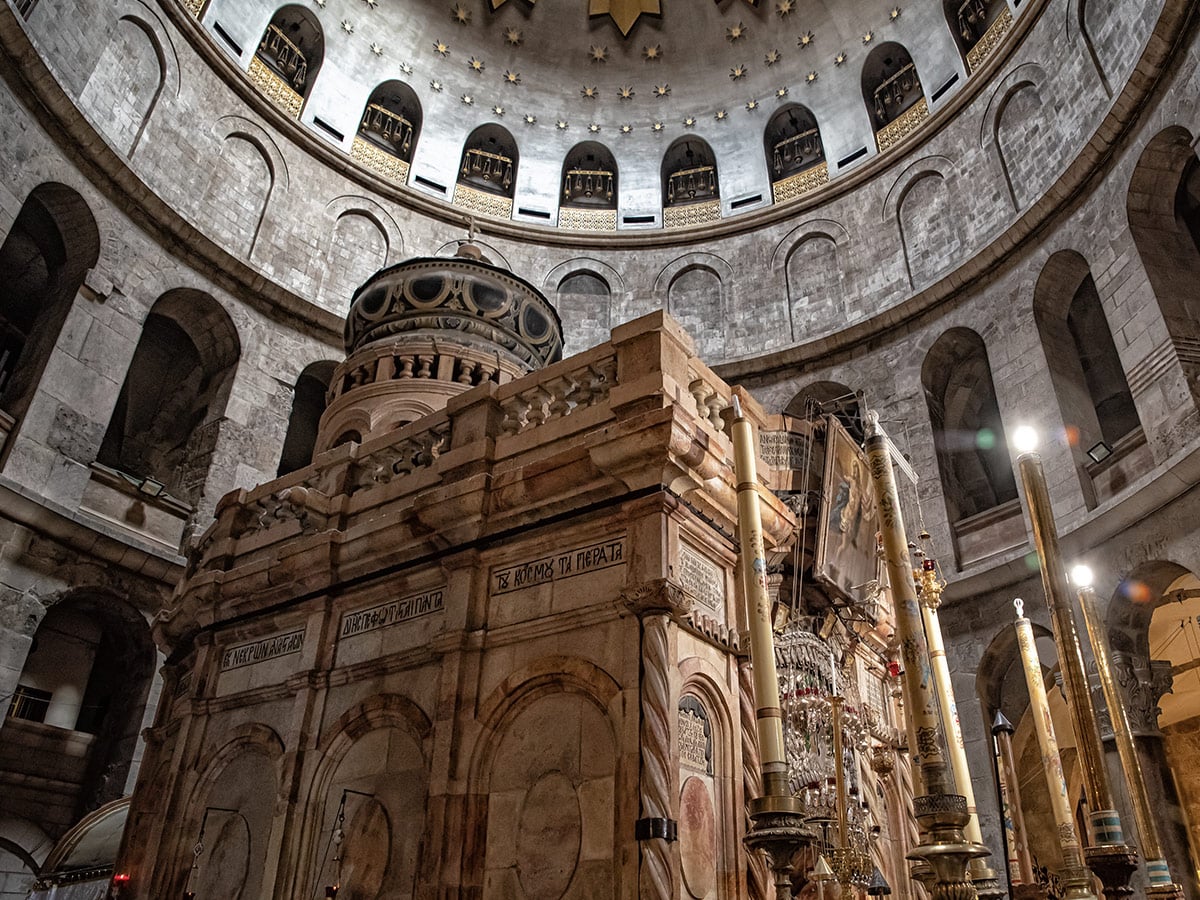
Archaeologists have uncovered a site that matches the Bible’s description of Jesus’s tomb. Excavations began beneath Jerusalem’s Church of the Holy Sepulchre, which is said to have been built over the site of Christ’s crucifixion, burial, and resurrection. The excavations have been ongoing from 2022. The project began after long-sought after renovations were approved to the church’s floor. The renovations uncovered what was described as a “funerary landscape” that included an abandoned quarry, cultivated plots of land, rock-cut tombs, and an ancient garden. The find matches the description in John 19:41, which states, “Now in the place where he was crucified there was a garden; and in the garden a new sepulchre, wherein was never man yet laid.”
Professor Francesca Romana Stasolla of the Sapienza University of Rome spoke about the area that was excavated. “We know that the area was already part of the city at the time of Emperor Hadrian when the Romans built Aelia Capitolina. However, at the time of Jesus, the area was not part of the city yet.” She also connected the excavations site with the biblical description. “The gospel mentions a green area between the Calvary and the tomb, and we identified these cultivated fields.” Archaeologists discovered olive trees and grapevines from 33 AD, the traditional date attributed to Jesus’ death. They also found graves were etched directly into the rock, which is described by the Gospels.
The faithful have embraced the find as further confirmation of the biblical narrative (especially given that no body has been found at the site). Stasolla, however, stressed that the discovery has historical significance for everyone, regardless of theological persuasion. “Whether someone believes or not in the historicity of the Holy Sepulchre, the fact that generations of people did is objective,” said Stasolla. “The history of this place is the history of Jerusalem, and at least from a certain moment, it is the history of the worship of Jesus Christ.”
Excavations are slow-going due to the historical nature of the site, with only small teams at a time allowed to work on certain areas at the time. The church calendar also impacts excavation schedules. The find of the olive trees was first discovered in 2025, for example, but only recently were researchers able to piece together how it fit together with the graves and quarry. Statsolla asserted that the discovery shows the enduring tradition of maintaining the memory of where Jesus was buried.
 Read Previous Post