

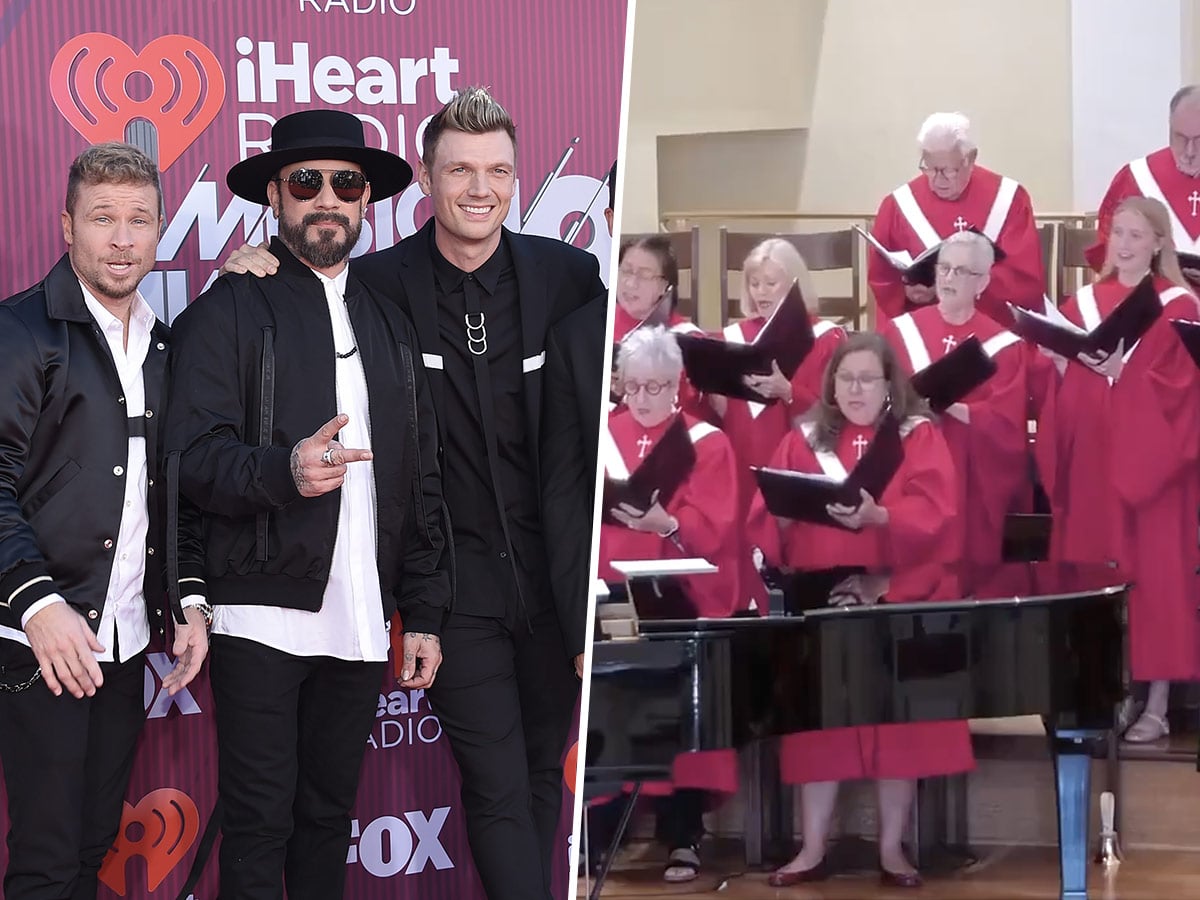
A United Methodist church in Arkansas is drawing attention after its choir performed a Backstreet Boys hit during Sunday worship, stirring debate over whether popular music belongs in church services.
Central United Methodist Church in Fayetteville surprised its congregation on October 11 with a choral rendition of the boy band’s 1999 hit “I Want It That Way.”
The performance was part of a sermon series exploring generational differences, with that Sunday’s service focusing on millennials.
When a clip of the performance circulated on social media, not everyone appreciated the musical throwback.
The Christian account Protestia shared footage of the choir on X, and the performance quickly drew criticism from some Christians who questioned whether a secular pop song was appropriate for worship.
Before the performance, the Rev. Virginia Brown, the church’s college pastor and Wesley director, introduced the song as a nostalgic surprise.
“Our choir is about to bring a pretty awesome throwback jam; one that you’ve never heard in this style before,” Brown told the congregation.
“It’s a little bit of a millennial nostalgia song, and I’m pretty sure you’re going to recognize this one.”
The Rev. Jennie Williams, senior pastor of Central United Methodist Church, defended the decision in an interview with The Christian Post, explaining that the song was intended to help bridge generational divides within the congregation.
Williams described the performance as “just a bit of nostalgia” and said the church was looking for ways to encourage greater understanding between generations.
She also suggested that making church relatable reflects an important part of Jesus’ ministry.
“The most important thing Jesus did in order to bring about salvation to the world is to become like us; to make the unknowable relatable,” Williams said.
“And so, we’re just trying to be relatable to not only the people in our chairs, in our congregation, but also to the people around in the community [to whom] churches seem really irrelevant and unrelatable, so that they can come and meet Jesus, too.”
The service continued with the Rev. Chase Burns reading from Genesis 32, which recounts Jacob wrestling with God.
Burns connected the biblical account to the struggles many millennials experience as they wrestle with questions about faith, disappointment and disillusionment with religious institutions.
Still, the unusual musical selection showed how the performance touched a broader debate about what worship should include.
One commenter accused the church of being a “whitewashed tomb,” reflecting a broader disagreement among Christians over how churches should approach contemporary culture.
For some believers, incorporating familiar secular music can make worship services more welcoming and create opportunities to discuss faith with people who might otherwise avoid church.
Others argue that worship should remain centered on glorifying God and that performances of secular love songs risk distracting from that purpose.
The controversy comes during a period of significant change within the United Methodist Church.
More than 7,500 mostly conservative congregations have left the denomination in recent years amid disagreements over theological issues, particularly the church’s positions on sexuality and marriage.
Although the Backstreet Boys’ performance is unrelated to those disputes, it points to another area where Christians differ over church traditions and cultural engagement.
For Williams, the goal was not simply to entertain the congregation but to connect with people across generations and help them encounter Jesus.
Whether the musical choice achieved that goal remains a matter of debate, but the viral performance has sparked discussion about what belongs in a Sunday worship service.
 Read Previous Post