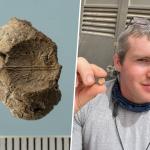
Archaeologists recently announced the discovery of an ancient Canaanite blade factory in Israel. The workshop, which made the blades for the purposes of agricultural use, was found flint at Nahal Qomem, near the southern Israel city of Kiryat Gat. The site had been originally discovered two years ago during work for a new neighborhood in Kiryat Gat. Researchers dated it to the early Bronze Age, making the site around 5,500 years old. The site contains various underground pits, that experts believe might have been used for garbage or to keep food cool.
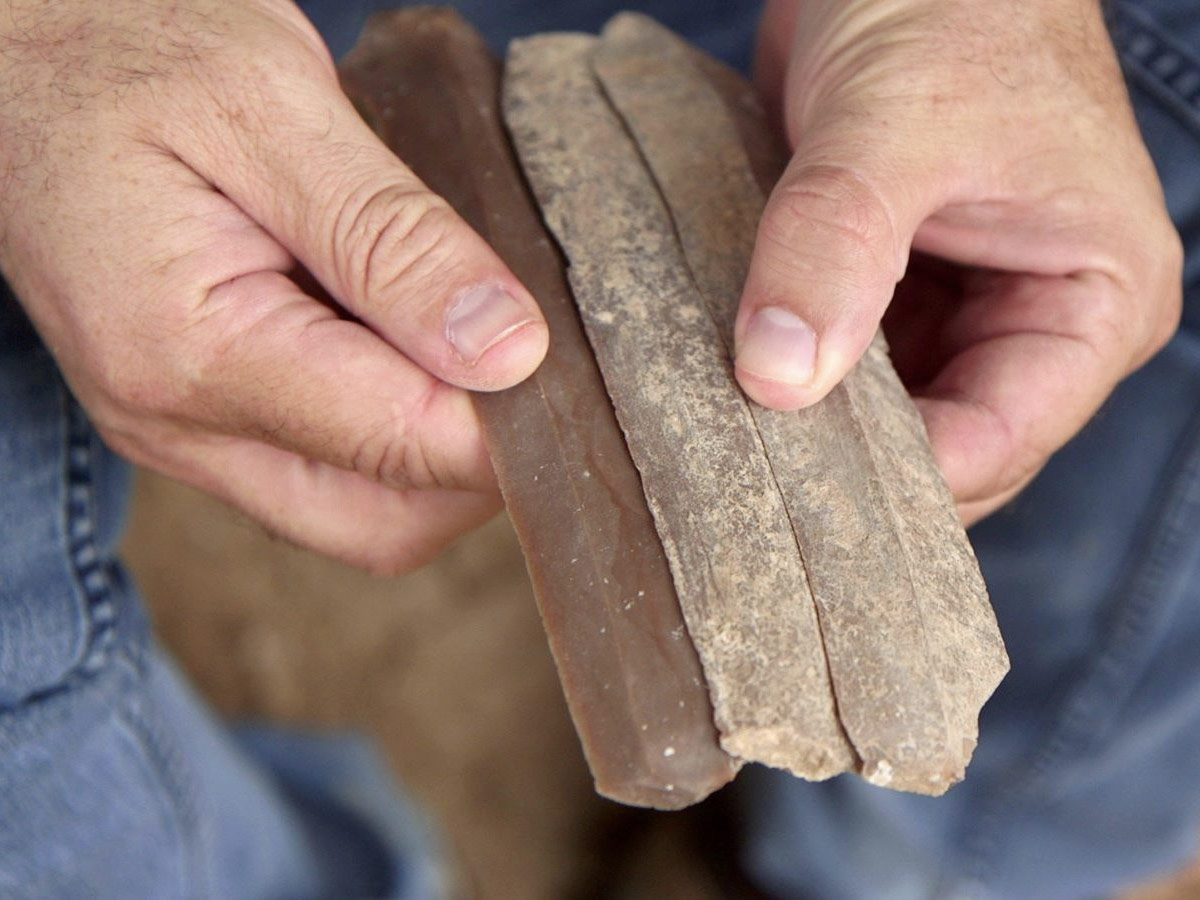
Speaking with The Times of Israel, Dudu Biton, an expert of flint tools and Canaanite blades with the Israel Antiquities Authority (IAA), called the find “truly extraordinary.” “This is the first time a Canaanite workshop has been uncovered in its full context,” he said. That the site was so intact made the find truly special, according to Biton. “Canaanite blades and cores had been uncovered in other sites across Israel, but only isolated ones and out of context. This time, however, we’ve discovered not just a few, but hundreds of them, along with the full range of materials related to their production,” he said.
The term “Canaanite” is used to refer to the group of traditional enemies that the Israelites faced when claiming the Promised Land of Israel. Biton said that there has yet to be any sign of an actual Canaanite settlement near the workshop. ““There are some remains of walls, houses, and small installations,” he said. “But if we’re talking about a large settlement, either it never existed, it was destroyed by modern development — especially since the area has seen extensive agricultural activity — or we simply haven’t found it yet.”
There was a cache of unused blades discovered at the site, leading to speculation that it might have been given as some sort of ritual offering. Biton stated it was unlikely, however, that the blades were used for battle, as agricultural blades obtain a special gloss that such blades obtain from cutting into wheat and vegetation. Archaeologists intend to continue exploring the site in hopes of more answers. “We are especially interested in determining whether the blades produced here were only used locally or traded to other sites across the region,” said Biton. A geologist has determined that the source of the flint for the blades came from the Beit Guvrin area, which is about 9 miles away. If blades can be found in other regions with flint from the same site, it could give researchers greater insight into the trade habits of the Canaanites. The artifacts from the site from the site will be put on display at the Jay and Jeanie Schottenstein National Campus for the Archaeology of Israel in Jerusalem.
 Read Previous Post