
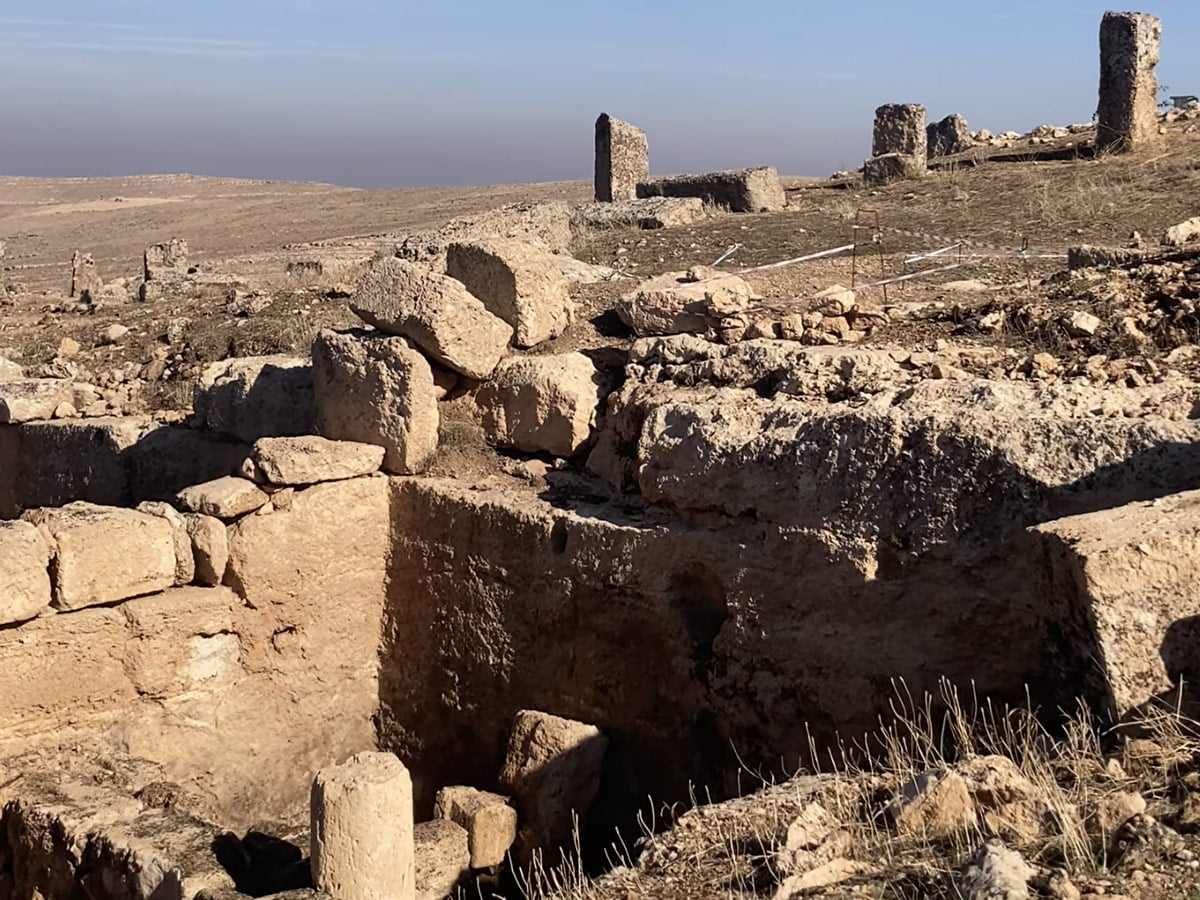
Since 2017, archaeologists have been baffled by an Aramaic inscription found at the entrance of the underground Mithras Temple at Zerzevan Castle in southeastern Tukey. The inscription is around 1,700 years old. The Mithras Temple was discovered during excavations at an ancient military settlement in Diyarbakir’s Cinar district. The temple at Zerzevan Castle is one of the best-preserved temples to date. Dedicated to the god Mithras, the temple is an example of Mithraism, a “mystery cult” that was very common during the second and third centuries AD in ancient Rome. The god Mithras’s earliest appearances can be found in Iran, with Mithraism later spreading to the Roman Empire. It was a popular religion amongst Roman soldiers during the second and third centuries AD. Temples to Mithras were typically underground where private rites could be practiced by Mithras’s followers, thus adding to the air of mystery around the cult.
At the time of its discovery, the temple appeared to have been abandoned around the third or fourth centuries, but the inscription indicates that may not have been the case. Professor Mehmet Sait Toprak, head of the Syriac Language and Literature Department at Mardin Artuklu University, spent around a year studying the inscription, comparing it with Old Syriac and Aramaic inscriptions from the second and third centuries AD. Toprak’s team’s findings indicated that the temple was purposely closed by early Christians. The text, along with a cross next to the inscription, indicate a formal closing of the temple, with the inscription referring to the “Invincible Sun God Mithras” and Jesus Christ. The text also makes reference to the holy cross in the name of God.
Toprak believes the inscription may be the first known Old Aramaic example of a Mithras Temple being purposefully closed. “This is an extremely important archaeological discovery,” he said. Professor Aytaç Coşkun, the temple’s excavation director, indicated that as Christianity grew in popularity, particularly as it was adopted by Roman emperors, Mithraism became a rival religion to early Christianity. As Christianity’s popularity grew, many Mithras Temples were converted into churches while others were sealed. According to archaeologists, the inscription’s translation offers growing insight to Christianity’s growing influence over the Roman empire as well as its handling of rival belief systems.
 Read Previous Post