A nearly 2,000-year-old account of Jesus Christ’s life, crucifixion and reported resurrection is raising new questions after a researcher suggested that parts of the historical text may have been altered by early Christian writers.
The findings center on a passage written by Flavius Josephus, a first-century Jewish historian whose writings are among the earliest non-Christian references to Jesus.
Jesús Fernández-Pedrera Correa, an independent researcher from Spain, examined different versions of a passage known as the “Testimonium Flavianum,” found in Josephus’ historical work Jewish Antiquities, written around A.D. 93 or 94.
His analysis, published as a preprint in August, suggests that later Christian scribes may have changed certain statements to make Josephus appear more supportive of Christian beliefs than he originally was.
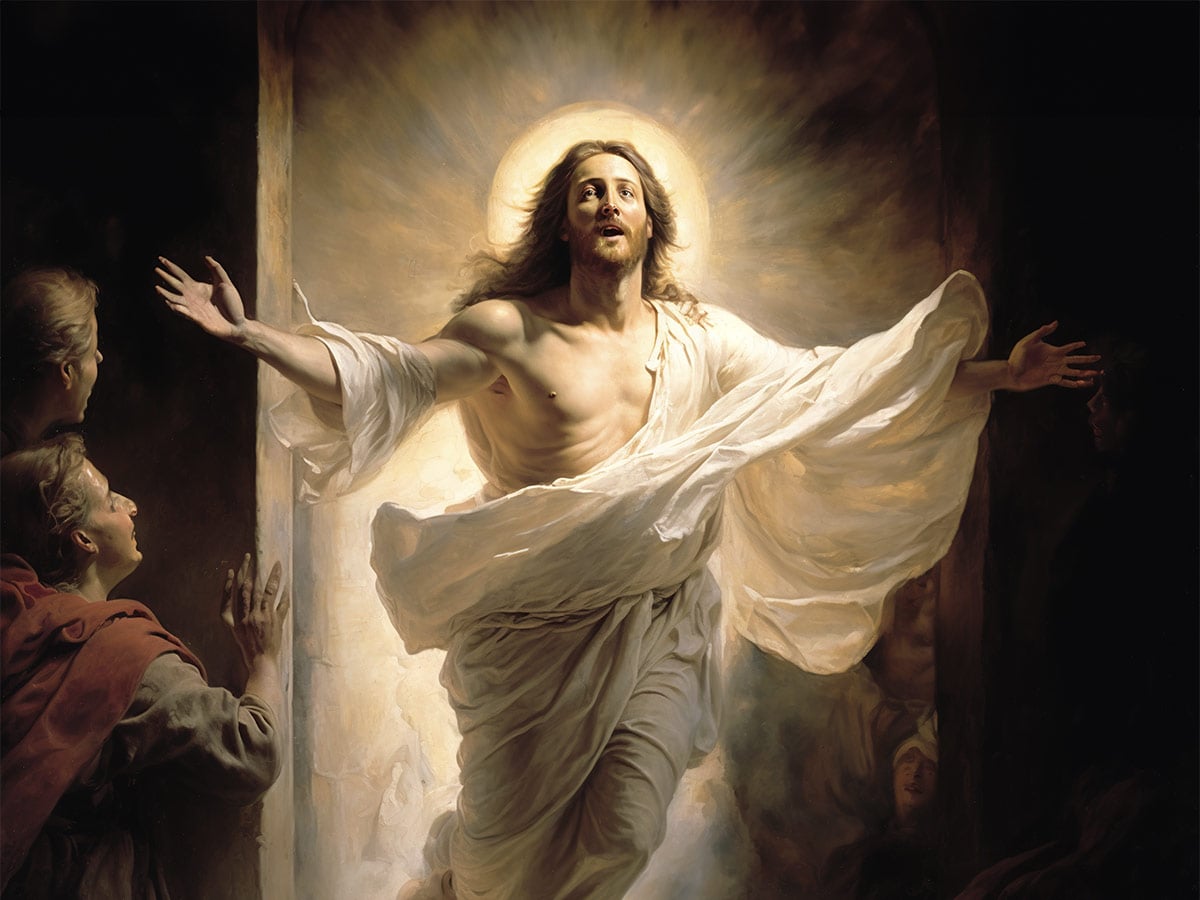
The passage has fascinated biblical scholars for centuries because it describes Jesus’ ministry, His crucifixion under Pontius Pilate, and His appearances to His followers after His death.
In the surviving Greek version, Josephus appears to declare that Jesus “was the Christ” and states that He appeared alive again on the third day, fulfilling the predictions of divine prophets.
But there’s a problem with that wording, according to the researcher.
Josephus was Jewish and did not identify as a Christian. Scholars have therefore questioned whether he would have openly affirmed Jesus as the Messiah or presented His resurrection as a fact.
To investigate, Fernández-Pedrera Correa compared Greek, Latin, Arabic and Syriac versions of the passage, searching for differences that might reveal how the account changed over time.
One of the most significant differences involves the resurrection itself.
While the Greek version presents Jesus’ appearance after His crucifixion as a direct statement, an Arabic version takes a more cautious approach.
Rather than confirming the miracle, it describes the disciples as having “reported that he appeared to them” alive three days after His death.
That distinction matters because it suggests Josephus may have been documenting what early Christians believed rather than personally affirming their claims.
The researcher also identified differences in how the texts describe Jesus as the Messiah.
While the Greek version declares that Jesus “was the Christ,” other translations suggest He was believed or thought to be the Messiah. The Arabic version is even less definitive.
These differences support the possibility that Christian writers strengthened the passage’s theological language as the text was copied and preserved.
The analysis also points to Origen, an early Christian theologian who wrote in the third century, as stating that Josephus did not believe Jesus was the Christ.
That observation raises additional questions about whether the stronger wording in surviving Greek manuscripts reflects Josephus’ original account.
However, the findings do not establish exactly what Josephus wrote or prove who may have altered the passage.
Another reference in Jewish Antiquities identifies James as the brother of Jesus “who was called Christ.” Scholars generally consider that reference authentic, and its more neutral wording offers a possible example of how Josephus described Jesus.
For Christians, the resurrection remains the foundation of their faith. The Apostle Paul emphasized its importance in 1 Corinthians 15:14, writing, “And if Christ be not risen, then is our preaching vain, and your faith is also vain” (KJV).
Importantly, the new analysis does not determine whether Jesus rose from the dead. Instead, it examines how an ancient historian’s account may have been transmitted and modified over centuries.
The research adds another chapter to the ongoing study of Christianity’s earliest historical records, highlighting both the value of ancient sources and the challenges of determining precisely what their original authors wrote.
 Read Previous Post