
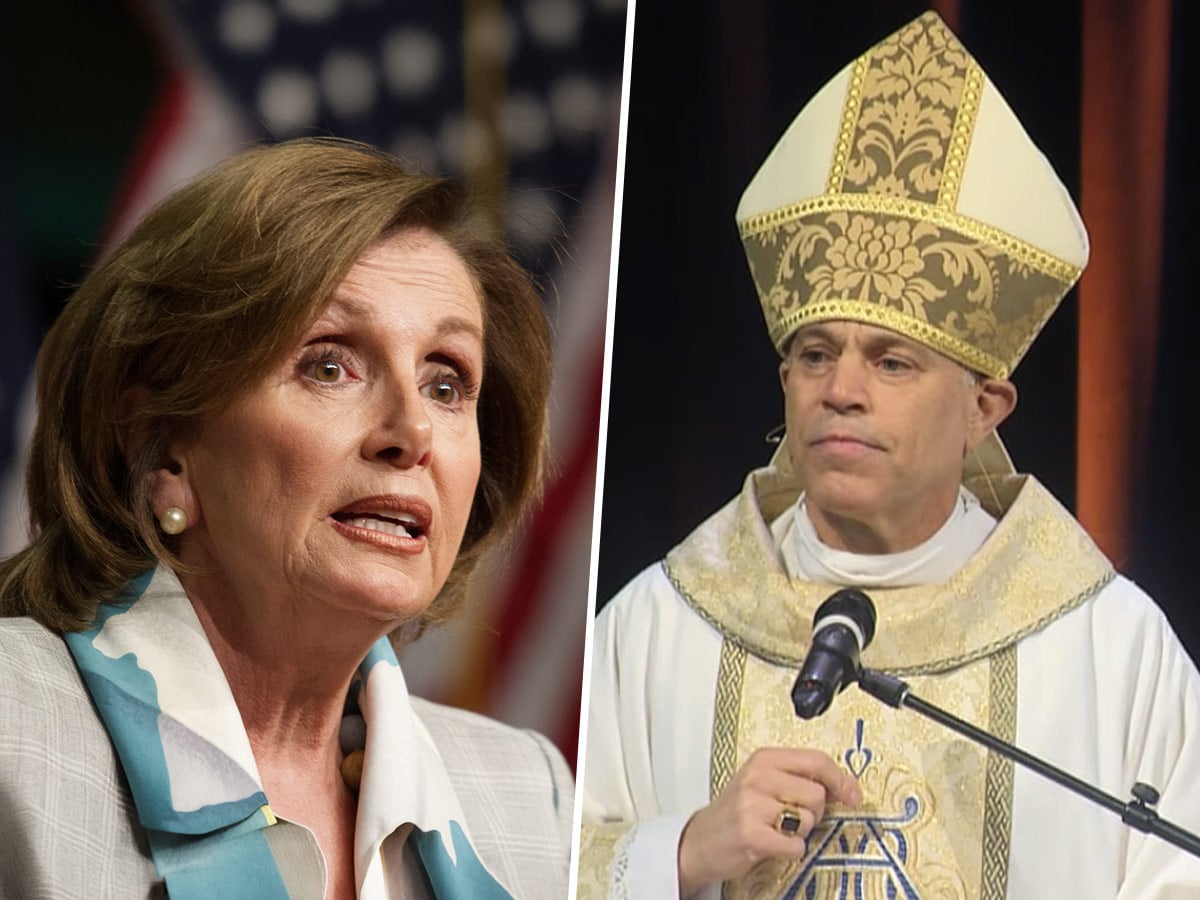
Pope Leo XIV has appointed Archbishop Salvatore Cordileone of San Francisco to the Vatican’s highest judicial body, elevating one of the Catholic Church’s most prominent American bishops while allowing him to remain in his current role leading the Archdiocese of San Francisco.
The Vatican announced Saturday that Cordileone is among seven new members of the Supreme Tribunal of the Apostolic Signatura, the Church’s highest court. According to the Vatican, the tribunal helps ensure justice is properly administered throughout the Catholic Church and is composed of cardinals, bishops and priests appointed by the pope for five-year terms.
Cordileone, who has served as archbishop of San Francisco since 2012, became internationally known in 2022 after directing that then-House Speaker Nancy Pelosi, a Catholic and longtime advocate of legal abortion, not be admitted to Holy Communion within his archdiocese.
Following his appointment, Cordileone said he views the new responsibility as an opportunity to serve both the Church and its mission.
“I receive this responsibility with a profound sense of stewardship, recognizing that every office in the Church is entrusted for the service of Christ, His people, and the mission of the Gospel,” he said in a statement.
He explained that the Apostolic Signatura exists not simply to oversee legal matters but to protect the rights of the faithful and strengthen the unity of the Church.
“Justice in the Church is never merely legal,” Cordileone said. “It is ordered toward the salvation of souls, the protection of the rights of the faithful, and the strengthening of ecclesial communion.”
The appointment does not require the archbishop to relocate to Rome. Cordileone emphasized that his primary responsibility remains serving the priests, religious and parishioners of the Archdiocese of San Francisco.
Cordileone first addressed the issue of pro-abortion Catholic politicians publicly in 2021, urging those who advocate for abortion rights to refrain from receiving Communion if they are unwilling to change their position.
“To publicly affirm the Catholic faith while at the same time publicly rejecting one of its most fundamental teachings is simply dishonest,” he wrote at the time.
The following year, after what he described as repeated attempts at private dialogue with Pelosi, Cordileone formally instructed that she not be admitted to Holy Communion in the archdiocese until she publicly repudiated her support for abortion rights and received absolution through the sacrament of confession.
The archbishop has consistently said his decision was rooted in Catholic teaching and canon law rather than politics. He has pointed to guidance issued in 2004 by then-Cardinal Joseph Ratzinger, who later became Pope Benedict XVI, as well as the Church’s Code of Canon Law, which states that those who “obstinately persevere in manifest grave sin are not to be admitted to holy communion.”
While the U.S. Conference of Catholic Bishops later issued a document on the meaning of the Eucharist, it clarified that it was not establishing a nationwide policy regarding Communion for Catholic politicians.
Cordileone’s appointment by Pope Leo XIV is likely to draw renewed attention to his leadership and his outspoken defense of the Church’s pro-life teaching, even as he takes on a significant new role helping oversee the administration of justice throughout the global Catholic Church.
 Read Previous Post