
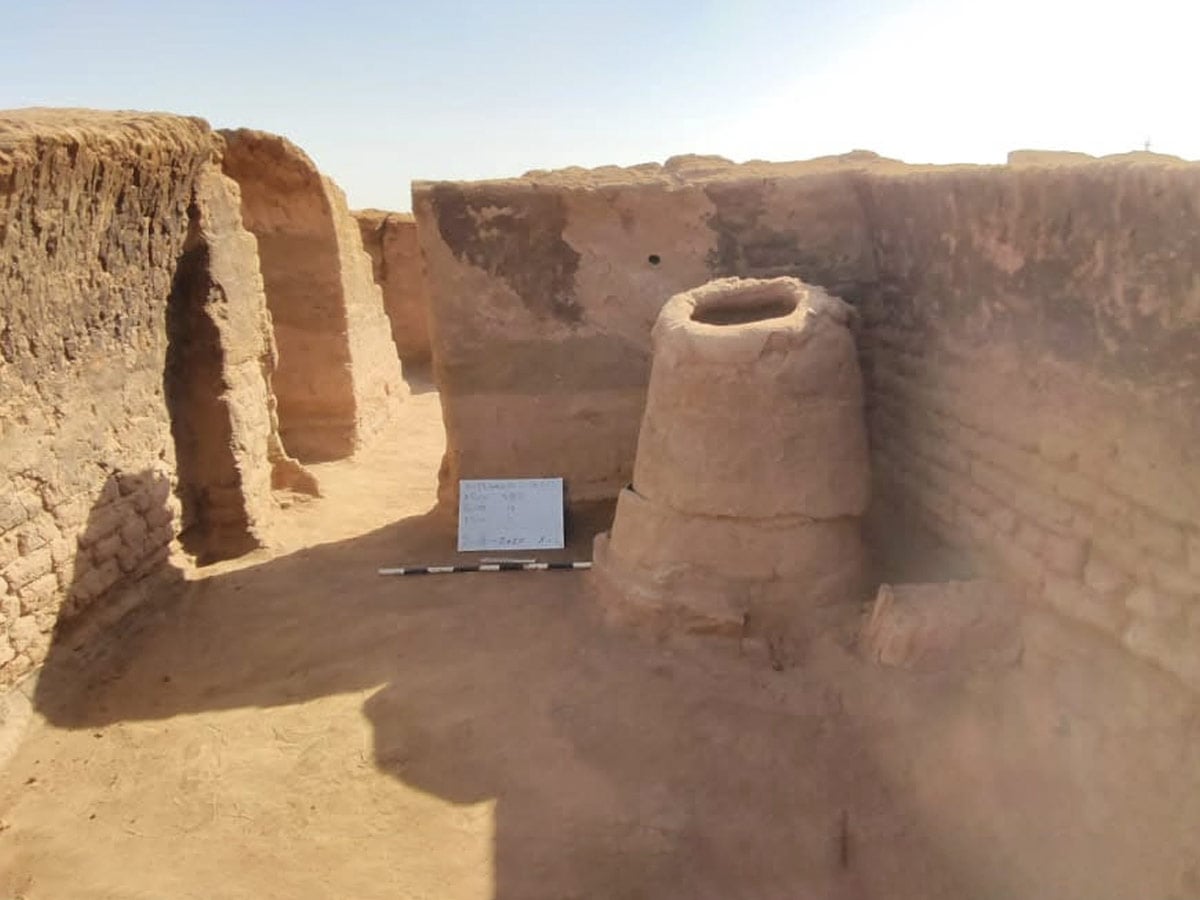
Archaeologists have unveiled the discovery of an ancient 1,700-year-old Christian city beneath the Egyptian desert. The city was discovered at the Ain al-Sabil archaeological site in the Dakhla Oasis of New Valley Governorate. The ruins are made of mudbrick and date to the Byzantine era. The city includes a well-organized street network, numerous mud-brick houses, a Christian Basilica, two watchtowers, and a fortified structure. The Basilica is located at the center of the city, dating from around the 4th century AD. Archaeologists discovered the homes of two priests or deacons, named Tisos and Tapibos. Researchers believe the home of Tapibos might have been used as an in-home church before the Basilica was built.
Diaa Zahran, head of the Islamic, Coptic and Jewish Antiquities Sector at the Supreme Council of Antiquities, described the city as having “a well-planned urban layout.” “It features main streets running north to south intersected by east-west cross streets, creating open squares and plazas. At the center of the city stands a basilica church overlooking one of the principal streets.” The findings also included domestic discoveries, such as tools used for grinding down grain, bread ovens, and kitchens. Other finds included pottery vessels and oil lamps. There were also many coins discovered at the site, with some well-preserved bronze coins bearing images of Byzantine emperors, Latin inscriptions, and Christian symbols. There were also gold coins that were dated during the reign of Emperor Constantius II.
Most interesting, archaeologists found what appeared to be an archive of written documents that were written on over 200 ostraca. Ostraca describes pottery pieces that were used as writing surfaces, with these ostraca being inscribed with Coptic and Greek. “The texts record sales transactions, correspondence and other details of everyday life,” said Zahran Mahdi, director of excavations for the Islamic and Coptic Antiquities Sector. The documents were significant according to Supreme Council of Antiquities Secretary-General Dr. Hisham El-Leithy because of the precise information they provide about daily life. El- Leithy also added that the excavation offered information that would broaden archaeologists’ understandings of many of the architectural, social, and economic aspects that characterized the region at the time. Egyptian Tourism and Antiquities Minister Sherif Fathy call the finds notable and that it helps “highlight the cultural diversity witnessed by the Egyptian oases throughout different historical periods.”
 Read Previous Post