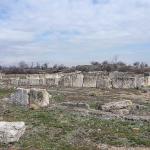
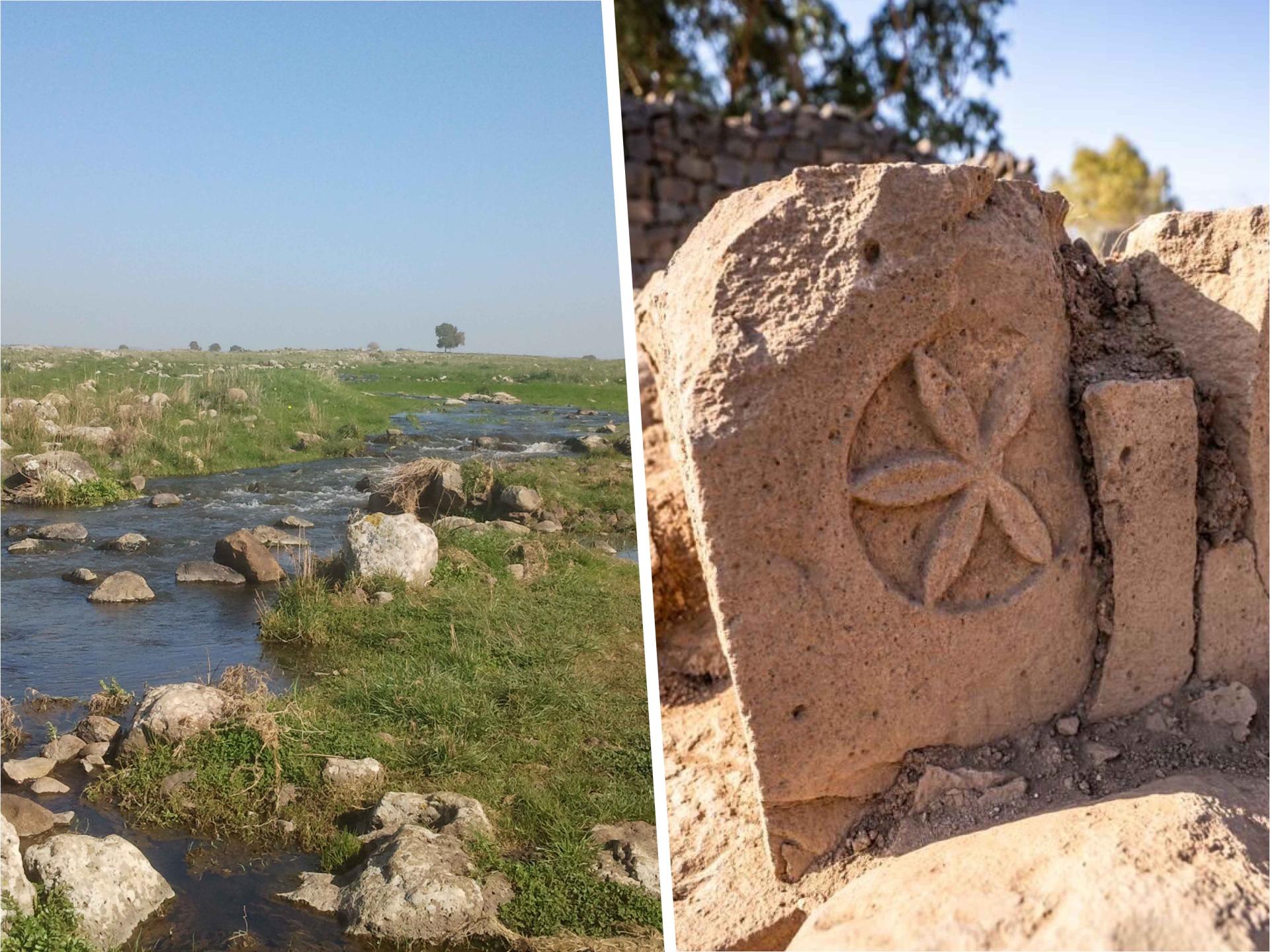
Archaeologists have uncovered a 1,500-year-old synagogue within the Yehudiya Nature Reserve in Golan Heights. The area was originally part of the Syrian village of Yehudiya, which Israel captured from Syria in 1967. Since that point, the village has been abandoned but hinted at the existence of artifacts from ancient days. “The abandoned Syrian village is built on top of ancient remains. You’d walk into a house and see a pillar in the middle used as a support for the roof, or a Doric capital underneath an archway,” said Dr. Mechael Osband from the Zinman Institute of Archaeology at the University of Haifa and the Department of Land of Israel Studies at the Kinneret Academic College.
Over 150 artifacts and fragments had been uncovered in the village hinting at the existence of the synagogue. Dr. Osband and his partner Professor Haim Ben-David mapped out the exact locations of the findings with the intention of using them to survey some possible spots for the location of the synagogue. “I’ll be honest, I didn’t think we would find anything,” admitted Dr. Osband. The first place they excavated was under an old house, but there was no sign of the synagogue there. Then they looked in a site where three columns had been discovered. In December 2024, archaeologists discovered the base of a column and stone floor below the second site, indicating the remains of the synagogue.
Another larger excavation in July revealed even more of the synagogue. “We found the southern wall of the building with three entrance ways, and different architectural elements, so it was clear that we found the spot. We are really just beginning the excavation. We have not even uncovered the northern wall yet. I look forward to seeing what else is there,” said Dr. Osband. The synagogue is estimated to be around 43 feet wide by 56 feet long with architecture influenced by the Roman style. “Stylistically, [the building] is very similar to other synagogues in the area which date mainly from the late 3rd century to the 7th, 8th centuries [AD]. As is the case in many synagogue buildings, there were probably different stages, possibly beginning in the late Roman period, and continuing through the Byzantine period, and maybe a bit later,” said Dr. Osband. “We don’t know yet.”
Dror Ben-Yosef, an archaeologist with the Israel Nature and Parks Authority, hopes the site will be accessible to tourists once the excavation is complete. He noted that other synagogues have been found with the Golan Heights. “In addition to this synagogue, about 25 other ancient synagogues have been discovered in the Golan, testifying to the strong Jewish presence there. These synagogues served not only for prayer but also as centers of study and as the core of Jewish literacy,” he said. “Sages visited these buildings and disseminated Jewish knowledge to all members of the community, from the young to the old.”
 Read Previous Post