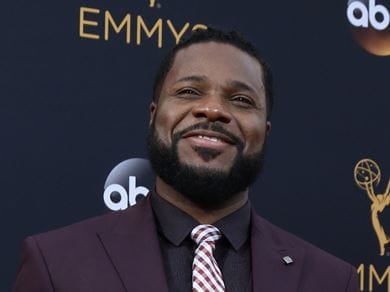
- Faith: Christian
- Career: Actor
- Birthday: August 18, 1970
- Date of Death: July 20, 2025
Malcolm-Jamal Warner was an American actor best known for his breakout role as Theodore Huxtable on the hit NBC sitcom "The Cosby Show" (1984–1992). His performance earned him a nomination for Outstanding Supporting Actor in a Comedy Series at the 38th Primetime Emmy Awards.
Malcolm-Jamal Warner was born on August 18, 1970, in Jersey City, New Jersey. Raised by his mother, Pamela Warner, who also served as his manager, Malcolm-Jamal was encouraged to pursue the arts from a young age. His middle name, Jamal, was chosen by his mother, reflecting cultural pride and significance.
He began acting in elementary school and went on to attend the Professional Children's School in New York City, where he honed his craft. Warner’s intelligence, confidence, and maturity as a young actor quickly set him apart, paving the way for the breakthrough role that would define a generation.
In 1984, at just 14 years old, Warner was cast as Theo Huxtable, the only son of Cliff and Clair Huxtable, on the groundbreaking NBC sitcom “The Cosby Show.” The series, which ran until 1992, became one of the most beloved television shows in history, celebrated for its portrayal of an upper-middle-class Black family and its positive, affirming messages.
Warner's portrayal of Theo—a bright but often mischievous teenager—endeared him to millions of viewers. He delivered both comedic timing and emotional depth, and his on-screen growth mirrored his own development as a young man.
The show earned Warner widespread acclaim and several award nominations, including an Emmy nod in 1986 for Outstanding Supporting Actor in a Comedy Series. He also became a positive role model for many young Black men, showing that intelligence, compassion, and self-respect could be cool.
Following the success of “The Cosby Show,” Warner continued to build a diverse and accomplished career in television, film, theater, and music. He starred in several series, including “Malcolm & Eddie” (1996–2000), a sitcom he co-led with comedian Eddie Griffin, which showcased his comedic chops and helped solidify his place in the entertainment world.
Over the years, he took on a variety of roles in drama and comedy, including appearances on “Jeremiah,” “Reed Between the Lines,” and “The Resident.” He earned praise for his role as Dr. AJ Austin on the latter, playing a brilliant and confident cardiothoracic surgeon. Warner also made guest appearances on shows like “Sons of Anarchy,” “Community,” and “Major Crimes.”
In addition to acting, Warner was a talented spoken word artist and musician. He released multiple albums, including “Love & Other Social Issues” and “Selfless,” blending jazz, soul, and poetry to explore themes of love, race, and justice. His work in music revealed another dimension of his creativity and helped him connect with fans in meaningful new ways.
Warner was not just a performer—he also worked behind the camera as a director and producer. He directed episodes of several television shows, including “The Cosby Show,” “All That,” and “Kenan & Kel.” His work in these roles demonstrated his understanding of storytelling and his desire to guide younger talents in the industry.
He also lent his voice to documentaries and narrated audiobooks, using his smooth, resonant tone to bring stories to life. His multifaceted career was marked by a deep commitment to excellence and a desire to use his platform to inspire and uplift.
Warner was known to be a deeply private individual. While he occasionally shared glimpses of his life on social media, he kept most personal details out of the spotlight. He was romantically linked to several well-known figures over the years, including Michelle Thomas, who played his girlfriend on “The Cosby Show” and passed away from cancer in 1998. Her death profoundly affected him and was a loss he rarely discussed publicly.
In later years, Warner became a father, welcoming a daughter with his partner. He often spoke about how fatherhood changed his life and made him more grounded. “Everything I do is now through the lens of being a dad,” he said in an interview. “It’s about setting an example, being present, and raising someone with love, wisdom, and purpose.”
Warner died unexpectedly in July 2025 at age 54, after drowning while swimming during a family vacation in Costa Rica.
Malcolm-Jamal Warner's Religious Beliefs
Though Warner was never outspoken in a traditional religious sense, his life and words revealed a deep and personal relationship with Jesus Christ. He frequently shared on social media about the importance of treating others with compassion, humility, and love—values he said were rooted in Christ’s teachings.
In 2016, Warner became an ordained minister with the Universal Life Church to officiate a close friend’s wedding. While not affiliated with a specific denomination, this moment reflected his spiritual openness and willingness to serve others through faith.
Warner often participated in conversations about faith, spirituality, and the Black Church, including podcasts and community discussions. He expressed both appreciation and critique for organized religion, acknowledging its flaws while affirming the power of the Gospel. He once wrote, “Good works without Christ are meaningless,” highlighting his belief in salvation through Jesus rather than deeds alone.
He described God as a being of love, not domination. “God isn’t a dictator. Love doesn’t coerce—it invites,” Warner said in a 2020 podcast appearance. He often emphasized that Christ came not only to conquer sin but also to bring healing and hope to those suffering physically, emotionally, and spiritually.
Though private about his worship practices, Warner’s actions consistently reflected Christian principles. He encouraged forgiveness, humility, and grace—offering a quiet but powerful testimony of faith in action.
Legacy
Malcolm-Jamal Warner leaves behind a legacy that transcends television and music. As Theo Huxtable, he helped reshape American media’s perception of Black families. As a musician and poet, he spoke truth to power and gave voice to complex emotions. As a father, partner, and friend, he loved deeply and lived intentionally.
Perhaps most importantly, Warner showed that success in Hollywood doesn’t have to come at the expense of integrity. He lived by faith, led with humility, and never lost sight of what mattered most—kindness, truth, and purpose.
In a world that often prizes fame over substance, Malcolm-Jamal Warner was a rare kind of celebrity: a man who remained grounded in who he was, guided by what he believed, and grateful for the opportunity to make a difference.
Back to the Celebrity Faith Database