- Faith: Christian
- Career: Politician
- Birthday: June 22, 1949
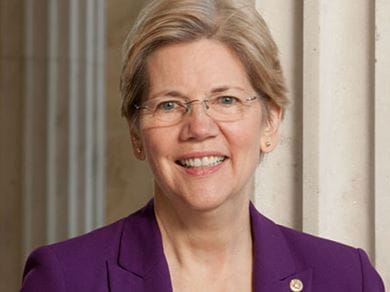
Elizabeth Warren a politician and former law professor who has served as the senior United States senator from Massachusetts since 2013.
Elizabeth Ann Herring Warren was born on June 22, 1949, in Oklahoma City, Oklahoma, the youngest of four children and the only girl in her family. Her childhood was marked by financial struggle, especially after her father suffered a heart attack when she was 12, which left the family with medical bills and a reduced income. Their car was repossessed, and her mother found work at Sears to help make ends meet while Elizabeth began working at her aunt’s restaurant at the age of 13.
Elizabeth was raised in the Methodist faith, attending Sunday school and church regularly, which shaped many of her values and beliefs that she carried into adulthood.
A gifted student, Elizabeth excelled in debate and won the state high school debating championship. At 16, she earned a scholarship to George Washington University but left after two years to marry her high school sweetheart, James Robert “Jim” Warren, in 1968.
The couple moved to Houston, where Elizabeth completed her degree in speech pathology and audiology at the University of Houston in 1970. She worked with children with disabilities before pursuing a law degree at Rutgers Law School, graduating in 1976.
After law school, Elizabeth worked from home, handling small legal matters like wills and real estate closings while raising her children. She then transitioned into academia, teaching law at Rutgers School of Law, the University of Houston Law Center, and the University of Texas School of Law. During this time, she continued teaching Sunday school, reflecting her continued commitment to faith and service.
Elizabeth became known for her research into bankruptcy and the economic pressures facing middle-class families. Her work challenged the narrative that bankruptcies were largely due to poor personal choices, highlighting instead the role of medical bills, job losses, and economic instability.
In 1987, she joined the faculty at the University of Pennsylvania Law School and later became a professor at Harvard Law School. She earned a reputation as one of the nation’s leading experts on bankruptcy and commercial law, influencing debates on consumer protection and economic fairness.
Elizabeth’s expertise led to her involvement in public policy, including serving on the National Bankruptcy Review Commission and advising Congress on bankruptcy and consumer protection issues. Following the 2008 financial crisis, she was appointed chair of the Congressional Oversight Panel, monitoring the use of government funds to stabilize the economy during the crisis.
She played a key role in the creation of the Consumer Financial Protection Bureau, an agency designed to protect consumers from unfair financial practices. Although she was not appointed as its first director, her work laid the foundation for the agency’s mission to hold financial institutions accountable and advocate for everyday Americans.
In 2012, Elizabeth ran for the United States Senate in Massachusetts, emphasizing economic fairness, accountability for big banks, and stronger protections for working families. She won the election, becoming the first woman elected to the Senate from Massachusetts.
As a senator, Elizabeth became known for her sharp questioning during hearings, particularly regarding banking practices and corporate accountability. She advocated for lower student loan interest rates, stronger regulations on Wall Street, and policies to support working families and consumers.
Elizabeth was re-elected in 2018 and continued to push for legislation addressing wealth inequality, student debt, and corporate accountability. Her commitment to economic justice and her willingness to challenge powerful interests made her a leading voice within the progressive wing of the Democratic Party.
In 2019, Elizabeth launched her campaign for the Democratic nomination for president, bringing her focus on wealth inequality and structural change to the national stage. Her campaign was known for its detailed policy proposals, including a wealth tax on fortunes above a certain threshold and plans to address health care, child care, and college affordability.
Although she ended her campaign in early 2020, Elizabeth’s presidential run solidified her reputation as a champion for working families and a leader committed to addressing economic injustice.
Elizabeth married Jim Warren in 1968, and the couple had two children before divorcing in 1978. In 1980, she married Bruce Mann, a law professor, and has remained married to him since. Elizabeth has two children and three grandchildren, and family remains an important part of her life.
In addition to her professional achievements, Elizabeth has authored several books on the economy and the struggles of the middle class, as well as her personal memoir detailing her journey from a financially struggling family in Oklahoma to the United States Senate.
Elizabeth Warren's Religious Beliefs
Elizabeth Warren was raised in the Methodist tradition, and her faith has influenced many of her life decisions and public service priorities. She has spoken about how her Christian beliefs underscore her commitment to fairness, justice, and advocating for those who are vulnerable.
Her faith has led her to view public service as a way to live out the values of caring for others and ensuring that every person has dignity and the opportunity to thrive. Elizabeth has shared that her faith calls her to work toward a society where people help one another and where structures support families and communities, especially during times of hardship.
While she does not often lead with her faith publicly, it remains a quiet but guiding force in her decisions and her view of the responsibilities of leadership.
Back to the Celebrity Faith Database