- Faith: Christian
- Career: Musician
- Birthday: March 15, 1943
- Date of Death: June 09, 2025
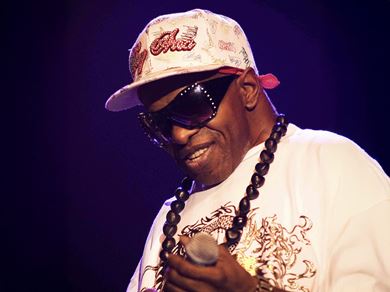
Sly Stone was a musician, songwriter, and record producer. As the frontman of Sly and the Family Stone, he was a trailblazer in shaping the sound of funk, blending soul, rock, psychedelia, and gospel in groundbreaking ways during the 1960s and 1970s.
Born Sylvester Stewart on March 15, 1943, in Denton, Texas, Sly Stone was one of five children in a deeply religious household. His parents, K.C. and Alpha Stewart, were devout Christians and members of the Church of God in Christ (COGIC), a Pentecostal denomination that emphasized lively, music-filled worship. The family moved to Vallejo, California, when Sly was a young child, where his musical journey truly began.
The Stewart family was known for its musical talents. Sly and his siblings—Freddie, Rose, and Vaetta—formed a gospel group called The Stewart Four, performing in churches and recording a few singles. Sly’s early exposure to gospel harmonies and rhythm would later influence his genre-blending style. He was a musical prodigy from the start, mastering multiple instruments including the organ, guitar, bass, and drums by the time he was a teenager.
Stone attended Vallejo High School and later studied music at Vallejo Junior College. During these years, he became immersed in both gospel and secular music, drawing inspiration from artists like Ray Charles, James Brown, and Little Richard. It was also during this time that he adopted the name “Sly,” a nickname derived from the mispronunciation of his real name, Sylvester.
Before founding his famous band, Stone worked as a radio disc jockey at KSOL, a San Francisco R&B station, where he was known for spinning an eclectic mix of music. He also worked as a record producer for Autumn Records, producing tracks for acts like The Beau Brummels and Bobby Freeman.
In 1966, Sly formed Sly and the Stoners and later merged with Freddie’s band, Freddie and the Stone Souls, to create Sly and the Family Stone. From the start, the band broke norms—not only musically, but socially. With its racially integrated and gender-inclusive lineup, the group was a powerful symbol of unity during a time of racial and political upheaval in America.
Their debut album, A Whole New Thing (1967), introduced their unique blend of funk, rock, and soul. But it was the follow-up, Dance to the Music (1968), that catapulted the band to mainstream success. With infectious rhythms and anthemic energy, the title track became a massive hit and a defining sound of late 1960s pop culture.
Their 1969 album Stand! included some of the group’s most iconic tracks, such as “Everyday People,” “Sing a Simple Song,” and “I Want to Take You Higher.” The record sold millions and solidified Sly and the Family Stone as pioneers of psychedelic soul and funk. The song “Everyday People,” with its message of equality and acceptance, became an anthem for the civil rights movement.
Despite their success, the early 1970s brought darker times. Stone's growing drug use began to impact the band’s stability and performance. He became increasingly erratic and isolated, missing shows and falling deeper into addiction.
In 1971, the band released There’s a Riot Goin’ On, a darker, more introspective album reflecting the turmoil of the era and Sly’s own inner demons. Though critically acclaimed, it marked a departure from the upbeat energy of their earlier work. The band’s lineup changed frequently in the following years, and internal tensions continued to rise.
Stone's subsequent albums, including Fresh (1973) and Small Talk (1974), still showed flashes of brilliance but were met with mixed reviews. By the mid-70s, the original band had essentially dissolved, and Stone struggled to regain his footing in the music industry.
In 1974, Sly Stone married model and actress Kathy Silva in a highly publicized ceremony at Madison Square Garden during a Sly and the Family Stone concert. The event was a spectacle, attended by over 20,000 people. The couple had one son, Sylvester Jr., but the marriage was short-lived, ending in separation just a year later. Kathy later cited drug use and erratic behavior as factors in the breakdown of their relationship.
Stone had other children and relationships throughout his life, though many of them were kept out of the public eye. In later interviews, he expressed regret about not being more present in his children’s lives during his years of substance abuse and instability.
After the 1980s, Sly Stone faded from the spotlight, occasionally appearing for collaborations or performances but largely retreating into a reclusive life. He lived in relative obscurity, struggling financially and battling health issues. In 2011, he filed a lawsuit against his former manager and record label, claiming millions in unpaid royalties. Though he was awarded a portion of the funds in a 2015 ruling, financial troubles persisted.
Stone made a rare public appearance at the 2006 Grammy Awards when Sly and the Family Stone were honored with a tribute performance. Wearing a blond mohawk and sunglasses, he performed briefly but left the stage abruptly, reigniting concern over his well-being.
In 2023, he released his memoir, Thank You (Falettinme Be Mice Elf Agin), co-written with journalist Ben Greenman. The book offered an unflinching look at his life—the glory and the pain—and was widely praised for its honesty and depth.
Sly Stone died on June 9, 2025, at the age of 81. The cause of death was not immediately disclosed, but sources close to the family noted he had been battling a number of chronic health issues. His passing marked the end of an era, prompting tributes from artists across generations and genres.
Sly Stone's Religious Beliefs
Though raised in a strict Pentecostal home, Sly Stone’s adult life often seemed far removed from the Christian faith of his upbringing. The fame, fortune, and fast lifestyle of the 1970s led him down a path of excess and disconnection. However, in his later years, Stone reportedly reconnected with his Christian roots.
Friends and family members noted that Stone had returned to reading the Bible and praying regularly. In his 2023 memoir, he wrote about his struggles with guilt and his longing for forgiveness. “I knew God never left me,” he wrote. “I left Him—but He was still there, waiting.”
He spoke in interviews of a quiet faith that helped him cope with his regrets and health challenges. “I still talk to God,” he said in a 2024 radio interview. “I don’t shout it from the rooftops like I used to shout onstage, but He’s with me.”
In the final months of his life, those close to him say Stone found peace. “He wasn’t perfect, but he knew who his Redeemer was,” said a longtime friend. “He came home to God in the end.”
Back to the Celebrity Faith Database