- Faith: Christian
- Career: Musician
- Birthday: December 05, 1932
- Date of Death: May 09, 2020
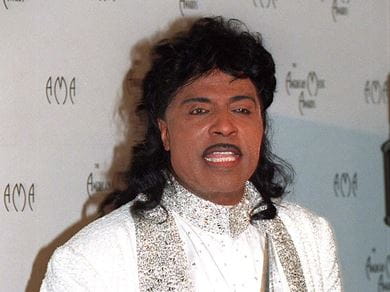
Little Richard (born Richard Wayne Penniman) was an American singer, songwriter, pianist, and minister whose explosive stage presence helped shape the foundation of rock and roll. Often called one of the genre's founding fathers, Little Richard transformed popular music with his energetic performances, unmistakable voice, and unforgettable hits, including "Tutti Frutti," "Long Tall Sally," "Rip It Up," and "Good Golly, Miss Molly." His influence reached generations of artists, from Elvis Presley and The Beatles to Prince and Bruno Mars. While his music changed the entertainment industry, his Christian faith remained a defining force throughout his life, often creating tension between his calling to ministry and his success as a rock star.
Richard Wayne Penniman was born in Macon, Georgia, the third of 12 children born to Charles "Bud" Penniman and Leva Mae Stewart Penniman. He was raised in a deeply religious household where church played a central role in family life. His father served as a church deacon while also operating a nightclub, exposing Richard to both gospel music and secular entertainment from an early age. Growing up in the segregated South, he developed a love for Pentecostal worship services, where expressive singing, energetic preaching, and spirited music would later influence his own performing style.
As a teenager, Penniman began singing in churches and traveling gospel groups before pursuing secular music. His distinctive blend of gospel-inspired vocals, boogie-woogie piano, rhythm and blues, and unmatched charisma quickly set him apart. His breakthrough came in 1955 with "Tutti Frutti," whose infectious energy became an instant hit. Over the next several years, he released a string of classics, including "Lucille," "Keep A-Knockin'," "Jenny, Jenny," and "The Girl Can't Help It."
Little Richard's performances became legendary for their intensity. His pounding piano, high-energy dancing, flamboyant wardrobe, and signature shout of "A-wop-bop-a-loo-bop-a-lop-bam-boom!" helped redefine what a rock-and-roll performer could be. His influence extended far beyond his own recordings. Artists including The Beatles, The Rolling Stones, James Brown, Otis Redding, David Bowie, Elton John, and countless others credited him as a major inspiration for their own careers.
Despite stepping away from rock music more than once, Little Richard returned to secular performance throughout the 1960s and 1970s while continuing to release both rock and gospel recordings. He remained a popular concert attraction for decades and received numerous honors recognizing his contributions to music. He was among the inaugural class inducted into the Rock and Roll Hall of Fame in 1986, received a Grammy Lifetime Achievement Award, and was honored by numerous music organizations for helping establish rock and roll as a global cultural force.
Little Richard's personal life was often the subject of public attention. He married Ernestine Harvin in 1959, but the marriage ended in divorce after several years. The couple did not have biological children together, though Richard maintained a close relationship with his adopted son, Danny Jones Penniman. Throughout his career, he openly discussed his struggles with identity, fame, addiction, and sexuality, frequently describing his life as a battle between worldly success and his desire to faithfully follow God. In interviews later in life, he spoke candidly about seeking forgiveness, pursuing holiness, and placing Christ above personal ambition.
Little Richard's Religious Beliefs
Little Richard remained a lifelong Christian whose faith profoundly shaped both his personal life and career. Raised in an evangelical Christian home, he often credited the church for developing his musical gifts and spiritual foundation. At the height of his fame in 1957, he experienced what he described as a dramatic spiritual awakening while touring Australia. Following a frightening incident involving an aircraft and believing God was calling him to change direction, he walked away from rock and roll almost overnight. During that trip, he famously threw valuable jewelry into Sydney's Hunter River as a public symbol of leaving behind his former lifestyle.
After leaving the music industry, Richard enrolled at Oakwood University in Huntsville, Alabama, where he studied theology. Although he later returned to recording and touring, his Christian convictions remained central to his identity. In the early 1960s, he devoted much of his work to gospel music and, in 1970, was officially ordained as a minister. By the mid-1980s, evangelism became his primary focus. He preached across the United States and internationally, frequently appearing on Christian television networks to share his testimony and encourage others to place their faith in Jesus Christ.
During the final decades of his life, Little Richard became increasingly outspoken about repentance and holy living. He publicly renounced many aspects of his earlier flamboyant lifestyle and repeatedly emphasized his desire to honor Christ above entertainment. In interviews, including appearances on the Three Angels Broadcasting Network, he spoke about God's forgiveness, the importance of salvation, and his hope of spending eternity with Jesus. Though remembered worldwide as one of rock and roll's greatest pioneers, Little Richard consistently said he wanted his greatest legacy to be his faith in Christ rather than his musical achievements.
Back to the Celebrity Faith Database