- Faith: Agnostic
- Career: Musician
- Birthday: September 12, 1952
- Date of Death: January 07, 2020
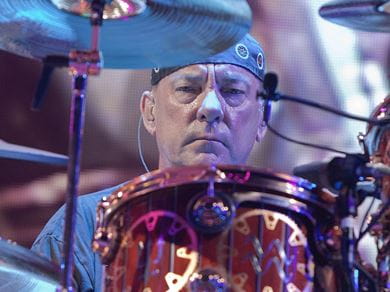
Neil Peart was a Canadian musician, songwriter and author best known as the drummer and primary lyricist for the rock band Rush. Widely regarded as one of the most technically accomplished drummers in rock history, Peart was known for his elaborate drum kits, precise playing and intellectually ambitious lyrics. Over more than four decades with Rush, he helped shape the band’s progressive rock sound and became one of its defining creative forces.
Neil Ellwood Peart was born on Sept. 12, 1952, in Hamilton, Ontario, Canada, and grew up in nearby St. Catharines. He was the oldest of four children born to Glen and Betty Peart. His father worked in the agricultural equipment business, and Peart was raised in a middle-class household.
Peart became interested in music as a child and initially experimented with piano before becoming drawn to drums. At age 13, his parents bought him drumsticks and arranged lessons, with the promise of a drum kit if he remained committed. He soon began playing in local bands and studying prominent drummers, including Keith Moon, John Bonham and Gene Krupa.
After finishing school, Peart moved to London, England, hoping to establish himself as a professional musician. He struggled to find success and returned to Canada after about 18 months. He briefly worked for his father before deciding to give music another serious attempt.
Peart joined Rush in 1974, replacing original drummer John Rutsey shortly before the band’s first major U.S. tour. The lineup of Peart, guitarist Alex Lifeson and bassist-singer Geddy Lee became the group’s classic configuration.
In addition to playing drums, Peart became Rush’s primary lyricist. His early writing drew heavily on philosophy, fantasy and science fiction, helping define albums such as “Fly by Night,” “2112,” “A Farewell to Kings” and “Hemispheres.” Over time, his lyrics became more personal and focused on social issues, individualism, relationships and human experience.
Rush became one of the most successful and influential rock bands of its era. Albums including “Permanent Waves,” “Moving Pictures,” “Signals” and “Clockwork Angels” expanded the group’s audience while showcasing Peart’s increasingly sophisticated drumming.
Peart was known for continuously refining his technique. In the 1990s, he studied jazz drumming under teacher Freddie Gruber and later incorporated more swing and traditional grip into his playing. He also became known for lengthy, complex drum solos during Rush concerts.
Rush was inducted into the Rock & Roll Hall of Fame in 2013. Peart retired from touring after the band’s R40 Live Tour in 2015, effectively bringing Rush’s active career to an end.
Peart married Jacqueline Taylor in 1975, and the couple had one daughter, Selena. His personal life changed dramatically in 1997 when Selena, then 19, was killed in a car accident. Less than a year later, Taylor died of cancer.
Devastated by the losses, Peart withdrew from music and embarked on a long motorcycle journey across North and Central America. He later chronicled the experience in his memoir “Ghost Rider: Travels on the Healing Road.”
Peart later met photographer Carrie Nuttall, whom he married in 2000. Their daughter, Olivia, was born in 2009. In addition to music, Peart was an avid motorcyclist and prolific writer, publishing several books about travel, music and his personal experiences.
Peart died on Jan. 7, 2020, in Santa Monica, California, at age 67. The cause was glioblastoma, an aggressive form of brain cancer. His diagnosis had been kept private, and he had lived with the disease for more than three years.
His death was announced by Rush several days later and prompted tributes from musicians around the world. Peart left behind a legacy as a groundbreaking drummer, thoughtful lyricist and writer whose work influenced generations of rock musicians and fans.
Neil Peart's Religious Beliefs
Peart identified as agnostic and was frequently skeptical of organized religion. His lyrics and writings reflected a strong interest in philosophy, reason, individual freedom and questions about belief.
As a young man, Peart was influenced by the writings of novelist and philosopher Ayn Rand, particularly her emphasis on individualism and self-reliance. Those ideas were especially visible in Rush’s 1970s lyrics, although Peart later distanced himself from some aspects of Rand’s philosophy.
Peart’s views on religion also evolved over time. He rejected certainty about the existence of God and criticized religious dogmatism, particularly when faith was used to justify intolerance or violence. Songs such as “Faithless” expressed his preference for personal ethics over traditional religious belief.
In interviews, Peart described himself as an agnostic rather than an atheist, emphasizing that he did not claim to know whether God existed. His worldview centered on evidence, intellectual curiosity and personal responsibility, while leaving room for uncertainty about questions that could not be proven.
Back to the Celebrity Faith Database