- Faith: Christian
- Career: Actress
- Birthday: April 03, 1922
- Date of Death: May 13, 2019
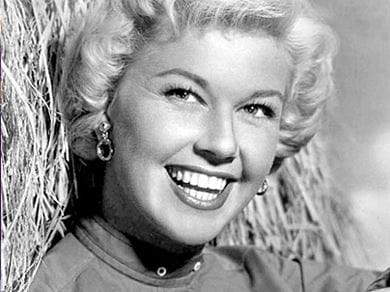
Doris Day was an American singer, actress, and television star whose career spanned nearly five decades. One of the most popular recording artists of the 1940s and 1950s and a leading Hollywood box-office star of the 1950s and early 1960s, she became known for her warm vocal style and wholesome screen image. Over the course of her career she recorded hundreds of songs and appeared in nearly 40 films, establishing herself as one of the most commercially successful female stars in American entertainment history.
Doris Mary Anne Kappelhoff was born in Cincinnati, Ohio, the youngest child of German-American parents Alma Sophia Welz and William Joseph Kappelhoff, a music teacher and church organist. Her father’s work in church music exposed her early to singing and performance.
As a child, Day intended to become a professional dancer. In 1937, however, she was seriously injured in an automobile accident that damaged her legs and ended her dancing ambitions. During a long recovery period she began vocal training and discovered her singing ability. As a teenager she performed on local radio and soon joined touring big bands, adopting the professional name Doris Day.
Day’s major breakthrough came in 1945 as the featured vocalist with Les Brown and His Band of Renown. Her recordings “Sentimental Journey” and “My Dreams Are Getting Better All the Time” became national hits and helped make her one of the most recognizable voices of the era.
She moved into films in the late 1940s and quickly became a leading musical star. Her early screen success included musicals such as Romance on the High Seas (1948), Calamity Jane (1953), and The Pajama Game (1957). In 1956 she recorded “Que Sera, Sera (Whatever Will Be, Will Be)” for Alfred Hitchcock’s thriller The Man Who Knew Too Much, a performance that earned an Academy Award for Best Original Song and became her signature recording.
By the late 1950s Day transitioned into romantic comedies and became one of Hollywood’s top box-office draws. Films such as Pillow Talk (1959), Lover Come Back (1961), and Send Me No Flowers (1964), often opposite Rock Hudson, reinforced her image as the wholesome yet sophisticated leading lady of American cinema.
After her film career declined in the late 1960s, Day starred in the television sitcom The Doris Day Show from 1968 to 1973. She later hosted the pet-focused program Doris Day’s Best Friends in the 1980s but otherwise retired from regular entertainment work. Despite her reduced public profile, her recordings and films remained widely popular.
Day’s personal life included four marriages: trombonist Al Jorden (1941–1943), saxophonist George Weidler (1946–1949), producer Martin Melcher (1951–1968), and restaurateur Barry Comden (1976–1982). Her only child, Terry Melcher, was born in 1942 during her first marriage and later became a successful music producer.
Her third marriage to Martin Melcher had major professional consequences. After his death in 1968, Day discovered that he and his business manager had mismanaged and depleted much of her fortune, leaving her deeply in debt. The financial crisis forced her to return to work, leading directly to her starring role in The Doris Day Show. The experience was one of the most difficult periods of her life.
In her later decades, Day became known for her devotion to animal welfare. She founded and supported multiple animal-protection organizations and dedicated much of her time and resources to rescue and advocacy work. She spent most of her later life in Carmel Valley, California, living quietly and largely out of the public spotlight.
Doris Day died on May 13, 2019, at her home in Carmel Valley, California, at age 97. She had been in relatively good health for most of her later years but developed pneumonia shortly before her death. She passed away peacefully at home.
Doris Day's Religious Beliefs
Day was raised in a Christian household shaped by her father’s role as a church organist and choir leader. Her early exposure to church music helped form both her musical foundation and her sense of spiritual identity.
Although she did not publicly affiliate strongly with a specific denomination in adulthood, she maintained a lifelong belief in God and often expressed gratitude and trust in divine guidance. Biographical accounts describe her outlook as grounded in traditional Christian values such as kindness, humility, moral responsibility, and compassion.
Her faith perspective became especially evident in how she interpreted hardship. Following marital struggles, financial betrayal, and career pressures, she spoke of perseverance, prayer, and inner strength rooted in spiritual conviction.
In later life, Day’s deep commitment to animal welfare reflected her belief in stewardship and care for creation. She viewed compassion toward animals as consistent with her moral and spiritual values. While private about formal religious practice, she consistently acknowledged belief in God and retained the spiritual framework shaped by her Christian upbringing.
Back to the Celebrity Faith Database