- Faith: Spirituality
- Career: Musician
- Birthday: January 30, 1951
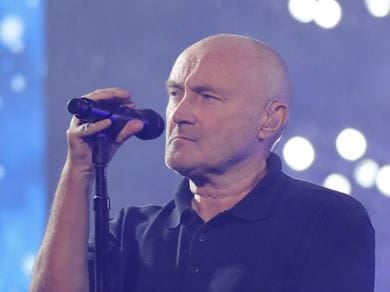
Phil Collins is an English musician and entertainer whose career began as the drummer—and later lead singer—of the rock band Genesis. He went on to build a prolific solo career, scoring several number-one hits in both the UK and the US.
Collins was born on January 30, 1951, in London, England, the youngest of three children of June Winifred Collins, a theatrical agent, and Greville Philip Austin Collins, an insurance agent. He grew up in Putney and later Middlesex, where his creative interests were encouraged from an early age. Collins received a toy drum kit at age five and began playing along to television and radio broadcasts, demonstrating an early sense of rhythm. He later progressed to larger drum sets and took lessons with professional instructors, though he never learned to read traditional musical notation, instead developing a strong ear-based intuition.
In addition to music, Collins pursued acting as a child and attended stage school. He appeared in the West End production of Oliver! in the late 1960s, playing the Artful Dodger, and had uncredited appearances in films including A Hard Day’s Night and Chitty Chitty Bang Bang. During his teen years, Collins played in several school bands and local groups, shifting his focus increasingly toward drumming and performance. By the end of the 1960s, he had begun pursuing music as a full-time vocation.
In 1970, Collins successfully auditioned for the progressive rock band Genesis and joined as drummer and backing vocalist. He contributed to the band’s evolving sound through the early and mid-1970s, becoming known for his distinctive drumming style, often involving gated reverb effects that later came to define a portion of the decade’s pop and rock production aesthetic. When Genesis’s lead singer Peter Gabriel departed the band in 1975, Collins assumed lead vocal duties while continuing to play drums on recordings and in select live performances.
With Collins as frontman, Genesis transitioned from progressive rock toward a more commercially accessible sound. Albums including A Trick of the Tail (1976), Duke (1980), Abacab (1981), and Invisible Touch (1986) achieved international success, producing multiple charting singles and expanding the band’s global audience. During this period, Genesis became one of the best-selling rock acts in the world.
Collins launched his solo career in parallel with his work in Genesis. His debut solo album, Face Value (1981), produced the international hit single “In the Air Tonight,” noted for its atmospheric production and iconic drum break. Subsequent albums, including Hello, I Must Be Going! (1982), No Jacket Required (1985), and …But Seriously (1989), yielded a series of chart-topping singles such as “Against All Odds (Take a Look at Me Now),” “One More Night,” “Sussudio,” “Take Me Home,” and “Another Day in Paradise.”
By the late 1980s, Collins had become one of the world’s most commercially successful solo artists, earning numerous awards including Grammy Awards, Brit Awards, and an Academy Award. His soundtrack work for the 1999 Disney animated film Tarzan produced the song “You’ll Be in My Heart,” which won the Academy Award for Best Original Song.
Collins also pursued acting and screen work. He starred in the 1988 feature film Buster, portraying a real-life Great Train Robbery participant, and contributed to the film’s soundtrack. Collins later led the Phil Collins Big Band, exploring jazz and big-band interpretations of his music. He continued touring periodically throughout the 2000s and 2010s, including his Not Dead Yet Tour and the final Genesis reunion tour, which concluded in 2022.
Phil Collins has been married three times and has five children. His first marriage was to Canadian-born Andrea Bertorelli in 1975. Collins adopted Bertorelli’s daughter, Joely, and the couple later had a son, Simon. The marriage ended in divorce in 1980.
In 1984, Collins married American Jill Tavelman. Their daughter, Lily, was born in 1989 and later became an actress. The couple divorced in 1996.
Collins married Swiss national and former translator Orianne Cevey in 1999. They had two sons, Nicholas and Matthew. Collins and Cevey divorced in 2006, later reconciled and remarried in 2016, and ultimately separated again in 2020.
Over the course of his life, Collins maintained residences in England, Switzerland, and the United States. Several of his children pursued careers in the arts, particularly music and film.
Beginning in 2007, Collins developed significant health complications following a spinal injury that resulted in nerve damage affecting his hands and legs. The injury limited his ability to play the drums, ultimately leading him to retire from drumming and significantly restrict touring activity. Additional medical issues included extensive knee surgeries, type 2 diabetes, and complications including “drop foot,” which affected his mobility.
During the 2010s and 2020s, Collins experienced increasing physical limitations, including the need for a cane and later a wheelchair. His son Nicholas performed drums during live performances as Collins shifted to seated vocal roles. In recent years, Collins has required ongoing in-home support and medical supervision due to cumulative health conditions that affect daily functioning. Despite these challenges, Collins continued to remain musically involved in various capacities and has expressed a reflective but optimistic attitude toward his legacy.
Phil Collins' Religious Beliefs
Phil Collins is widely described as spiritual but not formally aligned with institutional religion. While not identifying with a specific Christian denomination or other organized religious tradition, Collins has spoken about a personal sense of higher purpose, spirituality, and moral connection that informs both his life and artistic output.
Several of Collins’s songs engage with spiritual themes. “Jesus He Knows Me,” released with Genesis, critiques religious hypocrisy and televangelism, reflecting Collins’s skepticism toward institutional misuse of faith rather than disbelief in spiritual meaning. Other compositions, including “The Coming In,” explore broader themes of hope, renewal, mortality, and connection. Collins has described his worldview as grounded in universal rather than doctrinal concepts, emphasizing compassion, introspection, and the search for meaning.
Collins has also expressed interest in moral and philosophical systems that operate outside formal religion and has avoided strict labeling of his beliefs. His approach to spirituality is generally reflective, personal, and experiential, with a focus on the interior and transcendent aspects of human life rather than organized worship or religious identity.
Back to the Celebrity Faith Database