- Faith: Spirituality
- Career: Musician
- Birthday: March 10, 1994
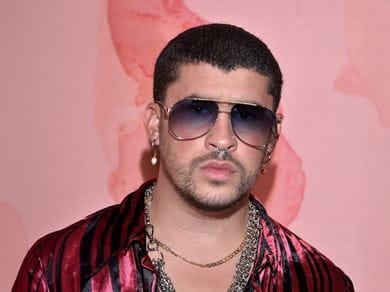
Benito Antonio Martínez Ocasio, better known by his stage name Bad Bunny, is a Puerto Rican rapper, singer, and producer who has become one of the most influential figures in modern Latin music. Often called the “King of Latin Trap,” he played a central role in bringing Spanish-language rap and reggaetón into the global mainstream. Today, he is widely regarded as one of the greatest Latin rappers of all time.
Benito Antonio Martínez Ocasio—better known to the world as Bad Bunny—was born on March 10, 1994, in the small town of Vega Baja, Puerto Rico. Raised in the Almirante Sur barrio, Benito grew up in a lower-middle-class household with his parents, Tito Martínez and Lysaurie Ocasio, and two younger brothers. His father worked as a truck driver, while his mother was a schoolteacher with a deep devotion to the Catholic faith.
As a child, Benito was immersed in church life. He attended mass with his family and, starting at a young age, sang in the church choir. His mother’s passion for gospel hymns and salsa music shaped his early appreciation for rhythm and melody. Even so, his musical world wasn’t limited to the church. Benito would spend hours listening to reggaetón and Latin hip-hop artists, sneaking in time with CDs and radio when he wasn’t doing chores or schoolwork.
By the time he was a teenager, Benito was already experimenting with writing lyrics and performing casually among friends. At 13, however, he decided to leave the choir, admitting later that he felt he was “too old for this.” Still, those years of choral singing gave him vocal discipline and stage presence that would eventually set him apart.
Benito attended the University of Puerto Rico at Arecibo, where he studied audiovisual communications. Like many college students, he worked side jobs to make ends meet. One of those jobs was bagging groceries at Econo, a local supermarket—something he later referenced as a reminder of his humble beginnings.
During his university years, Benito began uploading music to SoundCloud under the stage name “Bad Bunny.” The unusual moniker came from a childhood memory of being forced to wear a bunny costume for school—his grumpy face in the photos inspired the nickname that stuck. His deep, slurred vocals and genre-bending beats quickly drew attention.
In 2016, DJ Luian of the record label Hear This Music discovered Bad Bunny on SoundCloud and signed him. What followed was a meteoric rise that would disrupt the Latin music industry.
Bad Bunny’s breakout single, “Soy Peor” (2016), introduced him as a bold new voice in Latin trap, a subgenre blending reggaetón with U.S. trap music. The track became an anthem for heartbreak and rebellion, propelling him to stardom across Puerto Rico and Latin America.
Collaborations quickly followed. He partnered with established reggaetón giants like J Balvin, Ozuna, and Daddy Yankee. Songs like “Ahora Me Llama” (with Karol G) and “Sensualidad” (with J Balvin and Prince Royce) cemented his presence on global charts.
By 2018, Bad Bunny had gone from a promising newcomer to one of Latin music’s most recognizable stars. That year, he released his debut album, "X 100PRE," which was praised for its versatility, moving between reggaetón, trap, rock, and even synth-pop influences. Tracks like “Estamos Bien” and “Caro” highlighted his willingness to push boundaries, lyrically and musically.
He also collaborated with Drake on the bilingual hit “Mía,” a chart-topping single that introduced him to a wider U.S. audience.
In 2020, Bad Bunny’s global profile exploded when he performed alongside Shakira and Jennifer Lopez during the Super Bowl LIV halftime show in Miami. The performance celebrated Latin culture on one of the world’s biggest stages and showcased Bad Bunny’s charisma for millions of new fans.
That same year, he released YHLQMDLG (short for Yo Hago Lo Que Me Da La Gana—“I Do Whatever I Want”), which won a Latin Grammy for Best Urban Music Album. It debuted at No. 2 on the Billboard 200, the highest charting all-Spanish-language album in history at the time.
Later in 2020, he surprised fans with two more projects: Las Que No Iban a Salir and El Último Tour del Mundo. The latter made history by becoming the first all-Spanish-language album to top the Billboard 200, thanks in part to the success of “Dákiti,” his hit collaboration with Jhay Cortez.
Bad Bunny is not confined to music. A lifelong wrestling fan, he made appearances in WWE, including performing at WrestleMania 37 in 2021, where he stunned fans with his athleticism. He later held the WWE 24/7 Championship briefly, further boosting his crossover appeal.
In 2022, he made his acting debut in Bullet Train alongside Brad Pitt, showing that his charisma could translate to Hollywood. That same year, he was the most-streamed artist globally on Spotify—for the third consecutive year.
By 2023 and 2024, he had become a mainstay not just in Latin music but in global pop culture, headlining festivals like Coachella and collaborating with artists across genres.
On September 28, 2025, Bad Bunny was announced as the headliner for the Super Bowl LX halftime show. This will make him the first male Latin artist to headline the event.
Despite his global fame, Bad Bunny has kept much of his personal life guarded. Known for his eccentric fashion—often wearing skirts, nail polish, and vibrant colors—he uses his style as a form of self-expression and defiance against traditional gender norms.
He has been romantically linked to Gabriela Berlingeri, a jewelry designer, since 2017. The couple has been seen together at events and even collaborated musically, with Berlingeri providing vocals on some of his tracks. Still, Bad Bunny often downplays questions about marriage or settling down, preferring to keep the focus on his art.
In addition to his music and relationships, Bad Bunny has been outspoken about political and social issues. He has criticized government corruption in Puerto Rico, spoken out against gender violence, and used his platform to support marginalized communities. His 2019 performance at protests calling for the resignation of Puerto Rican governor Ricardo Rosselló highlighted his role as both artist and activist.
Bad Bunny's Religious Beliefs
Bad Bunny was raised in a devout Catholic household, where church life was central to family and community. His mother’s strong faith influenced him deeply, and as a child he actively participated in the choir until the age of 13. Even today, he acknowledges the formative role his Catholic upbringing played in shaping his worldview.
His mother remains a guiding spiritual influence. Bad Bunny has said she would love to see him marry in the church someday, a reflection of her enduring devotion.
As an adult, however, Bad Bunny has distanced himself from institutional Catholicism. In a 2023 interview, he remarked: “God is everywhere, so why do I need to go to church?” The statement captured his preference for spirituality over organized religion. He acknowledges the presence of God but rejects the idea that devotion requires formal church attendance.
Religious scholars have even studied his lyrics, noting that his music often carries spiritual undertones—wrestling with longing, morality, and faith. At times, his songs critique organized religion directly. In “Baticano,” for example, he pushed back against a sermon that shamed people for their sexuality, highlighting what he sees as hypocrisy within religious institutions.
Bad Bunny admits he does not pray himself, though he finds comfort in knowing his mother, grandmother, and aunt regularly pray for him. In a 2024 interview with Vogue Italia, he candidly said: “I don’t pray, but my family does it for me.”
Back to the Celebrity Faith Database