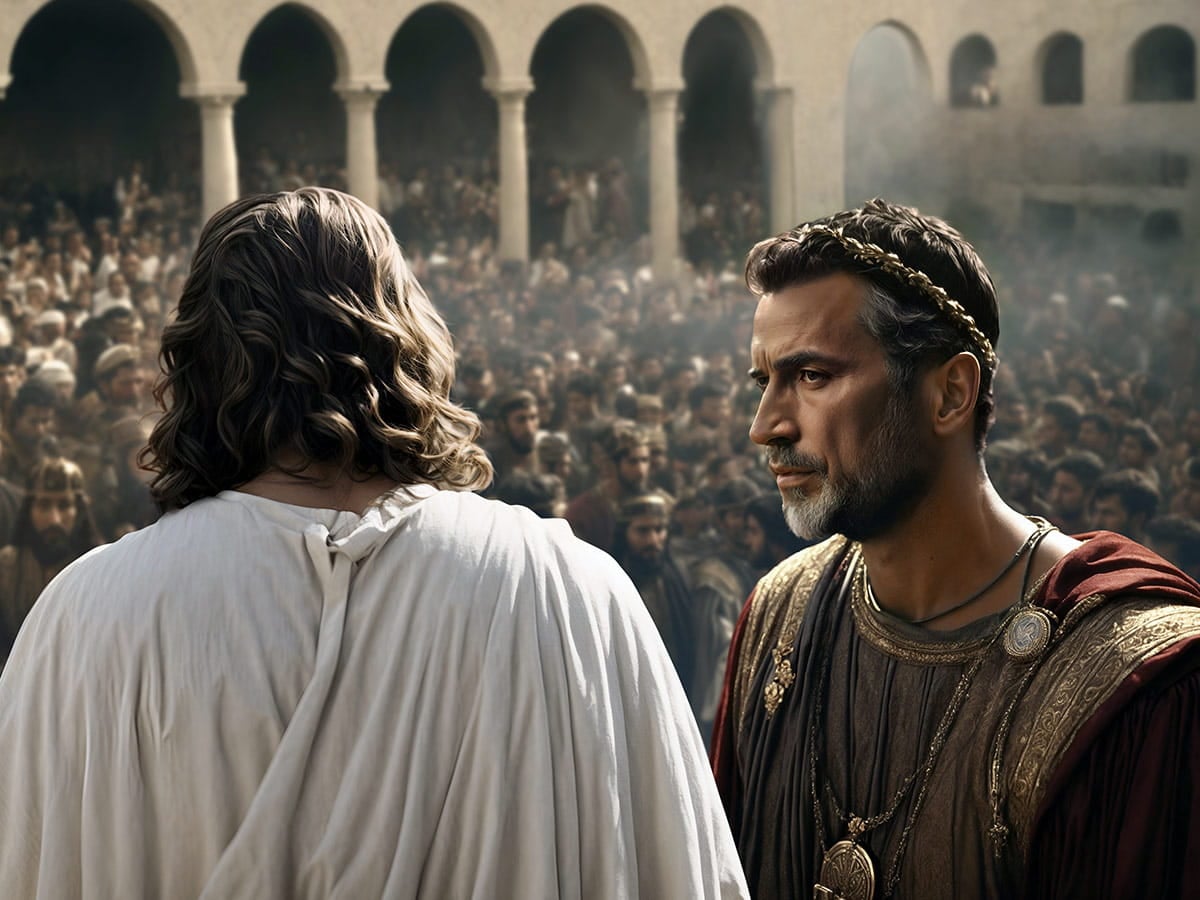
Baptism is almost universally recognized as a sacrament of the Church. While there are diverse views on how and when Christians are baptized, nearly everyone understands that it is an important part of our Christian journey. But is it possible to be saved without being baptized?
Jesus Expects His Disciples to Be Baptized
Jesus Himself went to John the Baptist to be baptized. John recognized that Jesus didn't "need" to be baptized. In fact, he told Jesus that He should be baptizing John, not the other way around! But Jesus told John that it was necessary "to fulfill all righteousness" (see Matthew 3:13-15). Like in every other aspect of life, Jesus set an example for His followers by being baptized.
In John 3, Jesus and His disciples were in the wilderness baptizing people, just as John the Baptist was. When John's disciples complained to him that Jesus was baptizing and that "everyone is going to Him," John reminded them that he had pointed them toward Jesus, and that "a person can only receive what is given them from heaven" (John 3:27). It's important to remember that John's baptism was directed toward repentance – acknowledging sins and asking God's forgiveness. God clearly expects that converts will be baptized.
In the Great Commission (Matthew 28:18-20), Jesus directed His disciples to make disciples, which includes both baptizing them and teaching them. The disciples clearly "got the message"; on the day of Pentecost, Peter directed the crowd to "repent and be baptized" (Acts 2:38). And, in Acts 8, after Philip had witnessed to the Ethiopian eunuch, the man asked to be baptized (Acts 8:36-38). Clearly, the early Church understood that Jesus expects His disciples to be baptized.
Baptism Does Not "Save" Us
Even though the expectation is that new believers will be baptized, baptism itself does not save us. The Apostle Paul responded to Jesus' call on the road to Damascus, but he was not baptized until at least three days later (see Acts 9:1-18). Most people would understand that Paul was "saved" when he heard and responded to Jesus' call, not three days later when he was baptized.
It seems that Paul understood this distinction between being saved and walking in obedience. In Romans 10, Paul discusses what it means to be saved: "But what does [the law of Moses] say? 'The word is near you; it is in your mouth and in your heart,' that is, the message concerning faith that we proclaim: If you declare with your mouth, 'Jesus is Lord,' and believe in your heart that God raised him from the dead, you will be saved. For it is with your heart that you believe and are justified, and it is with your mouth that you profess your faith and are saved" (Romans 10:8-10).
Recognizing that baptism does not "save" us does not diminish its importance. It simply means that baptism is our public declaration of what God has already done in us through our faith in Christ. As Paul also wrote in Ephesians 2:8-9, we are saved by God's grace, not by any "work" that we do. Works do not save us – not even baptism. Baptism is a sacrament: "a means of divine grace or…a sign or symbol of a spiritual reality." By being baptized, Christians bear witness to our participation in the death and resurrection of Jesus.
Baptism is an Act of Obedience
Saying that baptism does not save us does not mean that it is unimportant. As noted above, baptism has been recognized as a public demonstration of repentance since John the Baptist called people to repent, because God's kingdom was breaking into the world through the coming of Jesus. The New Testament model is that believers were baptized shortly after their conversion. Why? Being baptized was one way that a new believer demonstrated that they had truly repented. True repentance means more than just asking for forgiveness; it involves acknowledging that God's way is right (and our way was wrong).
Paul points to this reality in Romans 3:23 when he reminds us that all have sinned and fallen short of the glory of God. Repentance means saying, "Yes, God, I have sinned. Your way is right, and I was wrong." Baptism makes that acknowledgment public; it demonstrates for the world that the believer has renounced their rebellion against God and is now following Jesus.
Many people minimize Paul's statement in Romans 10 about "declaring Jesus as Lord." Such a declaration is more than merely saying, "Jesus is Lord." To say that Jesus is Lord means that we acknowledge His sovereignty over us, and our willing surrender to His will. Saying that Jesus is Lord means that each day we commit to walking in obedience. And baptism is one prominent way that Christians demonstrate their obedience to Him.
Sometimes Baptism is Not Possible
Luke 23 contains Luke's account of Jesus' crucifixion. As Jesus hung on the cross, there were two criminals also being crucified, one on each side of Him. One of these criminals mocked Jesus, saying that if He really was the Messiah, He should save Himself and the two men being crucified with Him. The other criminal rebuked him: "Don't you fear God, since you are under the same sentence? We are punished justly, for we are getting what our deeds deserve. But this man has done nothing wrong." He then asked Jesus to "remember me when You come into Your kingdom." Jesus responded that the man would be with Him "today" in paradise (Luke 23:39-43).
Obviously, the man hanging next to Jesus did not have the opportunity to be baptized. But he did confess his faith in Jesus, asking that Jesus remember him when He came into His kingdom. We deserve our punishment because we've done wrong. But Jesus has done nothing wrong. He who knew no sin became sin for us (2 Corinthians 5:21). When Jesus told the man that he would be with Him in paradise that day, that must have meant that the man was "saved." Right?
In Matthew 20, Jesus taught a parable about workers in the field. Those hired at the beginning of the day were angry when those hired at the end of the day received the same wage. The landowner responded that he paid the first workers the agreed price – which was fair; if he wanted to be generous with others, why should they be upset? While this parable is not directly about baptism, it does speak to the same point as Jesus' comment to the thief on the cross – that even those who get "hired" at the end of the day receive the same "wage." If that's true – and Jesus taught that it is – then why would God say, "But wait – no, you weren't baptized"?
He wouldn't – because baptism doesn't save us. It's important because it's our obedient response to Jesus' example and call. But if someone can't be baptized – because of time, physical limitations, or other reasons – God doesn't say, "Sorry, but no." God did so much – motivated solely by His love and grace – to save us, and Scripture tells us that we receive that salvation by grace through faith – not through baptism.