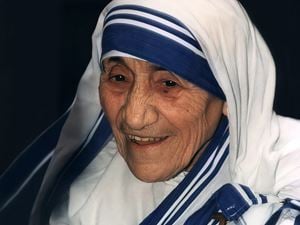
Mother Teresa is a Catholic icon of charity who served the poorest of the poor. Known during her time as "the living saint," she fed the hungry, cared for orphans, consoled the dying, and welcomed anyone seeking refuge. She later won the Nobel Peace Prize for her efforts to overcome poverty.
In the years following her death, however, the saint's reputation has suffered much. A simple online search reveals various arguments against her, some of which assert that she's a fraud.
Why is there such a contrast in the way people remember Mother Teresa? Where could all the hate be coming from? The answer is complex.
The Critics' Case
Many criticisms today could be traced back to Christopher Hitchens, a prominent atheist, who wrote a book challenging her work and beliefs. He accused her of using the poor to promote Catholicism, questioned the sources of her funding and their possible links to questionable figures, criticized the absence of modern medical care in her hospices, and lamented their alleged reluctance to provide painkillers to the dying.
Along with Hitchens, others have also expressed their dismay at her view of suffering. They found her quotations, which seem to favor suffering, very insensitive to those in pain.
Moreover, strong opposition has come from people who feel offended by her anti-abortion stance.
While much of this may sound far too damaging for those who believed in Mother Teresa's work, they should nevertheless not be ignored. Even the Catholic Church allowed Christopher Hitchens to voice his accusations during her beatification process.
To understand what is really going on, it is important to look more closely at the circumstances.
Looking Deeper at the Circumstances
A fact some miss is that Mother Teresa and her sisters did not run hospitals. What they had were hospices that admitted the dying after being refused by hospitals.
Long before the widespread development of modern hospice programs, the sisters were already providing elements of palliative care. They offered shelter, food, hygiene, and companionship to people in their final days.
And they did not refuse to relieve people's pain. They gave them weak painkillers since stronger drugs were scarce and had government restrictions.
Perhaps the misunderstanding stemmed from some of Mother Teresa's quotes about the value of suffering. The intention was to offer one's suffering in union with Christ's redeeming love, not to glorify pain.
That does not mean everything was done perfectly, but the sisters' circumstances and intentions should be considered alongside the shortcomings critics have identified.
Mother Teresa's perspective was that of a Catholic sister. Her views on suffering, though contrary to the opinion of many, were based on her religious belief in Christ's sacrificial love. From that point of view, God gives value even to our suffering and invites followers to share in the sacrificial love of Jesus Christ.
Why So Much Hostility?
The image of selflessness and love that Mother Teresa left behind may have reached a kind of celebrity status, where any defect is magnified and deemed unacceptable.
In today's fast-moving media environment, individuals who are widely admired can quickly become the subject of public criticism. Social media discourse often plays a significant role in shaping public perceptions and influencing opinion.
Without realizing it, some people may be reacting to issues that challenge their deepest-held beliefs. Others may associate Mother Teresa with the scandals of abuse involving Catholic priests. Still, some may not agree with her pro-life stance.
There may also be those who find it difficult to accept a way of life that challenges modern assumptions about comfort, security, and success.
How could a person live in such a dire situation and still help other people? Isn't this too good to be true? Does it mean that we should also live in poverty and discomfort to pursue a meaningful life?
Supporters argue that assessments of Mother Teresa's work are often made from a distance, without direct exposure to the conditions in which she and the Missionaries of Charity served. Their ministry frequently involved caring for people suffering from severe illness, abandonment, and extreme poverty.
The Human and the Saint
Much of the hatred toward Mother Teresa seems to stem from unmet expectations and misunderstandings about her life and work.
After forming an image of herself as a saint, she was cast like a celebrity into the spotlight, where there is no room for human flaws.
Where misunderstandings occurred, she easily fell from her lofty pedestal and was deemed a fraud.
Perhaps one way to see the truth is to view Mother Teresa both as a saint with good deeds and an imperfect human being with her own struggles.
For years, Mother Teresa struggled with what seemed to be a spiritual night of the soul. Although deprived of the sweet consolation of sensing the intimacy of Christ, she carried on the mission of serving the destitute. Thirsting for Jesus Christ, she continued to serve Him among those who hungered and thirsted, and among those who were sick and dying.
A Legacy of Compassion
Critics have accused Mother Teresa of many faults, but few dispute that she lived a simple lifestyle among the poor rather than in personal luxury.
Deep in her heart, she may also have wanted to share the joy of her faith, but she fed the hungry and cared for everyone who needed her, no matter their religious beliefs.
Mother Teresa's supporters argue that the lasting significance of her life lies not in personal perfection but in the example of compassion she sought to embody.
This is, after all, what Christ Himself would have wanted. That we feed the hungry, give drink to the thirsty, clothe those who are naked, and give shelter to those who have been abandoned and have nowhere else to go.
"For he had made himself the hungry one, the naked one, the homeless one, so that you and I have an opportunity to love him, because where is God? How can we love God? It is not enough to say to my God, I love you, but my God, I love you here." - Mother Teresa