
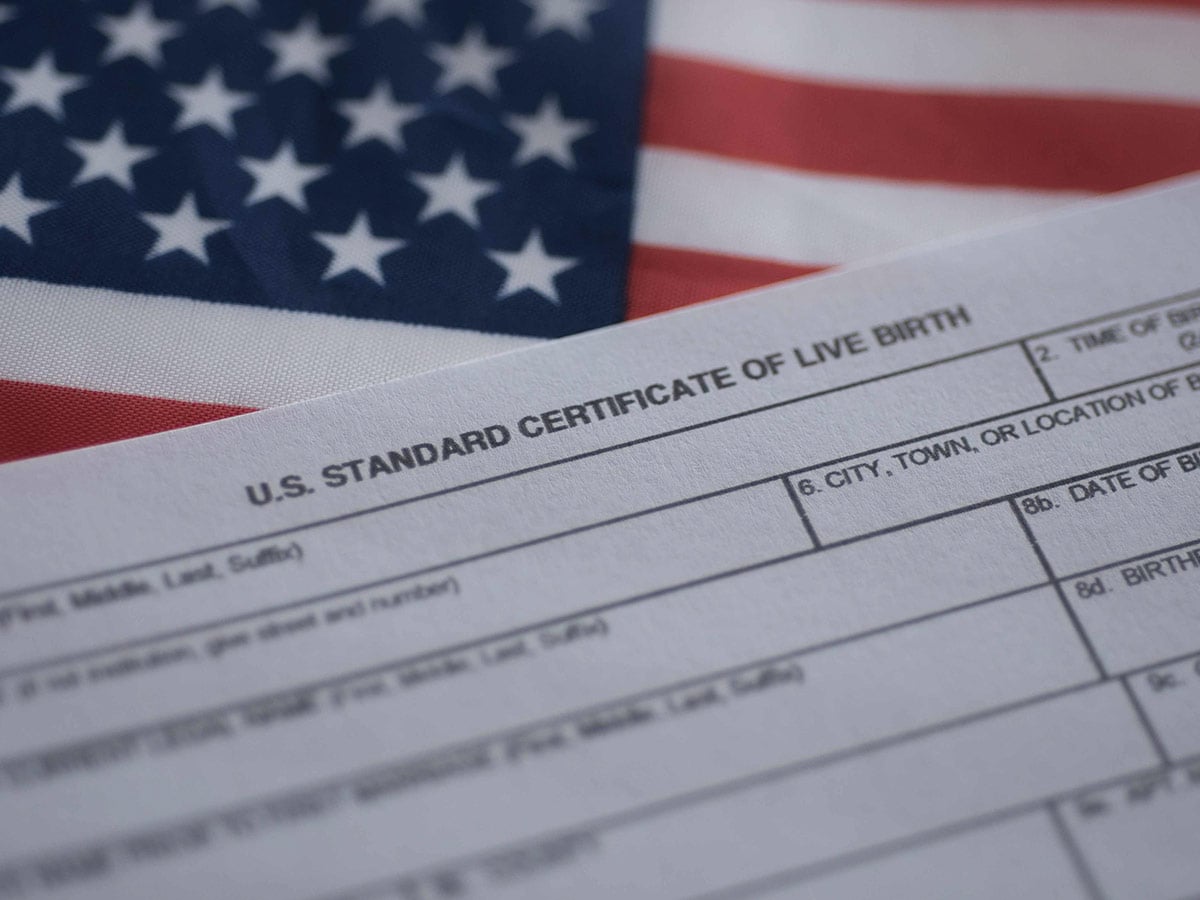
The U.S. Supreme Court has struck down President Donald Trump’s executive order seeking to limit birthright citizenship, ruling that children born in the United States to illegal immigrants remain American citizens under the Constitution.
In a decision released Tuesday in Trump v. Barbara, the high court ruled that the executive order, signed by Trump on his first day back in office last year, violates the Fourteenth Amendment to the United States Constitution.
Writing for the majority, John Roberts pointed to the amendment’s Citizenship Clause, which states that “all persons born or naturalized in the United States and subject to the jurisdiction thereof, are citizens of the United States.”
“If Congress intended to limit American citizenship to the children of those domiciled in the United States, nothing in the succinct language of the Citizenship Clause conveyed that design,” Roberts wrote.
He added, “Citizenship, then and now, was the right to have rights — to freely participate in our political community. The Framers of the Fourteenth Amendment extended that promise to ‘every free-born person in this land.’ … We keep that promise today.”
The majority opinion was joined by Justices Sonia Sotomayor, Amy Coney Barrett, Elena Kagan and Ketanji Brown Jackson.
In dissent, Clarence Thomas argued that both the Civil Rights Act of 1866 and the Fourteenth Amendment were never intended to grant citizenship to children of people who were unlawfully or only temporarily in the United States.
“The Court today takes the extraordinary step of holding facially unconstitutional the President’s Order excluding from citizenship the children of foreign temporary visitors and illegal aliens,” Thomas wrote. He argued that the amendment had been “repurposed for political projects that the Reconstruction Congress did not support.”
Trump’s executive order sought to end automatic citizenship for children born in the United States to parents who were in the country illegally or only temporarily. The administration argued that such children were not fully “subject to the jurisdiction” of the United States, a phrase found in the Fourteenth Amendment.
The order quickly faced legal challenges from the American Civil Liberties Union and other advocacy groups. Lower courts issued nationwide injunctions blocking the policy before the case reached the Supreme Court.
During oral arguments in April, much of the discussion centered on the Supreme Court’s 1898 decision in United States v. Wong Kim Ark, which held that a man born in California to Chinese parents was a U.S. citizen by birth. Attorneys challenging Trump’s order argued that the century-old precedent directly controlled the outcome, while the administration maintained it was not seeking to overturn that ruling.
The decision marks a significant setback for one of Trump’s signature immigration initiatives and leaves longstanding birthright citizenship protections intact. While the ruling settles the constitutionality of the executive order, immigration policy is expected to remain a central issue in national political and legal debates.
 Read Previous Post