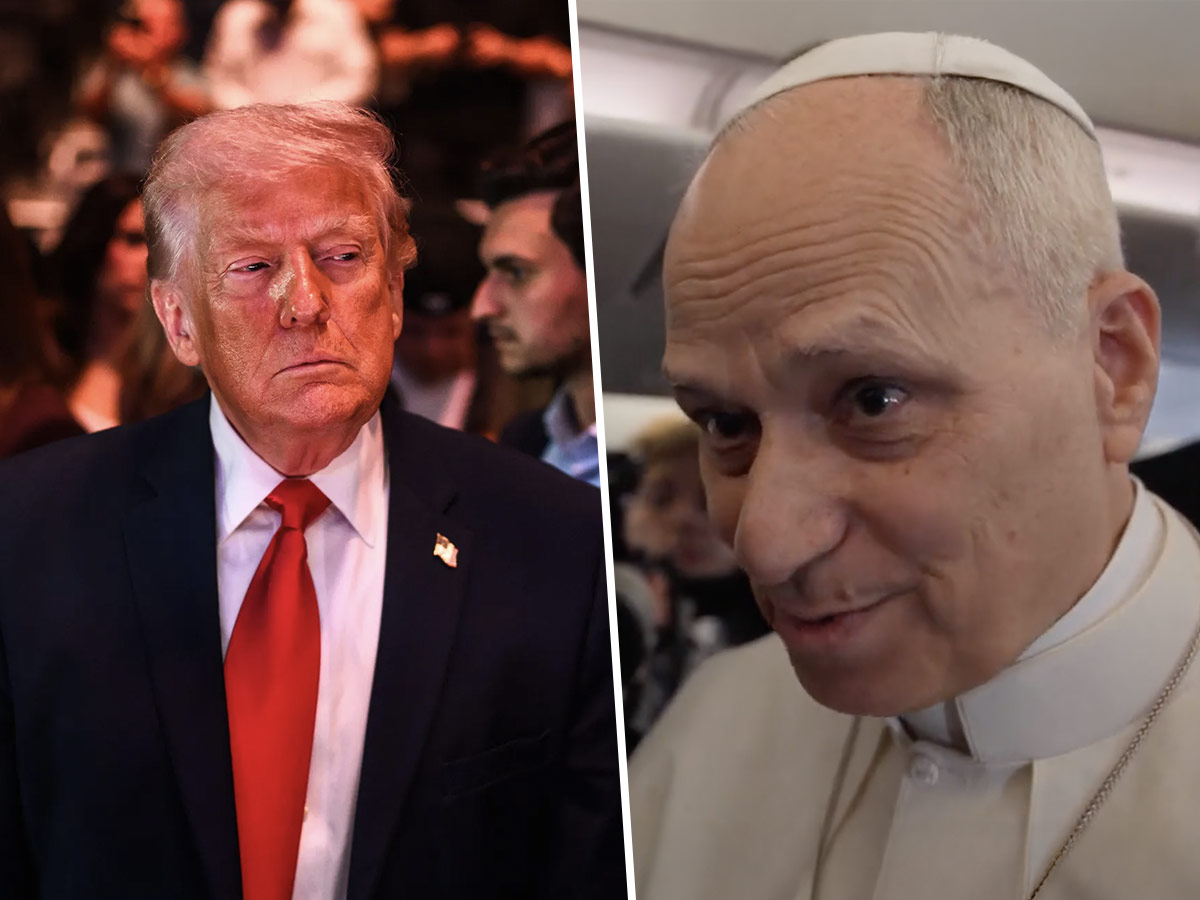
A growing war of words between Donald Trump and Pope Leo XIV is drawing attention far beyond politics, raising deeper questions about faith, leadership, and what it means to follow Christ in times of conflict.
On Sunday, Trump sharply criticized the Pope, calling him “terrible” on foreign policy and “weak on crime” in response to Leo’s ongoing condemnation of war in the Middle East. The Pope has repeatedly spoken out against the U.S.-Israeli conflict with Iran, urging peace and warning that violence cannot produce true freedom.
In a Truth Social post, Trump accused Leo of failing to address broader concerns, including global threats and domestic issues. “I don’t want a Pope who thinks it’s OK for Iran to have a nuclear weapon,” Trump wrote, adding that he is “not a big fan of Pope Leo” and describing him as “a very liberal person.”
The president also suggested that Leo’s rise to the papacy was politically influenced, claiming, “If I wasn’t in the White House, Leo wouldn’t be in the Vatican.”
But the Pope’s message has remained consistent—and deeply rooted in Scripture. In recent weeks, Leo has emphasized that Christians are called to reject violence, pointing to Jesus as the ultimate example.
“God does not bless any conflict,” Leo wrote in a recent post. “Anyone who is a disciple of Christ… is never on the side of those who… drop bombs.”
Quoting from the Bible, Leo added a sobering warning: “Even though you make many prayers, I will not listen: your hands are full of blood.” He has also described ongoing violence as “atrocious” and reminded believers that Jesus, the “King of Peace,” refused to respond to violence with force.
“Rather than saving himself, he allowed himself to be nailed to the cross,” Leo said, underscoring Christ’s model of sacrificial love over retaliation.
The remarks have not gone unnoticed among U.S. faith leaders. Paul Coakley, president of the U.S. Conference of Catholic Bishops, pushed back on Trump’s comments, urging a more respectful tone.
“I am disheartened that the President chose to write such disparaging words about the Holy Father,” Coakley said in a statement. “Pope Leo is not his rival; nor is the Pope a politician. He is the Vicar of Christ who speaks from the truth of the Gospel and for the care of souls.”
The tension highlights a broader divide—not just political, but spiritual—over how Scripture should be applied in times of war. Some U.S. officials, including Defense Secretary Pete Hegseth, have invoked biblical language to support military action, praying for strength and victory over enemies.
Leo, however, has taken a markedly different approach, pointing to Jesus’ rebuke of violence when He stopped a disciple from using a sword at His arrest. For the Pope, that moment is not just historical—it’s instructive.
As the debate continues, many believers are left wrestling with a central question: how should Christians respond when faith and politics collide?
For Pope Leo, the answer is clear—peace, patience, and a refusal to justify violence in the name of God. For Trump and others, the priority remains security, strength, and decisive action.
In the midst of these competing visions, the Gospel’s call remains unchanged—challenging Christians everywhere to examine not just what they believe, but how they live it out in a divided world.
 Read Previous Post