Tensions surrounding the legacy of civil rights leader Jesse Jackson surfaced following his memorial service in Chicago after his son publicly criticized several political leaders for using the occasion to criticize President Donald Trump.
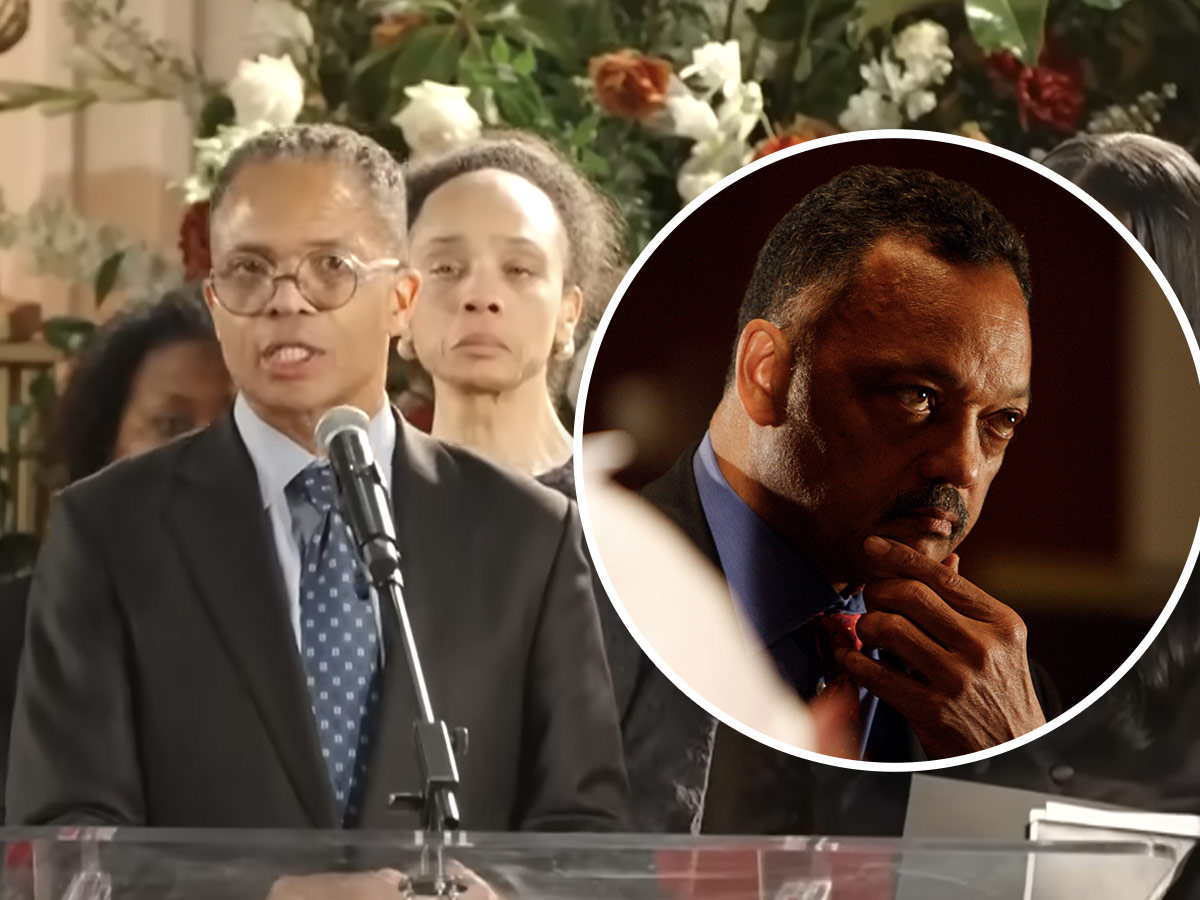
Jackson’s son, Jesse Jackson Jr., delivered pointed remarks Saturday during a private memorial gathering at the Rainbow PUSH Coalition headquarters, saying that some speakers at the public memorial misunderstood his father’s legacy.
“Yesterday, I listened for several hours to three United States presidents who do not know Jesse Jackson,” Jackson Jr. said, referring to former presidents Joe Biden, Barack Obama, and Bill Clinton.
The memorial service, held Friday at Chicago’s House of Hope arena, brought together thousands of mourners and prominent political figures to honor Jackson, who died last month at age 84. The longtime civil rights activist rose to national prominence as a close associate of Martin Luther King Jr. and later founded the Rainbow PUSH Coalition while running two historic presidential campaigns in the 1980s.
During the public service, several speakers reflected on the current political climate in the United States. Obama warned about what he described as growing threats to democratic institutions.
“Each day, we’re told by those in high office to fear each other and to turn on each other,” Obama said during his eulogy. “Everywhere we see greed and bigotry being celebrated, and bullying and mockery masquerading as strength.”
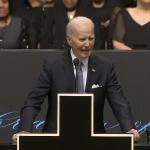
Biden also criticized the Trump administration, claiming it does not share “any of the values that we have.” Former Vice President Kamala Harris, who lost the 2024 presidential election to Trump, said she had anticipated many of the challenges the nation now faces.
“I’m not into saying ‘I told you so,’ but we did see it coming,” Harris said.
Jackson Jr., however, argued that the political tone of some remarks did not reflect the deeper message his father carried throughout his life and ministry.
“He maintained a tense relationship with the political order,” Jackson Jr. said, explaining that his father’s mission was not rooted in partisan politics but in speaking for “the least of these — those who are disinherited, the damned, the dispossessed, the disrespected.”
He emphasized that his father’s prophetic voice challenged both political parties and sought justice for marginalized communities rather than aligning with one political ideology.
Clinton, in contrast, largely avoided political commentary in his eulogy, choosing instead to share personal reflections about his longtime friendship with Jackson.
President Trump did not attend the memorial service.
Despite the political tensions surrounding the event, many attendees said the day ultimately served as a tribute to Jackson’s decades of advocacy, faith, and commitment to uplifting those on the margins of society — a legacy that continues to shape conversations about justice, leadership, and compassion.
 Read Previous Post