
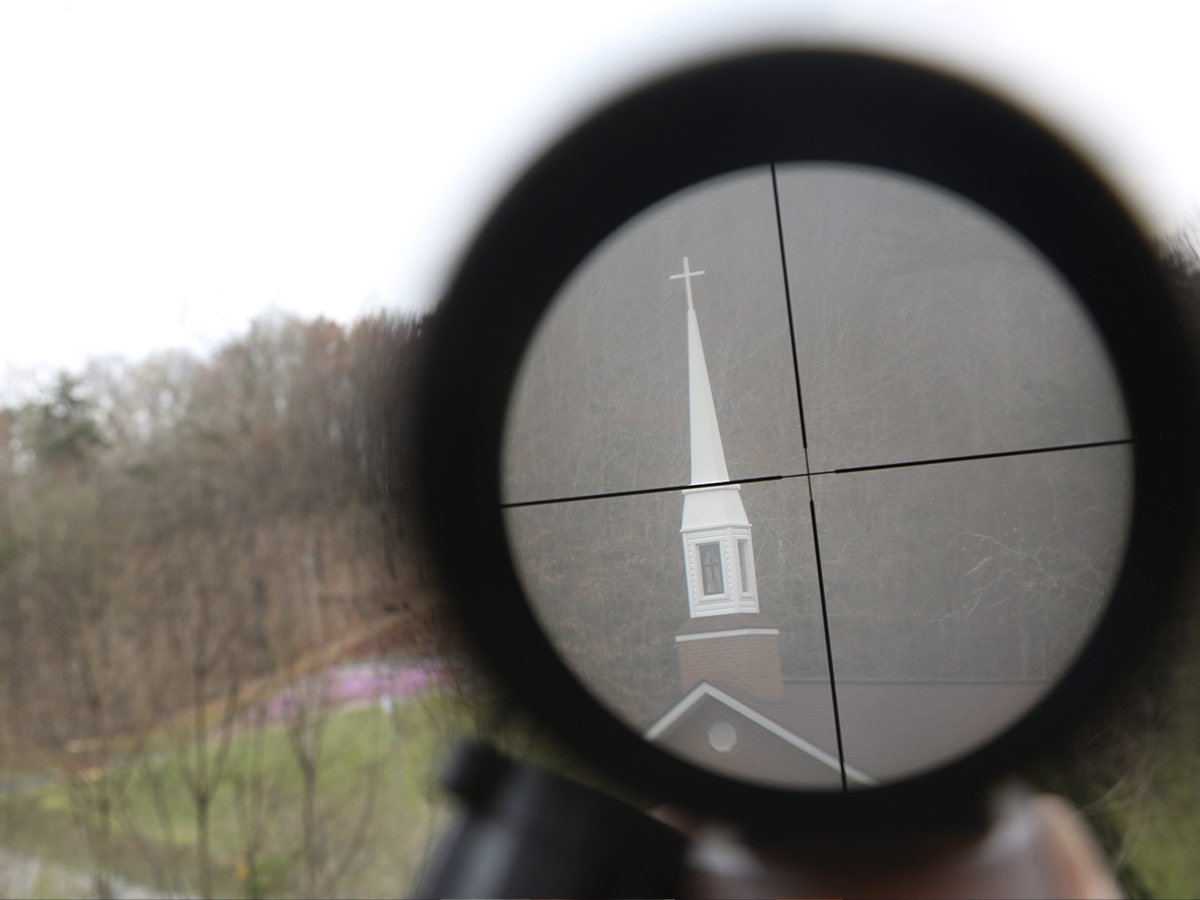
Time Magazine’s recent firsthand account from a survivor of a shooting at a Latter-day Saints church underscores a sobering reality: sanctuaries long regarded as safe havens for worship and community are increasingly vulnerable to violence.
When faith is under fire, churches, synagogues, and mosques respond to this threat and prepare for violence in a myriad of ways.
Across the country, places of worship have quickly adopted security measures, including comprehensive security training programs, regular drills, simulations, and equipment testing, as well as collaboration with law enforcement. Others have begun to embrace technology and additional tools, including video surveillance systems, alarm systems, and mass notification systems.
Parish Soft, a company that provides transformative technology and services that enable mission-focused organizations to grow, protect, and engage their communities, offers Digital Data Protection, Entry Management, and Intrusion Detection, in addition to many of the aforementioned services.
For faith leaders who desire to balance safety with the theological call to hospitality and trust, the situation is complicated.
According to reports, many Latter-day Saints meetinghouses now incorporate discreet surveillance systems, controlled access points, and emergency response protocols, often in partnership with local law enforcement. These steps reflect a growing recognition that spiritual sanctuaries must also be prepared for real-world threats—without losing sight of their mission to welcome and minister to all.
When the congregation at First United Methodist Church in New Braunfels, Texas, became engrossed in watching a security demonstration, they didn’t notice when a “man with a backpack slipped unnoticed into the church auditorium.” When he “quickly assembled a firearm with practiced precision,” however, “people cowered in the pews.”
For many congregants, the two-fold demonstration was simply too realistic for some to accept.
For Jeremy Yamin, director of security and operations at Combined Jewish Philanthropies of Greater Boston, growing threats cannot be ignored.
“There’s an existential threat to Judaism and to religion, which is that if people are afraid to come together, then their religion becomes much, much weaker,” Yamin stated. Even though religious institutions often do not have the same security measures as schools or government buildings, continuing to provide places to worship and gather is imperative – even as security measures increase.
Ethicists note the dualistic nature of the problem, particularly when security threats “challenge the country’s ability to assure religious communities’ constitutional rights.” When and as worshiping communities continue to assemble, “it is reasonable to expect that their practices are necessarily affected by security concerns and the associated development of new strategies designed to maximize their safety.”
For those who wonder whether armed congregants, surveillance, or active-shooter drills align with religious values, religion writer Jack Jenkin notes that increased security measures aren’t the only way to keep communities safe: “Many houses of worship ban guns on their property. And many religious groups have urged lawmakers to pass gun control legislation.” As a result, more and more religious communities are turning to private security firms, such as Parish Soft, for assistance.
Historically, violence in sacred spaces is not anything new.
According to Common Place, “One of the most chilling images in early American history is the deliberate firing of For Mystic during the Pequot War of 1637. Five hundred Indian men, women, and children died that day, burned alive along with their homes and possessions by a vengeful Puritan militia intent on doing God’s will.”
All historical anecdotes aside, in the last quarter century, 2017 was the deadliest year for deaths at religious congregations and religious community centers. That year, “47 people were killed at places of worship, 42 of them with firearms,” including 26 people in a “single catastrophic shooting at First Baptist Church of Sutherland Springs, Texas,” according to The Conversation.
Even though this type of violence is rare, it’s often deadly. As a result, many churches, synagogues, and mosques prepare for violence by developing disaster preparedness plans.
The Episcopal Diocese of Virginia recommends the following seven measures:
1) Establish relationships with local law enforcement and first responders
2) Identify your Security Culture
3) Assess your security; define areas of risk
4) Create an Emergency Preparedness Plan
5) Communication
6) Practice your plans with staff and volunteers
7) Proclaim the Good News
Likewise, Council on American-Islamic Relations (CAIR) offers helpful resources and follows a basic formula for survival, as outlined by the Federal Bureau of Investigation (FBI): Get out, Hide out, and Take out.
For some communities of worship in Europe, barbed wire, heavily armed military guards, and appointment-only visits are employed to deter violent attacks.
To Michael Masters, national director at the Secure Community Network, a greater loss will occur if American religious leaders follow that directive: “If we get to the point where our religious institutions look like that … we will have fundamentally lost a huge part of what it means to be a functioning democracy that upholds religious freedom.”
A sobering reality remains.
 Read Previous Post