
In September, Charlie Kirk was assassinated while speaking on the campus of Utah Valley University.
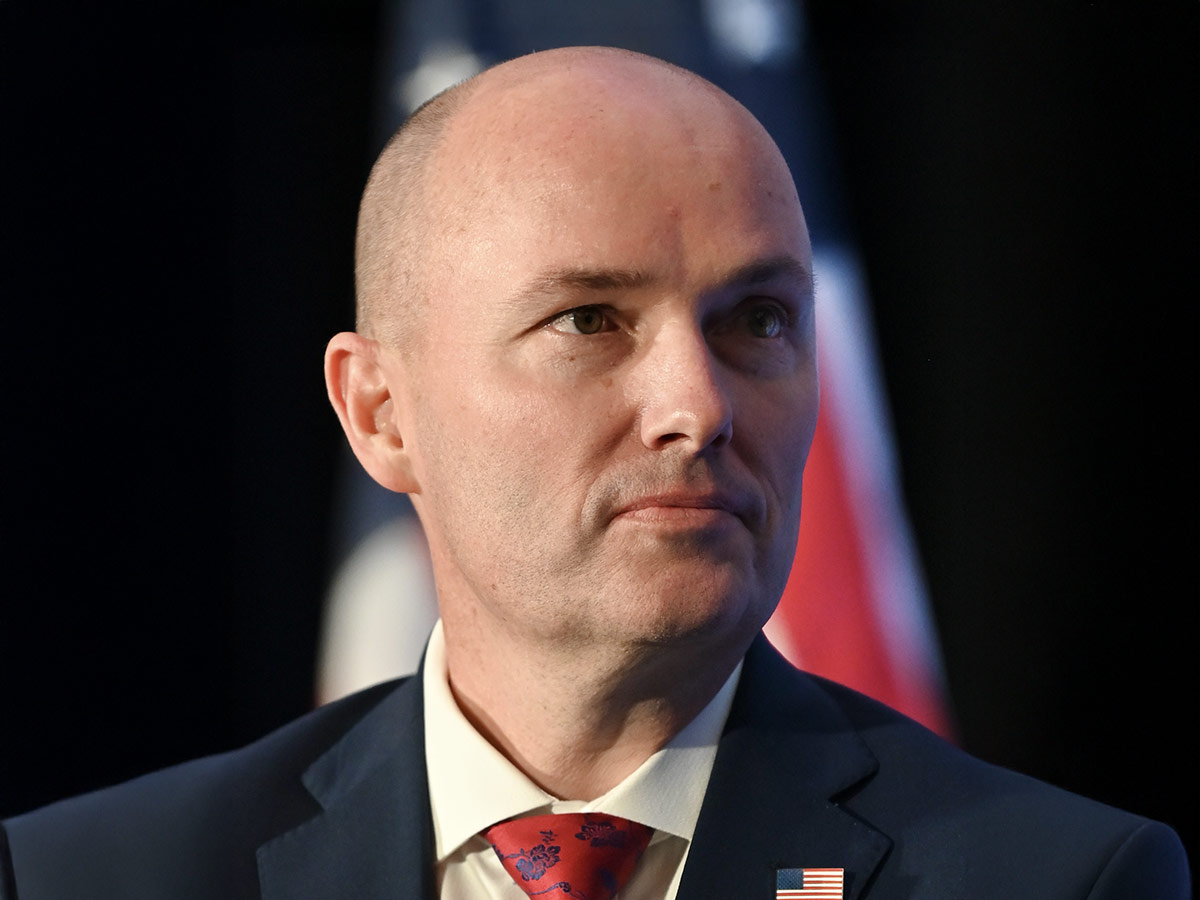
In the aftermath of that shooting, as the temperature of our political discourse soared ever higher, Utah Governor Spencer Cox chose a different path.
He called people to “disagree better,” continuing his efforts to change the direction of political debate.
This emphasis is nothing new for Cox. After the assassination attempt on Donald Trump during the 2024 election, Cox wrote to Trump, urging him to be a unifying force instead of amplifying the anger and bitterness. Unfortunately, Cox’s efforts have not yet borne fruit. Politically-connected violence continues to rage – not just in the United States, but around the globe – and the rhetoric becomes angrier and angrier.
The deeper question, though, is whether religious faith can help to transform political debate.
Gov. Cox, an active member of the Church of Jesus Christ of Latter-day Saints, emphasizes the scriptural values of peace, stewardship, and love for neighbors. Those values are not peculiar to the Church of Jesus Christ; they are grounded in the Old Testament and the teachings of Jesus. However, as a recent article in The Washington Post noted, Latter-day Saints politicians appear to be publicly espousing these values more frequently than others.
“Blessed are the peacemakers, for they will be called children of God” (Matthew 5:9).
The biblical concept of peace is not simply about stopping wars; it is about promoting reconciliation between ourselves and God, and among ourselves. The Jewish word “shalom” (translated as “peace” in the Old Testament) also encompasses wholeness and well-being. When Jesus calls us to be peacemakers, He points us toward being reconciled to God and to one another.
The concept of peace goes hand in hand with the call to love our neighbors. Two things must be remembered in this regard. First, Jesus defined “neighbors” very broadly.
In the Parable of the Good Samaritan (Luke 10:30-37), the “neighbor” was a Samaritan – the despised people who lived north of Judea. For Jesus to call his Jewish audience to emulate a Samaritan extended the definition of “neighbor” far beyond the popular conception (perhaps like calling Republicans and Democrats to love one another today).
Second, in the Sermon on the Mount, Jesus also called us not just to love our neighbors, but also our enemies: “You have heard that it was said, ‘You shall love your neighbor and hate your enemy.’ But I say to you, love your enemies and pray for those who persecute you, so that you may prove yourselves to be children of your Father who is in heaven…” (Matthew 5:43-45)
How does stewardship fit into this equation?
The biblical concept of stewardship involves recognizing that what we have has been entrusted to us by God. To be a good steward means caring for what God has given us and using it for His purposes, not just our own. The call to stewardship also applies to our position in life and the opportunities that come with it. In that sense, Gov. Cox is acting as a good steward by using his position to call us to a better way.
Not surprisingly, there are numerous examples of spiritual leaders who call us to the way of peace. Unfortunately, their voices are too often drowned out by the rising tide of anger and bitterness. Both “sides” are guilty. After Charlie Kirk’s assassination, too many people on the left celebrated and said that “he deserved it.”
Of course, after the 2020 election, an armed mob undertook to occupy Congress, leaving legislators and their staffs fearing for their lives. While many people rightly condemned this act, President Trump repeatedly minimized and excused it.
As Gov. Cox noted, “The leader of my church has been advocating for us to be peacemakers. I think it is the issue of our time, and we desperately need it.”
Bridge-building is the most challenging thing I’ve ever done, and it’s not something that comes naturally. It takes people of strong faith and strong courage.” Meanwhile, most political leaders are too busy pointing fingers at each other and ratcheting up the rhetoric to build bridges. Cox himself has felt the ire of President Trump on numerous occasions – primarily because he has dared to challenge the President’s approach.
Cox recently stated (in an appearance with Pennsylvania governor Josh Shapiro), “I’m not going to try to play down [Trump’s] divisive rhetoric at all.”
It’s encouraging that people may be starting to recognize the positive impact that faith can have on our political discourse. For far too long, politicians have been discouraged from discussing their faith, let alone allowing it to influence their positions.
Perhaps if political leaders focused more on the values of their faith – such as peacemaking and loving one’s neighbors – instead of trying to enact particular “religious” legislation, voters would follow that lead.
The values of peace-making, love for neighbor, and stewardship are not specific to any one faith. Instead of seeking to inhibit expressions of faith by our leaders, we should encourage them. If we stop trying to separate politicians from the values of their faith, they may help to change the tenor and temperature of our discourse.
The quote that Gov. Cox cited (from the Latter-Day Saints Church President Russell M. Nelson in 2024) ought to challenge us all: “Contention is a choice. Peacemaking is a choice. You have the option to choose contention or reconciliation with your agency. I urge you to choose to be a peacemaker, now and always. Now is the time to cease insisting that it is your way or no way.”
After all, the Lord of the church calls all Christians to be peacemakers. Jesus calls us all to love both neighbors and enemies. He calls us to forgive when we’ve been wronged.
And He never excluded political discourse from those teachings!
 Read Previous Post