
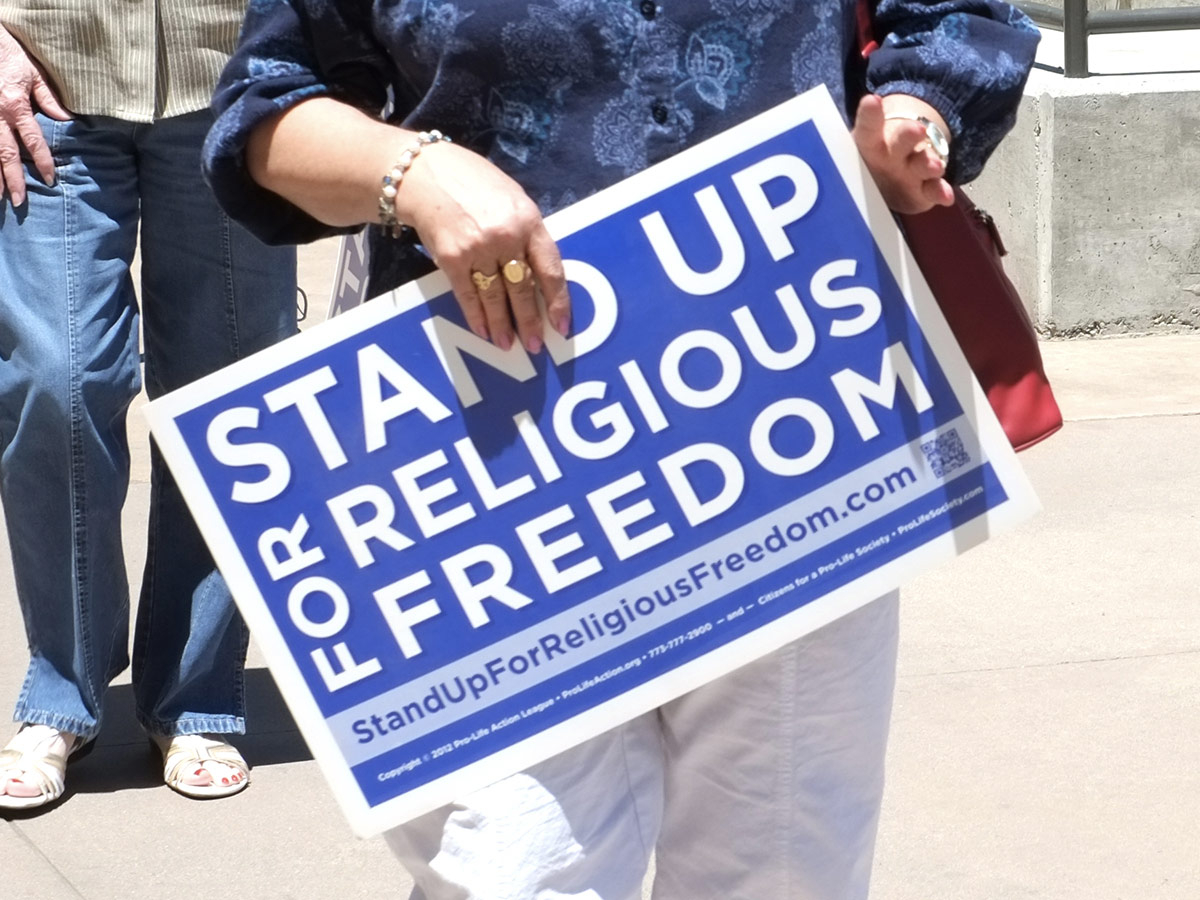
The Napa Legal Institute released its third annual 2025 Faith & Freedom Index, which ranks the 50 US states and District of Columbia on how well they protect religious freedom for nonprofits on a scale from 0-100%. The overall score is determined from a “religious freedom score” and a “regulatory freedom” score. States were ranked on such factors as if faith-based organizations can access the same public programs and funds as nonreligious groups, if the state has strengthened First Amendment protections, and how well employers are permitted to operate their organizations following their religious beliefs. The survey also explored protections during emergency situations, such as the COVID-19 pandemic, when many religious organizations such as churches found their services completely disrupted.
Alabama took the top spot, ranking at 86% in religious freedom and 51% in regulatory freedom, with an overall score of 72%. Alabama earned positive marks for “strong constitutional protections,” including a constitutional amendment that protects the religious free exercise of all individuals and entities. Alabama, however, prohibits faith-based organizations from accessing public funds, functioning much the same way as the Blaine Amendment, the federal rule that prevents faith organizations from receiving federal funding.
Michigan received the overall lowest score at 31%. The state scored a 22% in religious freedom and 45% in regulatory freedom. While Michigan does offer an automatic exemption from the state income corporate tax for religious organizations, it does have a broad Blaine Amendment. Additionally, it has nondiscrimination laws that offer no exemptions for religious accommodations.
Around 75% of all states scored below 50%, indicating continued need for improvement in religious freedom accommodations. “The many religious freedom attacks over the past few years are chilling reminders that without staunch state level protections for religious freedom, ordinary Americans will suffer, regardless of how supportive the current Administration may be. Too many Americans have been forced to spend precious time and money litigating issues that should never have gone to court in the first place,” said Senior Counsel and Napa Legal Institute Director of Content Frank DeVito. De Vito called the tool “powerful tool for lawmakers to see where they must add protections, strengthen existing state laws, or repeal harmful state laws.” De Vito also noted that some states, such as Georgia and Wyoming, had enacted their own Religious Freedom Restoration Acts since the last index was conducted. De Vito said any move forward is a victory. “Every state that passes a law improving the religious liberty landscape for faith-based nonprofits is a victory for society.”
 Read Previous Post