
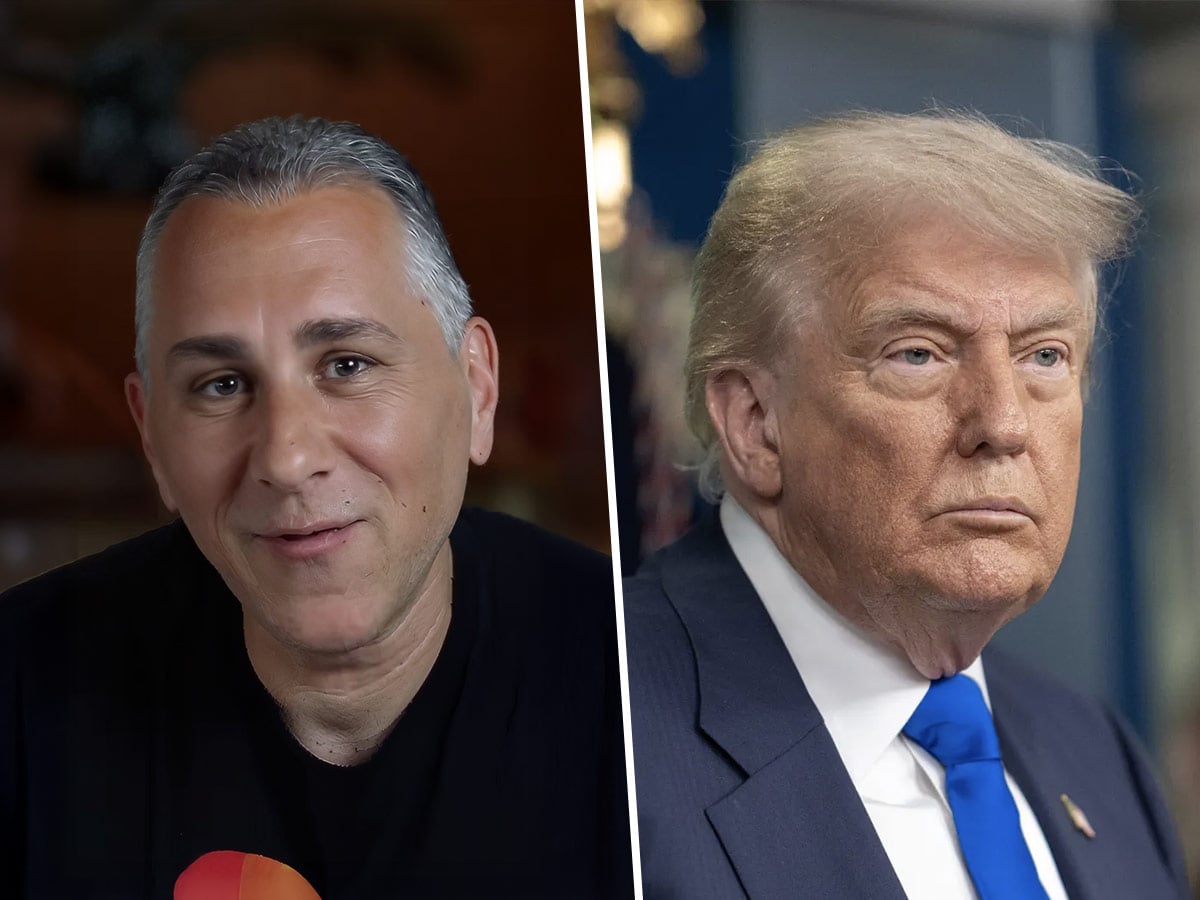
John Pavlovitz’s recent essay, “No, Good People Don’t Still Support Him,” paints a stark moral picture: any Christian who still supports Donald Trump does so out of hatred, bigotry, misogyny and supremacy. It is a sweeping charge that leaves no room for good-faith disagreement among believers.
I understand the passions behind Pavlovitz’s words. Christians should oppose racism, cruelty and injustice wherever they exist. But when moral accusations are stretched to cover every policy disagreement, Christian unity suffers and honest conversation dies.
Take, for example, Pavlovitz’s criticism that Trump’s Justice Department failed to release sealed records concerning Jeffrey Epstein. Maybe Trump should never have promised such a release in the first place. But the DOJ’s decision to keep those files sealed reflects long-standing Department policy and American legal norms, protecting the privacy of those not charged with crimes—not some partisan cover-up. Christians committed to truth should be wary of framing such legal realities as moral failures.
Pavlovitz also condemns changes to welfare eligibility, suggesting such policies betray Christian concern for the poor. But the affected group consisted largely of able-bodied adults without young children. Scripture values the dignity of work— “If anyone is not willing to work, let him not eat” (2 Thess. 3:10) —while also commanding care for the truly vulnerable. Christians may differ over where to draw policy lines, but it is not “unchristian” to expect work from those capable of it.
The same principle applies to Pavlovitz’s objection to reducing government jobs. There is far too much bureaucracy at every level of government. Reforming or eliminating unnecessary positions is not an attack on human dignity; it is stewardship. The biblical call to wise management of resources includes government budgets. Here again, Christians can disagree on policy without condemning each other’s faith.
For my part, I oppose a number of Trump’s policies—tariffs, industrial policy and his failure to support Ukraine. But I have supported him in other areas: protecting religious liberty, resisting irreversible medical procedures on minors with gender dysphoria, granting parents greater authority over their children’s education and eliminating government waste. None of these positions arise from hatred or prejudice. They flow from convictions about human dignity, family and the role of the state—convictions I believe are consistent with a Christian worldview.
Pavlovitz claims that the “only reason” to support Trump is that he “reflects your hateful heart” and “hurts the people you want to hurt.” This is a profound misunderstanding of many Christians’ motives. Support for a political leader is rarely total or uncritical. In a fallen world, Christians often must weigh flawed options and imperfect candidates, choosing where policy alignment outweighs personal shortcomings—and where it does not.
To insist that any support for Trump is incompatible with being a “good person” is to collapse complex moral and political judgments into a single litmus test. Such absolutism runs counter to the spirit of Romans 14, which calls believers to avoid passing judgment on disputable matters and to “pursue what makes for peace and for mutual upbuilding.”
Christians should be the first to call out wrong, even in leaders and policies we might otherwise support. But to condemn fellow believers over political alignment on certain issues is to mistake the kingdom of God for the kingdoms of this world.
Pavlovitz and I share a commitment to justice, compassion and truth. But we differ on how best to secure these goods in public life. That difference does not make either of us less Christian. As our nation barrels toward another polarizing election, Christians must resist the pull of partisan absolutism. We can stand firm in our convictions without branding all who disagree as moral enemies. In an age of division, the church’s witness depends on it.
Greg Schaller serves as the director of the Centennial Institute, the conservative think tank of Colorado Christian University. He has taught politics at CCU, Villanova University and St. Joseph’s University. He holds a B.A. in political science and history from Eastern University and an M.A. in political science from Villanova University.
 Read Previous Post