
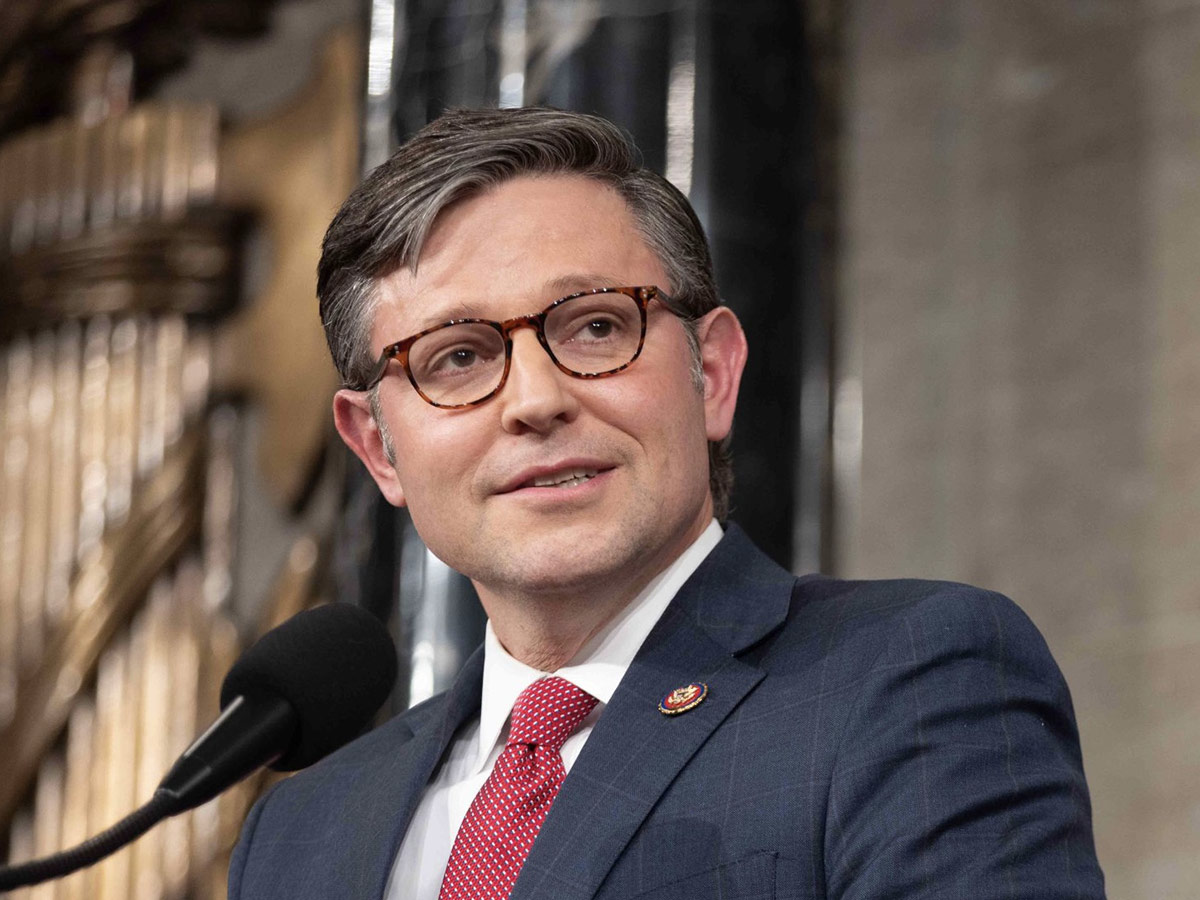
In the quiet hours of the early morning, long before the headlines would blare and debates ignite, House Speaker Mike Johnson paused outside an almost-hidden door in the U.S. Capitol.
“Would you like to see the prayer room?” he asked an Associated Press reporter, responding not to a question about policy but about something far deeper—his leadership style and the faith that shapes it.
It was just after 3 a.m., and the Louisiana Republican was navigating one of the most high-stakes moments of his career: shepherding President Donald Trump’s signature piece of legislation, his so-called “big, beautiful bill,” through a divided and weary Congress. But before returning to the chaos of whip counts and negotiations, Johnson stopped to pray—just as he said America’s founders once did.
“This is like a cathedral at night,” he said, unlocking the prayer room tucked near the speaker’s office on the Capitol’s second floor. “It’s the most beautiful thing in the Capitol.”
Inside the modest room, a stained-glass image of George Washington on one knee gazes solemnly above a small altar. Johnson nodded toward the spot where he’d spent much of his week. “Been here a lot this week, right there on my knees,” he said. “Just praying… That’s what the founders did.”
For Johnson, faith isn’t a political accessory—it’s his compass. “In times of great challenge, they got on their knees, and they sought divine guidance, and that’s what we do,” he explained. “Because I’m convinced that God’s given us a chance to save this great republic.”
Elected speaker nearly two years ago in an unexpected turn of events, Johnson has embraced his role as a “servant leader,” one who leads with conviction, not charisma. “I feel like I have sort of a vision of where we’re supposed to go,” he said. “You just set the course, and you patiently get everybody there.”
That patience would prove essential. The legislation he backed included sweeping reforms—some controversial—such as work requirements for able-bodied adults receiving Medicaid and food assistance. Critics warned millions could lose vital help. The Congressional Budget Office projected that 8.6 million people might lose health coverage and 3 million could lose monthly food assistance through SNAP.
However, Johnson defended the changes as both fiscally responsible and morally sound. “We have finite resources,” he said. “The vulnerable populations are who we’re trying to take care of.”
To him, work requirements weren’t punitive but empowering. “For an able-bodied man to work, it’s good for his own personal dignity. It’s good for his purpose. It’s a win-win-win.”
When asked if he feared political failure or public backlash, Johnson shook his head. “I don’t really have fear,” he said. “I mean, I know that we have to accomplish this mission in order to save the country.”
Still, tensions were high. House Democrats opposed the bill, accusing Republicans of moral hypocrisy. In a fiery floor speech, Minority Leader Hakeem Jeffries quoted Matthew 25 and warned, “It cannot be the case that one goes to church to pray on Sunday and then comes to Washington, D.C., to prey on the American people the rest of the week.”
Despite the resistance, Johnson stayed the course, relying on Scripture, prayer, and what he described as “a lot of patience.”
He kept the details of his meetings with Trump close to the vest. That would be a conversation “for another day.” But the impression he left—sharing the keycode to the prayer room—was one of invitation. In a building defined by power, he pointed instead to humility.
As dawn approached, Johnson closed the prayer room door behind him and returned to the business of governing. The Capitol was waking up. But for Johnson, the day had already begun—in prayer.
In an era marked by division and uncertainty, Speaker Mike Johnson reminds us that leadership grounded in faith is not about wielding control but about seeking God’s guidance as he said simply, “Just praying. That’s what the founders did.”
 Read Previous Post