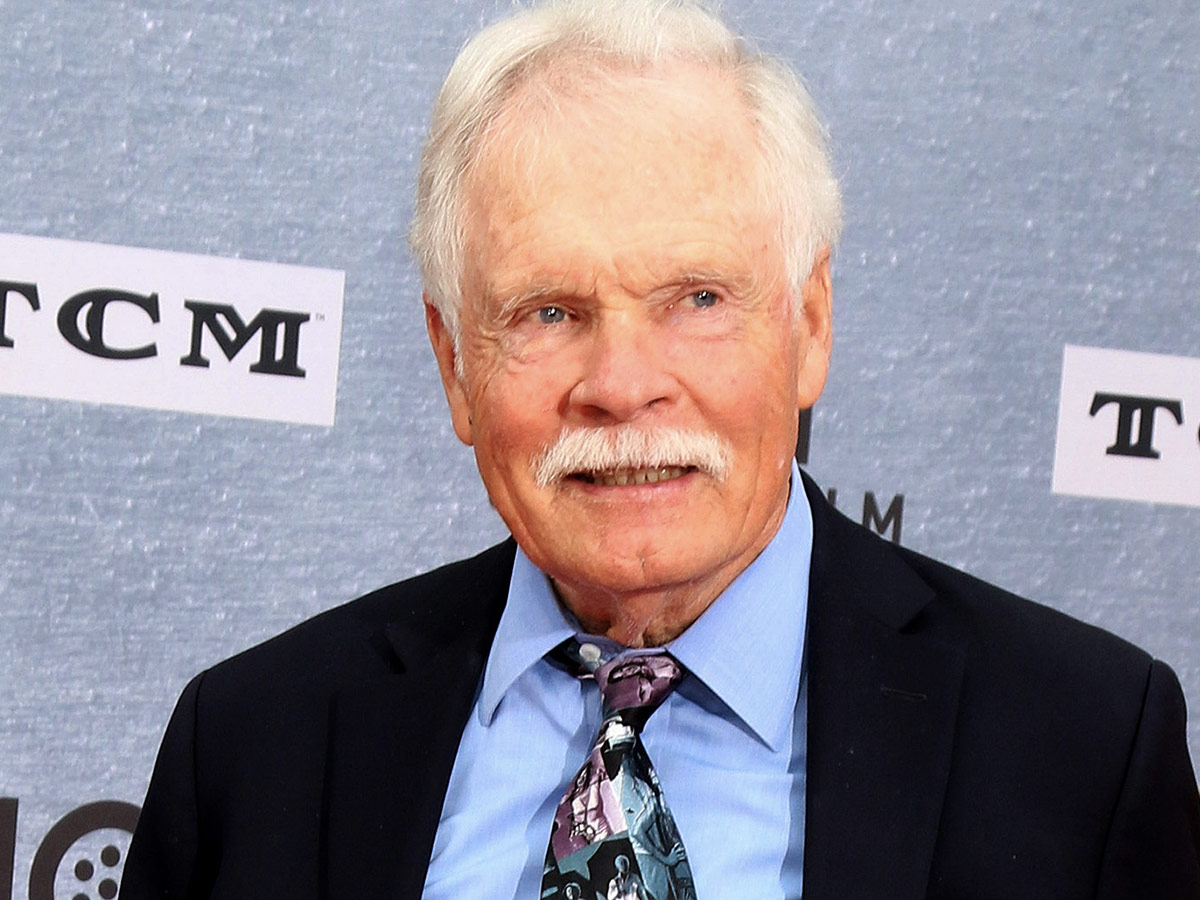
Ted Turner, the bold and often outspoken visionary who changed the way the world consumes news, has died at the age of 87. Known as the founder of CNN, Turner didn’t just build a media empire—he reshaped global communication while quietly becoming one of the most impactful philanthropists of his generation.
According to a statement from Turner Enterprises, he passed away peacefully, surrounded by family. He is survived by his five children, 14 grandchildren, and two great-grandchildren.
Turner’s name is forever tied to the launch of CNN in 1980, the world’s first 24-hour news network. At a time when most Americans relied on nightly broadcasts, his idea sounded far-fetched—even risky. But Turner saw something others didn’t. “I worked until 7 o’clock, and when I got home the news was over,” he once said. “So I missed television news completely. And I figured there were lots of people like me.”
That instinct proved revolutionary. CNN went on to bring real-time coverage of major global events into homes around the world, including the Persian Gulf War—marking the first time a war was broadcast live.
“Ted was an intensely involved and committed leader, intrepid, fearless and always willing to back a hunch,” said CNN CEO Mark Thompson. Veteran anchor Wolf Blitzer echoed that sentiment, saying, “We’re all here doing this because of Ted.” Journalist Christiane Amanpour added, “He made us all proud, he made us all hopeful, and he made us all strive for his vision of a better world.”
But beyond the headlines and business success, Turner’s heart for giving became one of his defining legacies.
In 1997, he made a staggering pledge—$1 billion to the United Nations, one of the largest charitable donations in history. That gift led to the creation of the United Nations Foundation, which continues to support global health, poverty reduction, and humanitarian efforts. Turner later fulfilled that pledge in full, despite financial setbacks.
His generosity didn’t stop there. Through initiatives like the Nuclear Threat Initiative, he worked toward reducing the threat of nuclear weapons worldwide. He also launched the Captain Planet Foundation to inspire young people to care for the environment—extending even into pop culture with the “Captain Planet” cartoon.
Turner’s passion for conservation was deeply personal. As one of the largest private landowners in North America, he dedicated vast portions of his land to wildlife preservation, helping reintroduce bison to the American West and protect endangered species. His efforts reflected a belief that stewardship of the earth is a responsibility not to be taken lightly.
His life, however, was not without struggle. Turner endured deep personal loss, including the suicide of his father and the death of his sister. He also spoke openly about how those experiences challenged his faith, once saying that Christianity “couldn’t give me any answers” during a painful season of grief.
Yet those who knew him often pointed to something deeper at work. Actress Jane Fonda, his former wife, once reflected on his life with surprising spiritual insight: “Given his childhood, he should’ve become a dictator… The miracle is that he became what he is… a man who will go to heaven.” She added that despite saying he wasn’t religious, Turner often ended his speeches with the words, “God bless.”
In his later years, Turner faced health challenges, including a diagnosis of Lewy body dementia. Still, his legacy remained firmly intact—not just as a pioneer of modern media, but as a man who used his influence and wealth to serve others.
Ted Turner’s life tells a powerful story: that success is not only measured by what we build, but by what we give away.
 Read Previous Post