
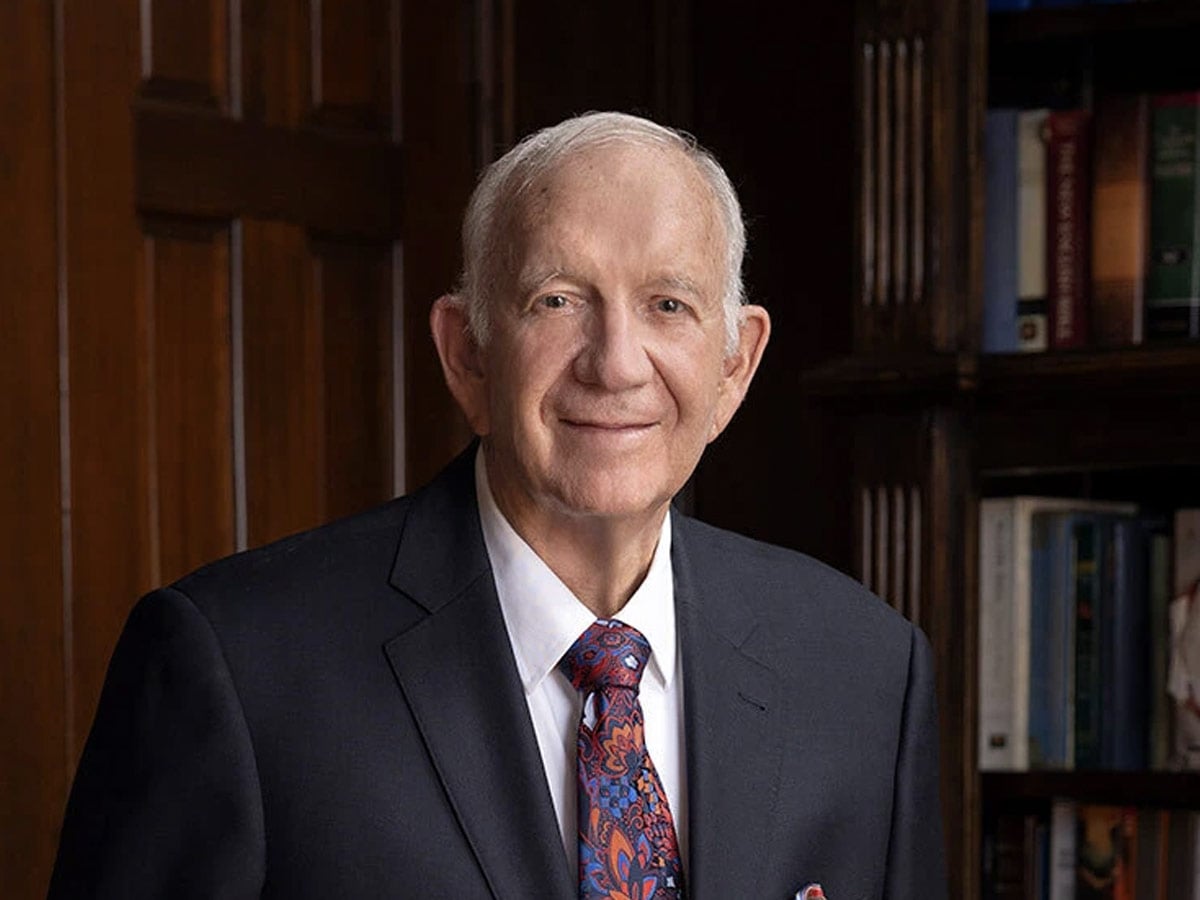
Houston Christian University is mourning the sudden loss of its longtime president, Dr. Robert B. Sloan Jr., who died Saturday morning at 77 after leading the university through two decades of significant growth and spiritual development.
In announcing Sloan’s passing, HCU Board Chairman Ramiro Peña asked the Christian community to pray for Sloan’s wife, children, and grandchildren as they grieve.
“For two decades, Dr. Sloan led HCU through her most monumental and glorious years, impacting countless lives of students, faculty, alumni, staff, trustees, and friends,” Peña said in a statement.
He credited Sloan’s leadership with transforming the university through record enrollment growth, expanded academic programs, campus development, increased national recognition, and what he described as an “incomparable spiritual awakening.”
“The fingerprints of Dr. Sloan’s leadership will continue to be upon the success of HCU for generations to come, and the impact of his presidency will yield outcomes both measurable and eternal,” Peña added.
Sloan, a native of Coleman, Texas, graduated from Baylor University in 1970 before earning a Master of Divinity degree from Princeton Theological Seminary. Throughout his career, he became one of the most influential figures in Christian higher education in Texas.
Before joining Houston Christian University, Sloan served as president of Baylor University from 1995 to 2005. During that time, he also founded the George W. Truett Theological Seminary and later served as Baylor’s chancellor.
Current Baylor President Linda A. Livingstone honored Sloan’s legacy by highlighting his role in launching the university’s ambitious “Baylor 2012” vision.
“His greatest contribution was the adoption of Baylor 2012, a 10-year vision that placed Baylor on the path to become a top-tier university while remaining committed to our historic Christian mission,” Livingstone said. “And that is where Baylor stands today.”
While Sloan’s vision helped elevate Baylor’s national academic profile, his presidency was also marked by significant controversy. Some faculty members and alumni argued that the Baylor 2012 initiative was too expensive and risked moving the university away from its core identity. In 2003, Baylor’s faculty senate issued a vote of “no confidence” in Sloan, and nearly half of the university’s faculty eventually called for his resignation.
Despite the opposition, Baylor’s Board of Regents continued to support Sloan’s leadership. When he transitioned from president to chancellor in 2005, Board Chairman Will Davis acknowledged the challenges but praised Sloan’s accomplishments.
“Baylor has been through a challenging period over the past 18 months,” Davis said at the time. Still, he maintained that Sloan had guided the university through “a period of tremendous growth and progress.”
Dr. Richard Land, executive editor of The Christian Post, also paid tribute to Sloan’s influence on Christian higher education.
“Robert was a tremendous academic leader and spiritual leader,” Land said. “He provided decades of outstanding administration to Baptist universities in Texas.”
Sloan’s death marks the end of a decades-long career dedicated to Christian scholarship, leadership, and ministry. Though his tenure included difficult moments and spirited debate, those who knew him say his commitment to strengthening Christian higher education and preparing students to serve Christ will leave a lasting legacy for generations to come.
 Read Previous Post