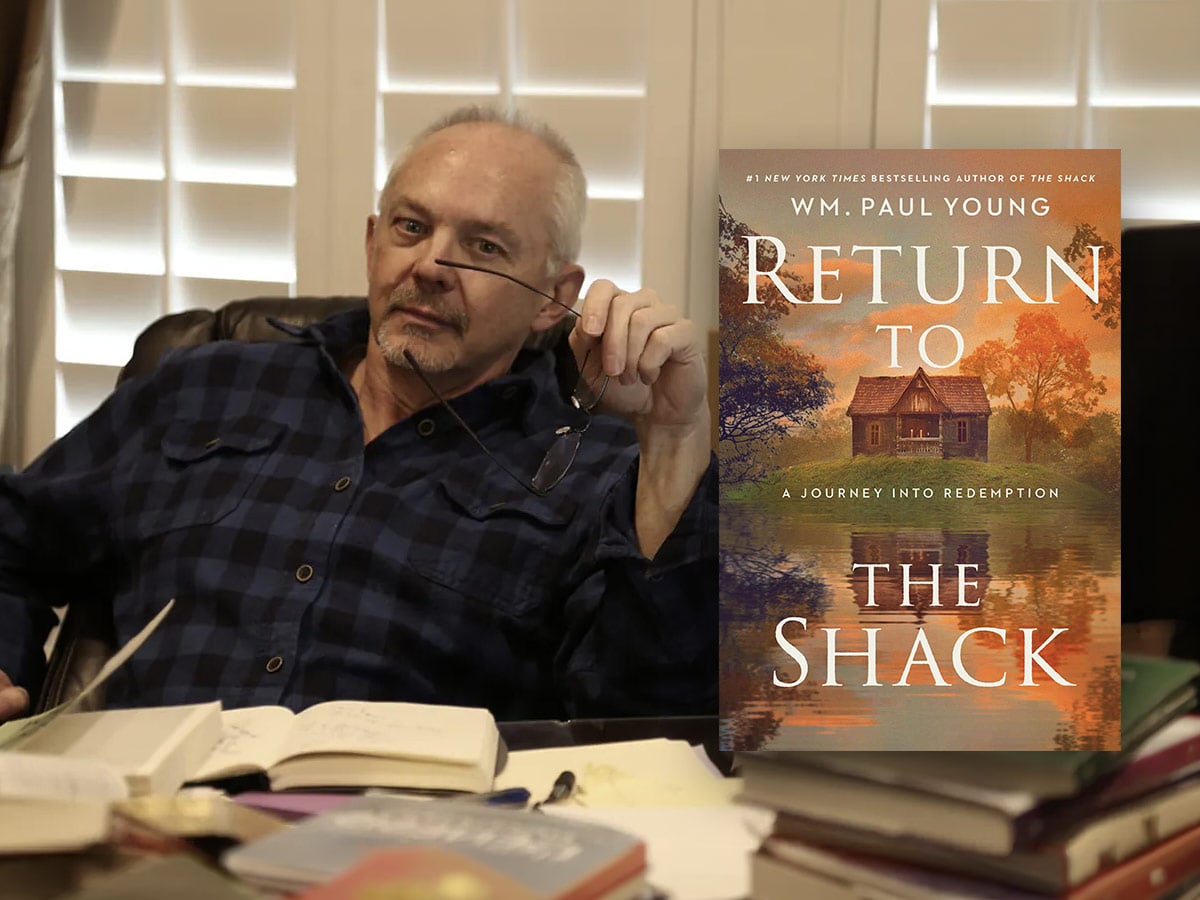
Nearly two decades after The Shack became one of the most talked-about Christian novels of its generation, author William P. Young says he expects his upcoming sequel to spark another round of debate—and he’s at peace with that.
Young’s new novel, Return to the Shack: A Journey into Redemption, arrives in October and revisits the fictional world that captivated millions of readers while also drawing sharp criticism from some Christians. The original novel, later adapted into a 2017 film, followed a grieving father who encounters God after the tragic murder of his young daughter. Its unconventional depiction of the Trinity—with God the Father portrayed as a Black woman, the Holy Spirit as an Asian woman, and Jesus as a Middle Eastern carpenter—led some believers to accuse the book of misrepresenting biblical doctrine.
Young told Fox News Digital he isn’t worried about facing similar criticism this time around.
“I don’t brace for any of it,” he said. “If you’re going to have something out in public purview, you’ll always find people who don’t like it. And that’s fine with me.”
While the sequel revisits familiar themes of suffering and healing, it also takes readers into more controversial territory by exploring the humanity of the man who murdered Mack’s daughter. The character, known simply as J, is now on death row, and Young gives him a backstory shaped by abuse and trauma.
The author said his own life influenced that decision. Young has spoken openly for years about his difficult relationship with his father, describing him as angry, distant, and emotionally unavailable during his childhood. Over time, however, he said God helped him see his father as more than his failures.
“He was allowed only to be a failed father,” Young said. “I finally released him from my expectations… and suddenly his story mattered.”
Young also drew inspiration from friendships he formed with death row inmates at Tennessee’s Riverbend Maximum Security Institution. Those relationships challenged him to see the prisoners not merely by the crimes they committed but as people with complex stories marked by brokenness.
“We’re talking about human beings who’ve come from very diverse backgrounds and situations,” he said, while emphasizing that difficult childhoods should never excuse sinful choices.
Young believes some of the criticism surrounding The Shack stems from fear rather than love, pointing to the biblical teaching that “perfect love casts out fear” (1 John 4:18). At the same time, he says he understands why some readers react strongly because he has experienced his own moral failures, including publicly acknowledging past marital infidelity.
“My identity is outside of that,” he said. “I’m not a book, and I’m not a movie.”
Despite the controversy, Young hopes the sequel will encourage readers to wrestle honestly with God’s grace, forgiveness, and the power of redemption. He also reaffirmed his belief that God still works in miraculous ways, saying he believes God continues to speak to people, even if not always audibly.
“If you want to see what the character and nature of God is like,” Young said, “look at Jesus, read the Gospel… and you’ll see how love lives in this world.”
Like its predecessor, Return to the Shack seems poised to generate passionate discussion among Christians. Whether readers embrace its themes or challenge its theology, Young says he hopes that the conversation ultimately points people back to Christ and a deeper understanding of God’s love.
 Read Previous Post