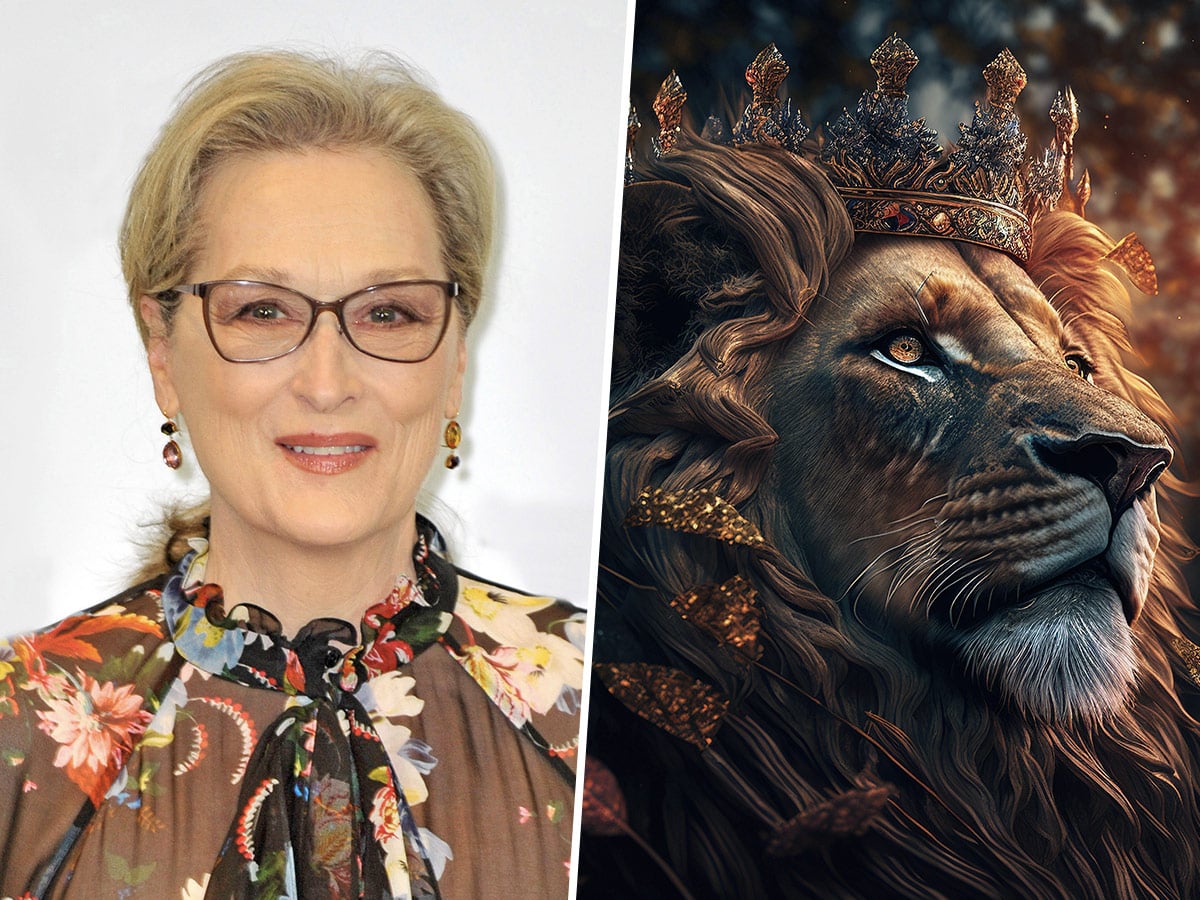
Netflix’s upcoming adaptation of C.S. Lewis’ “The Magician’s Nephew” is already stirring controversy after director Greta Gerwig confirmed that actress Meryl Streep will voice Aslan, the lion Lewis closely identified with Jesus Christ.
Gerwig explained her decision in an interview with Empire, saying she wanted an actor who could bring wisdom, depth and joy to the role.
“I wanted someone who was profound but not pretentious, who had gravitas but not morose self-seriousness,” Gerwig said. She also wanted someone “older than 70” who possessed both “a wisdom of experience” and a sense of “fresh wonder, like a child.”
For some Christians and Lewis fans, however, casting a woman to voice Aslan represents a significant departure from the character Lewis created.
David Fairchild, pastor of Cross and Crown in Waxahachie, Texas, called the decision “creative vandalism pretending to be artistic sophistication.”
“Gerwig was handed one of the most beloved works of Christian fiction in 20th century, and decided that even the central figure needed her brilliant editorial correction,” Fairchild wrote on social media.
Lutheran commentator Liam McCollum also criticized the casting, arguing that Lewis “would’ve hated Gerwig’s deconstruction and subversion of Aslan.” He pointed to “The Last Battle,” in which Lewis wrote about a counterfeit Aslan being used to deceive the inhabitants of Narnia.
Political commentator Isabel Brown similarly argued that changing Aslan carries particular significance because Lewis did not simply view the character as a loose symbol for Christ.
“Aslan is more than an allegory for Christ,” Brown wrote, arguing that the lion represents how the inhabitants of Narnia encounter Christ within their world.
Lewis himself made that connection clear during his lifetime. In a famous letter to a mother concerned that her son loved Aslan more than Jesus, Lewis reassured her that the qualities the boy loved in Aslan were the same qualities found in Christ.
“For the things he loves Aslan for doing or saying are simply the things Jesus really did and said,” Lewis wrote.
“The Magician’s Nephew,” although published sixth in “The Chronicles of Narnia” series, takes place first chronologically. The book depicts the creation of Narnia, with Aslan literally singing the world into existence.
Gerwig appears particularly interested in that musical element. She has described her vision for the film as a “rock opera” and said music will play a major role.
“Narnia is literally a world made out of music,” she told Empire. “It is a world sung to life by Aslan.”
Gerwig’s interpretation comes with considerable expectations. Lewis’ seven-book series has sold millions of copies worldwide and remains especially beloved among Christian readers because of its unmistakable connections to Christian theology.
That makes Aslan more than just another fantasy character for many fans. In “The Lion, the Witch and the Wardrobe,” he willingly gives his life to save the traitorous Edmund before rising from the dead — one of the series’ clearest parallels to Christ’s death and resurrection.
With Streep now set to give Aslan his voice, Gerwig’s “Narnia” has generated plenty of conversation well before audiences have seen the finished film. Whether her interpretation will preserve the Christian themes at the heart of Lewis’ world is likely to remain one of the biggest questions surrounding the adaptation.
 Read Previous Post