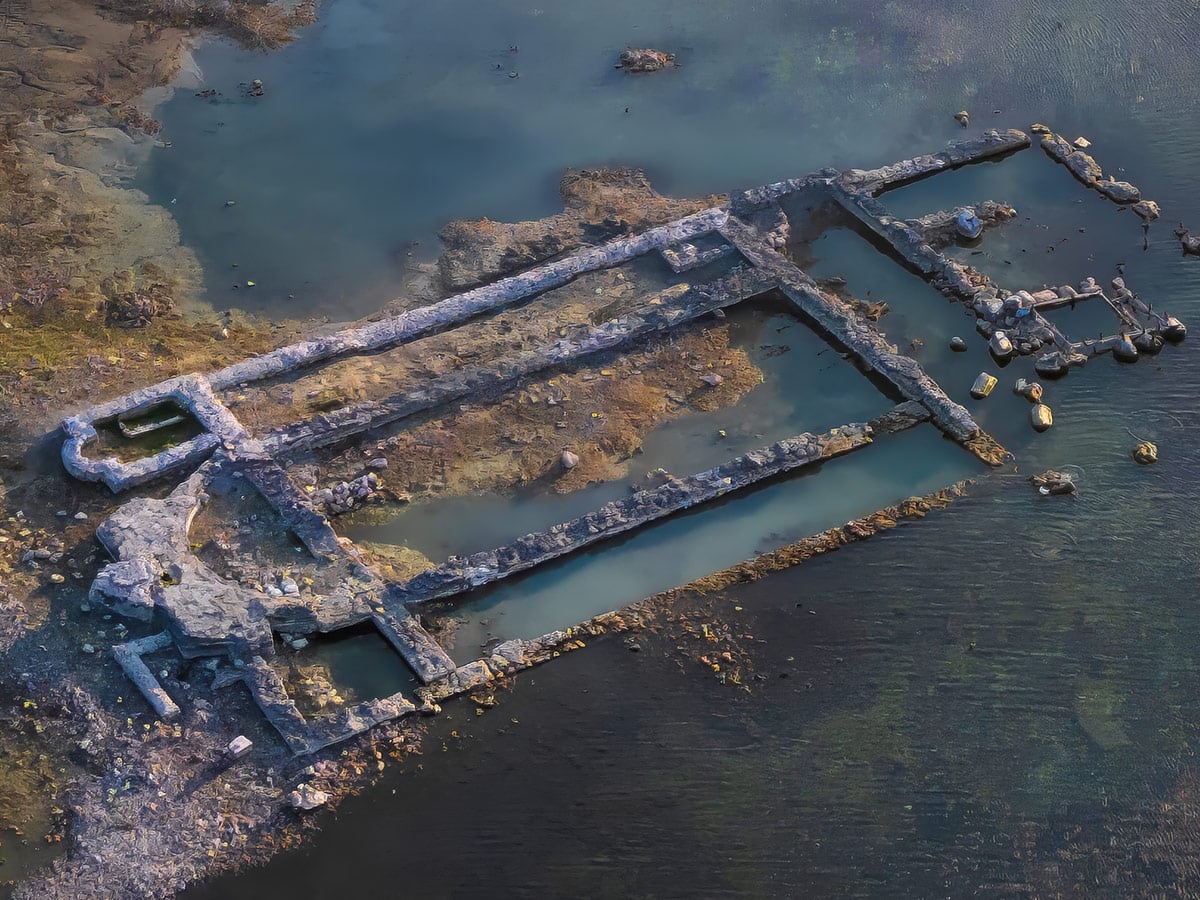
An ancient church discovered in Turkey could have been the site of one of the most important events in Christian church history. Archaeologists in Iznik, Turkey, which was once the site of the ancient city of Nicaea, uncovered a church complex that excavation director Mustafa Şahin identified as the Church of St. Neophytos. The church was destroyed by an earthquake in 368 AD. Hints of the church’s existence beneath the ground began with an aerial photograph of a lake near Iznik taken in 2014. The photograph seemed to indicate the existence of a church-like structure beneath the lake.
Nicaea is a significant location because of the First Council of Nicaea, the first gathering of Christian church leaders set up by Emperor Constantine I in 325 AD to establish official church doctrine. One of the major decisions it established was the Nicene Creed, which pushed back on the Arian Heresy, a teaching that suggested Jesus was a created being rather than God himself and rejected the Trinity. Archaeologists began excavating the site in the hopes that it might be the “place of worship” where the council took place as described by Eusebius of Caesarea, who attended and wrote about the First Council. Those hopes were initially dampened, however, when the first layer of stone of the church was dated after 325 AD.
Yet as archaeologists continued to dig, they found a smaller, older church structure beneath the basilica. The site matched Eusebius’s description of a church “so small that how so many clergymen fit into this church was a great miracle of God.” Recent excavations led by Şahin uncovered wall sections, floor paving, and a column base that the team concluded belonged to the Church of St. Neophytos. This made the excavation site the place of two churches, with Neophytos being the older structure and the Church of the Holy Fathers, which was built on top of its remains sometime around 380AD to honor the site of the Council of Nicaea. Sahin expressed his confidence in identifying the site as the church where the First Council was held. “The Church of the Holy Fathers… was built after 380 over the site of the First Council and in memory of the bishops who attended it,” he told Anadolu Agency. “As of this year, we are in a position to say definitively that the Church of the Holy Fathers is located here. We are very pleased because our hypothesis has been confirmed.”
 Read Previous Post