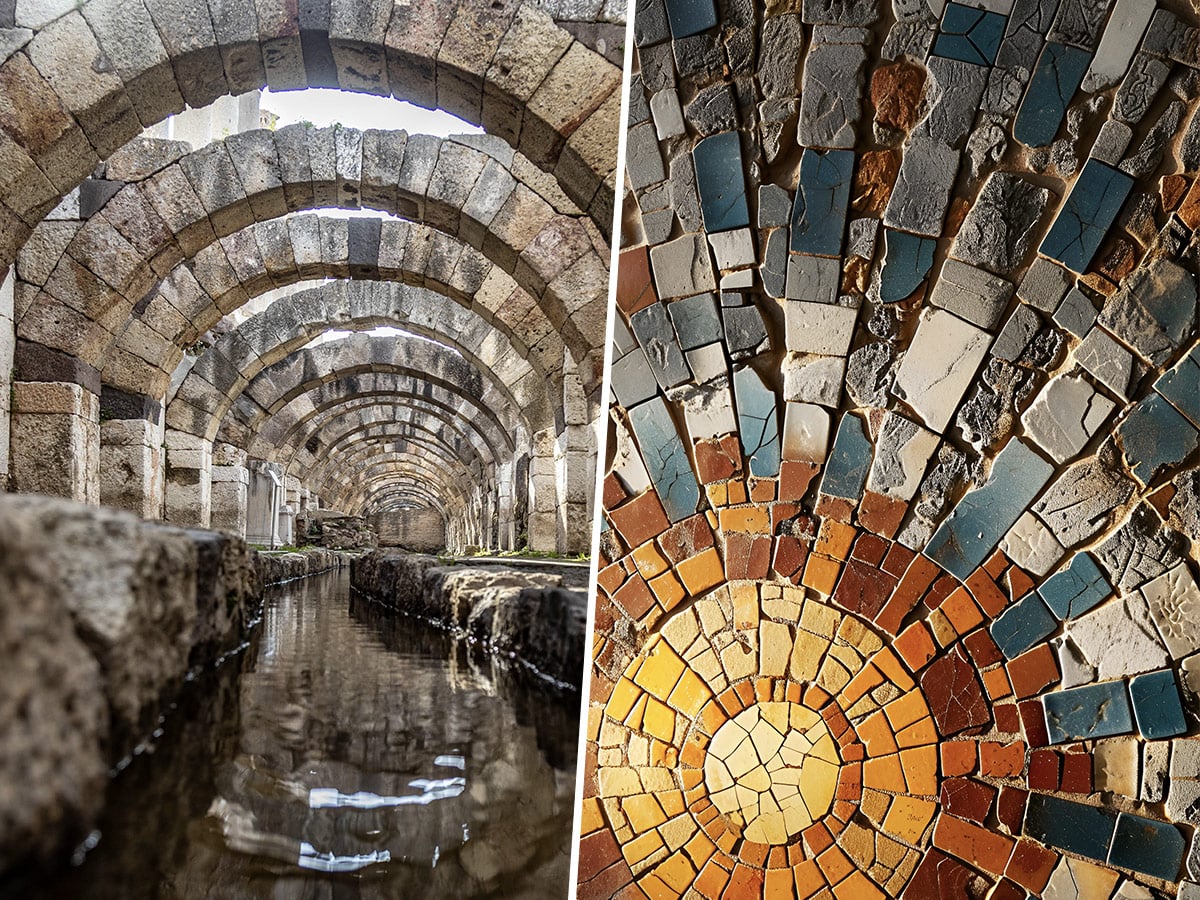
A 1,500-year-old mosaic has been discovered in an ancient city mentioned in the book of Revelation. Archaeologists working in Smyrna, now known as Izmir in modern-day Turkey, discovered the mosaic during infrastructure work at the archaeological site. The mosaic measures around 16.4 feet by 8.2 feet and dates to between the fourth and sixth centuries A.D. The city of Smyrna has biblical significance due to its mention as a city housing one of the seven churches that received a letter from Jesus in the book of Revelation. The original discovery of the mosaic was last year, but it was not fully excavated until this year.
The mosaic appears remarkably preserved, with special care given by past generations to leave it as intact as possible, with a past structure being built around the floor. “We believe that a structure was built over the mosaic during the Ottoman period in the 19th century, and that the new layout was created while avoiding damage to the mosaic floor as much as possible,” said excavation director Akın Ersoy. “We can say that the people of that period consciously protected it because there is very little damage. The space was brought back to life after 1,500 years.”
The mosaic features a heart-shaped ivy motif made of red tiles, known as red tesserae. Ersoy stated that heart shape may not represent feelings of affection that modern people are used to associating it with. “It was not very clear in the early periods that the heart represented affection and love. We see the heart emerge as a symbol of love in paintings during the Renaissance,” he said. The ivy leaf tends to represent loyalty.
In addition to the mosaic, archaeologists also discovered bags, cooking pots and earthenware vessels from the late Ottoman Empire and the early Turkish Republic, which show the space continued to be used after the mosaic’s creation with attention paid to preserving the mosaic floor. The discovery of a mosaic floor in Smyrna is especially rare, with the last one having been uncovered about 70 years ago. Archaeologists hope to expand their excavation efforts in order to turn up more well-preserved finds, which can offer valuable insights to everyday life and the social, political, and theological mindsets of the ancient people in the region.
 Read Previous Post