
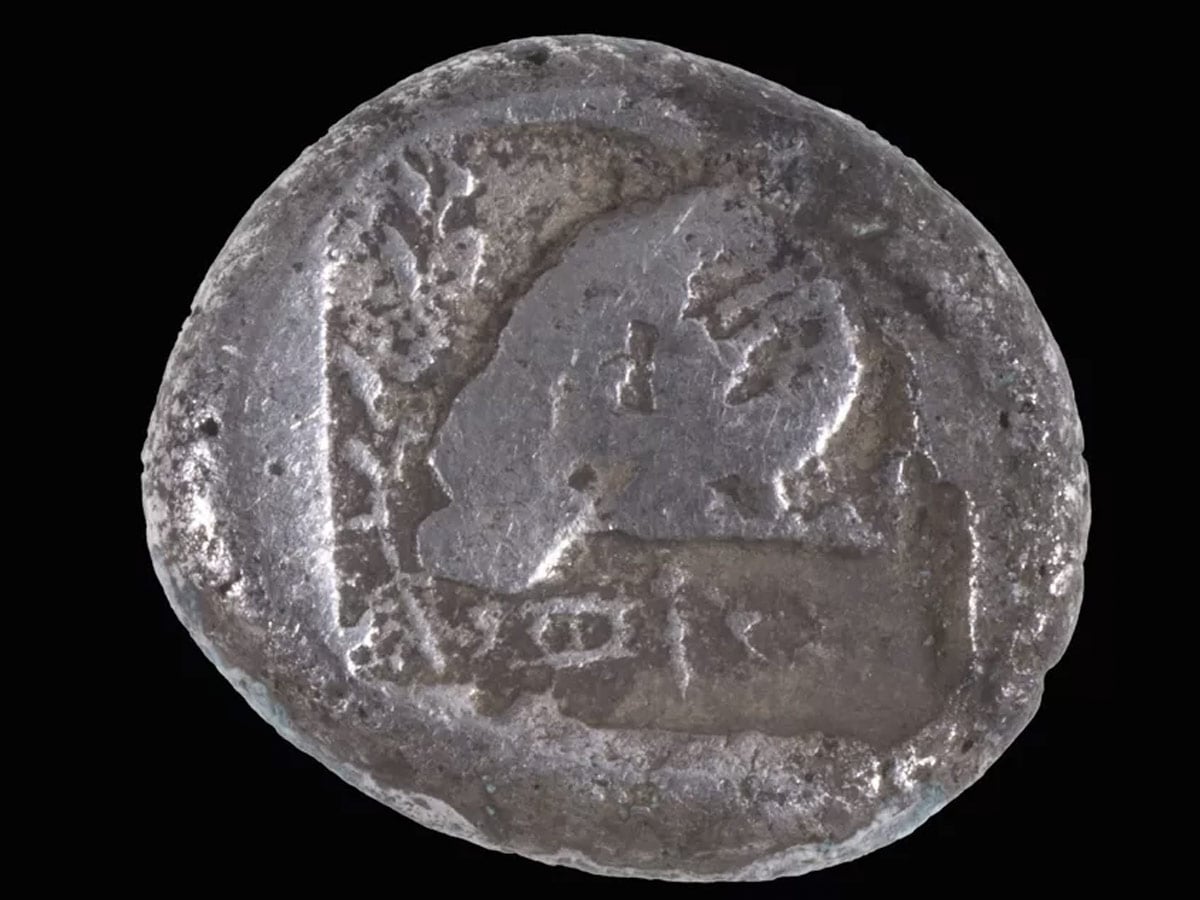
A beach worker in Israel found a rare 2,500-year-old coin and it’s offering some insight into ancient trade in the region. Avi Chaprak, Ashdod Beaches Department Deputy Director, was doing a routine search of the beach for items that might have been lost by beachgoers when he stumbled upon the coin. Having seen similar coins, Chaprak immediately recognized it might be significant and handed it over to the Israel Antiquities Authority (IAA) for further analysis.
Researchers at the IAA determined the coin dated from around the 5th century BC, when the area it was found was inhabited by Persians. Researchers believe the coin would have been minted in in Salamis, a city that sat on Cyprus’ eastern shoreline during the Persian Empire. The coin weighs about 11 grams and was determined to be what is known as a siglos, which were common during the Persian Empire. On one side of the coin there is a left-facing recumbent ram, with the other side featuring a left-facing ram’s head set within a sunken square frame. There is a vertical laurel branch placed beside the head and three symbols, which may be Cypriot syllabic script.
However, the coin did have an unusual characteristic. “At first glance it looked to be made of silver, but a closer examination showed it to actually be of metal that was only plated with silver; a known phenomenon in Cypriot silver coins from this period, given the shortage of silver on the island,” Yanniv David Levy, researcher and curator at the IAA’s Coin Department, said in a statement. That the coin was found at all was exceptional, according to Levy. “Coins of this size and value from the Persian period are rare altogether in the archaeological record. Usually, silver coins of this size were not preserved intact. Over time, they were cut into small pieces, for use as local trade currency.” Evangéline Markou, a senior researcher at the National Hellenic Research Foundation and an expert in ancient Cypriot coinage, agreed on the coin’s rarity. “Salamis coins from the fifth century B.C.E. were circulating throughout the eastern Mediterranean. However, finds with an exact provenance are rarer, so this coin potentially offers significant information about trade ties and movement between Cyprus and the Land of Israel during this period.” Such a rare coin, according to Markou, could offer “significant information about trade ties and movement between Cyprus and the Land of Israel during this period.”
Chaprak received recognition for finding and reporting the coin to the IAA. “I commend Avi Chaprak, who acted responsibly and transferred the coin to the Israel Antiquities Authority,” said Heritage Minister Amichai Eliyahu. “The public’s cooperation in reporting on antiquities makes it possible to preserve the heritage assets that belong to all of us, to deepen knowledge about the country’s past, and to ensure that the finds will be preserved and studied for the benefit of future generations.” For Chaprak, he said turning it in was an obvious decision. “For me, it was clear that the coin belonged to our collective heritage, so I immediately delivered it to the Israel Antiquities Authority. If through this act I contributed another small piece toward the research and history of the Land of Israel, then that is a great honor for me.”
 Read Previous Post