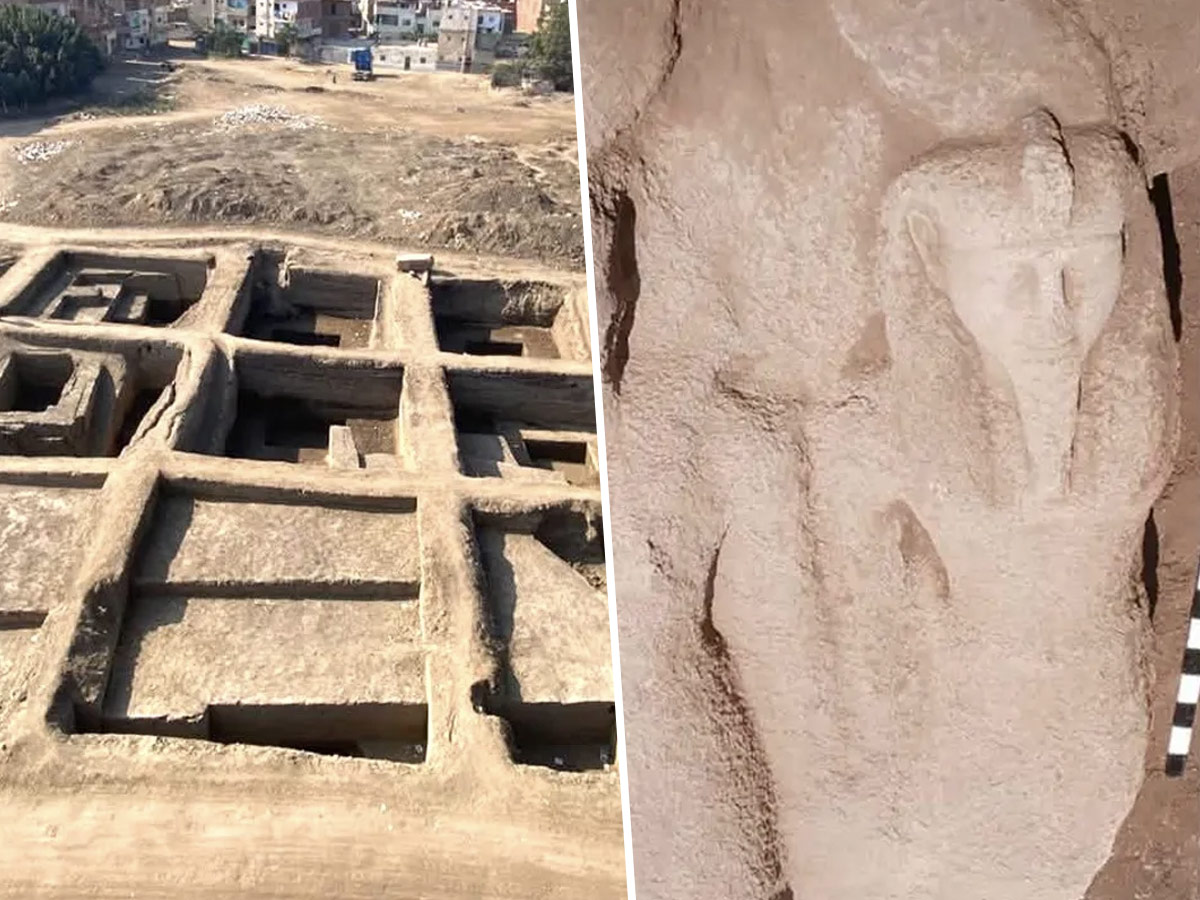
Archaeologists have uncovered a statue of the Pharoah some believe may have been the Pharoah who faced off against Moses in the book of Exodus. Researchers discovered a fragment of a statue that they believe depicts Ramesses II in the Tel Faraon archaeological site near El Husseiniya along the Nile Delta. The statue is described as being “remarkable” size, weighing between 5 and 6 tons and measuring over 7 feet long. This is especially remarkable given that the fragment is in poor condition, missing both its legs and base.
Hisham el-Leithy, Secretary-General of Egypt’s Supreme Council of Antiquities said the fragments “display artistic and royal features suggesting it was once part of a Triad, similar to those uncovered at a number of archaeological sites across Sharqia Governorate.” Despite the condition, archaeologists were able to determine from the details of the remains that it was most likely crafted during Egypt’s New Kingdom period, which dates 1550 to 1070 BC. Ramesses II ruled from 1279 BC to 1213 BC. Researchers also believe that Tel Faraon might not have been the original site of the statue. “[P]reliminary studies indicate the statue was transported in ancient times from the city of Pi-Ramesses to the Tel Pharaoh site, known in ancient times as ‘Imet,’ to be reused within one of the religious complexes, reflecting the religious and historical importance of the site across different periods,” suggested Egyptian antiquities official Mohamed Abdel Badie.
Ramesses II is considered one of the most influential and powerful Egyptian rulers of the New Kingdom era, and is known for his military prowess. He is especially notable as many historians connect him to the unnamed Pharaoh in the Old Testament book of the Exodus. After the Israelites call out to God after being oppressed by the Egyptians, God calls on Moses to tell the Pharaoh to release them. However, the Pharoah refuses to let the people go, resulting in the 10 plagues of Egypt being brought upon the land, with the last plague being the death of firstborn son. A reference in Exodus 1:11, which states the enslaved Israelites were forced to build the “treasure cities, Pithom and Raamses” is part of the reason why some historians believe the Exodus account may be referring to Ramsses II. However, dating ancient Egyptian history is notoriously difficult, so the debate is still quite vibrant on whom Exodus refers to.
Meanwhile, archaeologists are focusing on preserving the statue’s remnants. “As part of efforts to preserve this discovery, the statue was immediately transferred upon its discovery from within the temple complex at the site to the museum storage facility in the San El-Hagar area,” they said in a statement. The move is being made “in preparation for the start of precise and urgent restoration work, in accordance with the highest scientific standards followed in the conservation and preservation of antiquities.”
 Read Previous Post