Researchers from the University of Glasgow announced the recovery of over 40 pages of the Apostle Paul’s writings. The writings come from what is known as GA 015 and appear to belong to Codex H, a 6th-century copy of the letters from Paul, the most prominent writer of books in the New Testament. The pages had been lost around the 13th century when the manuscript had been “disassembled” at the Great Lavra Monastery on Mount Athos, Greece. As paper was hard to come by, it was a common practice for monasteries to repurpose and reuse manuscripts. The pages were reinked, with the pages being used for binding material and flyleaves for manuscripts throughout Italy, Greece, Russia, Ukraine, and France.
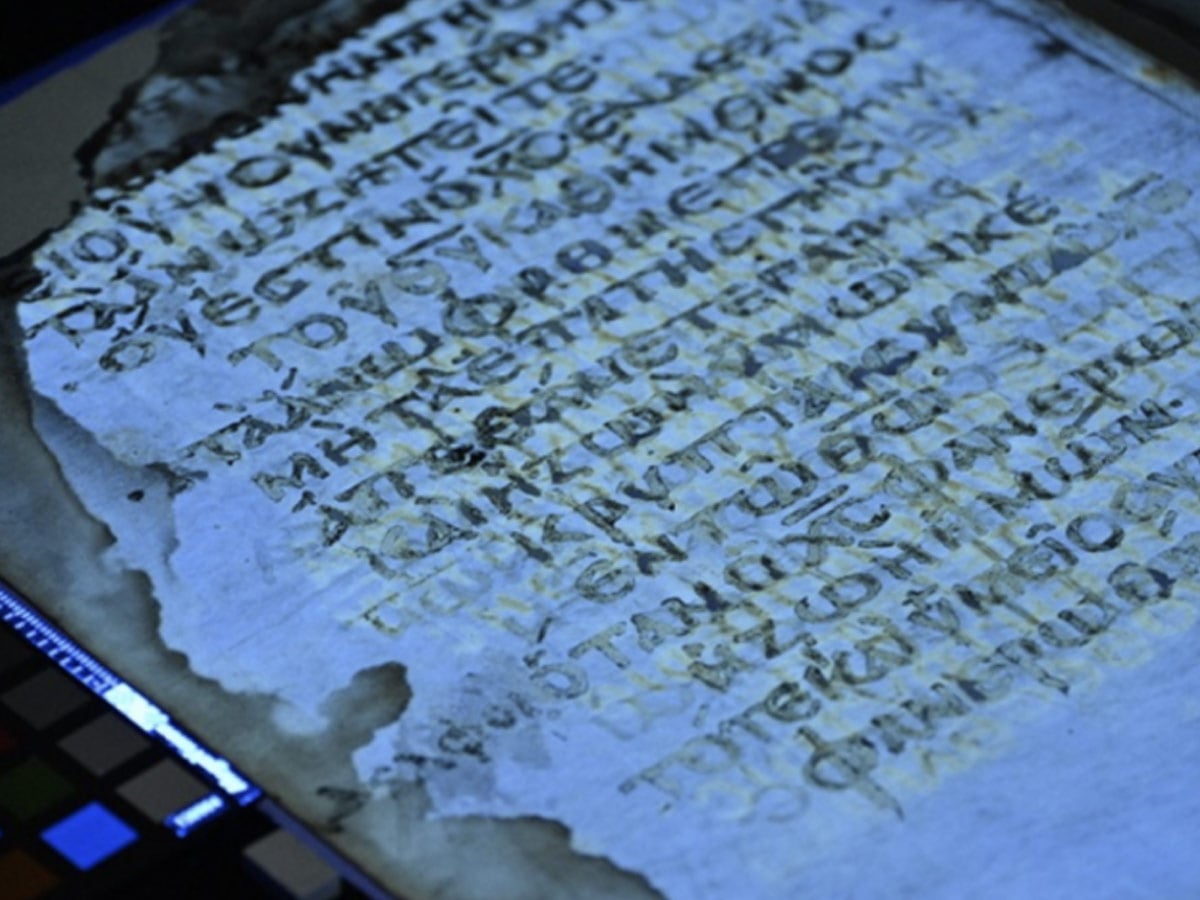
New technology, however, enabled the researchers to uncover the lost writings beneath the reinked pages. Professor Garrick Allen, who led an international team in the recovery of the writings, explained the process of “multispectral imaging” that was used to reveal the lost pages. “The breakthrough came from an important starting point: we knew that at one point, the manuscript was re-inked. The chemicals in the new ink caused ‘offset’ damage to facing pages, essentially creating a mirror image of the text on the opposite leaf – sometimes leaving traces several pages deep, barely visible to the naked eye but very clear with latest imaging techniques,” he said. The team partnered with the Early Manuscripts Electronic Library (EMEL) to uncover what Allen called “ghost” text. Experts in Paris also performed radiocarbon dating and confirmed that the parchment dated from the 6th century.
The recovered pages are known portions of Paul’s letters as presented in the New Testament, but they offer intriguing insight into the way ancient scribes understood and organized the New Testament. The pages include chapter lists that are very different from the modern ways Paul’s letters are divided as well as annotations from the scribes who copied the pages. The pages also include what is known as the Euthalian apparatus, a way scribes formatted writings so that readers could find their place in texts before the use of page numbers, tables of content, and indexes was utilized. Allen lauded the importance of the find, saying, “Given that Codex H is such an important witness to our understanding of Christian scripture, to have discovered any new evidence – let alone this quantity – of what it originally looked like is nothing short of monumental.”
 Read Previous Post