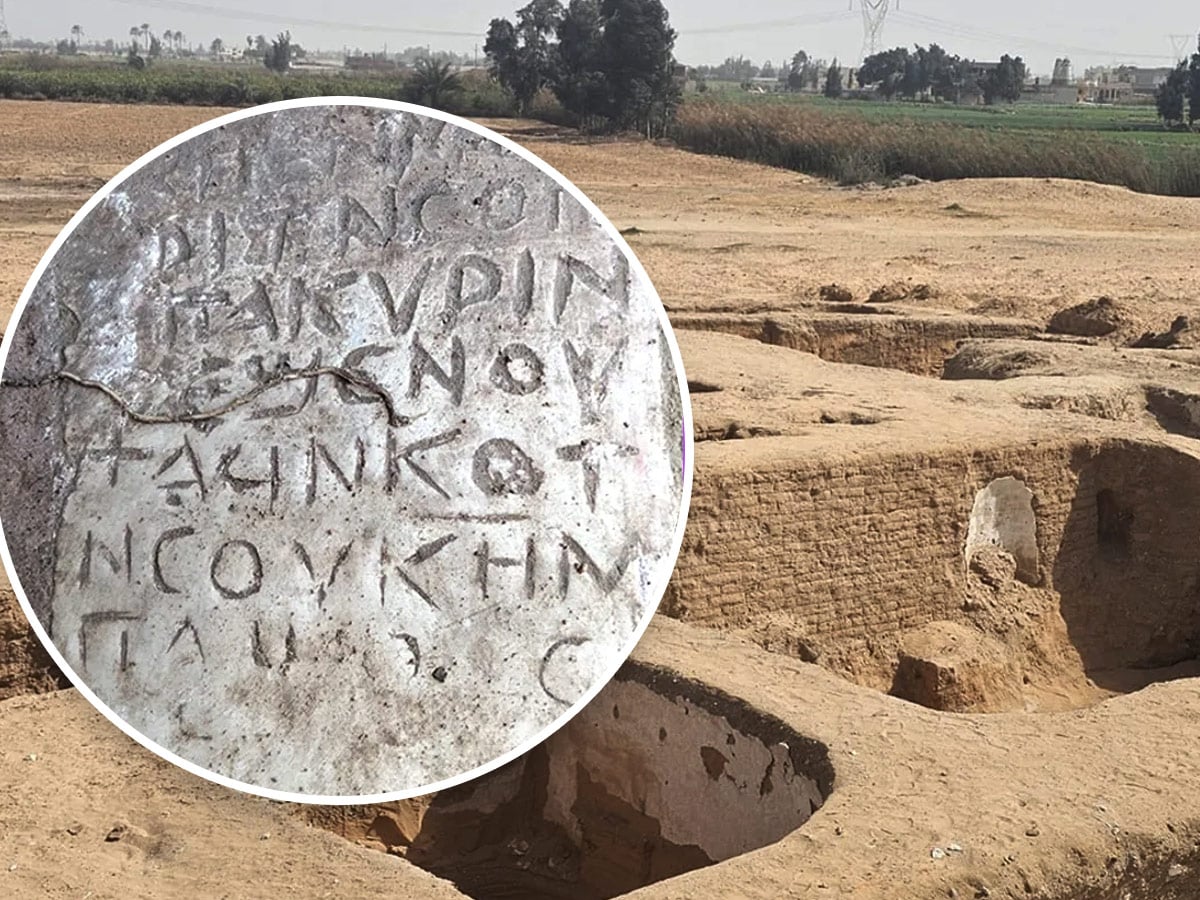
The Egyptian government announced the discovery of a 1,500-year-old monastic site that is the second largest to have been discovered in Christian history. The 13-room complex was discovered in Al-Qalāyā, an area located in Egypt’s Nile Delta area. One feature of the site is a 5th-century structure that may have served as a guest house. But the complex’s massive size is the most impressive feature of the discovery, given that it is typically Egypt’s Upper Egypt region that has been the primary site of most monasteries. The size and scope of this latest discovery could mean that Al-Qalāyā served as a greater center of Christian monasticism than previously believed. It could rewrite the very understanding of the origins of early Christian monasticism, as the site reveals a complex and thriving early Christian community.
The complex is structured with individual monk cells and shared living quarters, but also includes spaces intended for guests such as the guest house, educational spaces, and hospitality areas. This highlights an important shift in monastic life. Whereas early Christian monasticism began as an isolated practice where monks separated themselves from the world to focus on God, the guest spaces show a community-minded shift in the use of the monasteries. The site includes a large prayer room oriented towards the East with a limestone cross embedded within a niche. Egypt’s monasteries are particularly important because of their Coptic Christian history, which is one of the earliest forms of Chrisitan monasticism.
Secretary-General of the Supreme Council of Antiquities Hisham El-Leithy described the importance of the site, noting “The site’s architectural style reflects the earliest nucleus of monastery establishment.” Mission head Samir Rizq Abdel-Hafez described some of the artwork revealed by the dig, including paintings of monastic figures and plant-based decorative motifs. There is also a mural of two gazelles amongst vegetal decorations. The decorative style is filled with the symbol-rich artistry of monasticism. Secretary-general of the Supreme Council of Antiquities, Hisham El-Leithysaid, stated that the art found at the site is “among the most significant sources for studying early Coptic art in Egypt.” While the murals may seem merely decorative, Coptic art is full of symbolism and layered meaning. The site also revealed the evolution of monastic architecture as several features to the building were added through later periods. Most interesting is a slab with a Coptic expression that appears to commemorate a “Apa Kyr, son of Shenouda.” Archaeologists believe the slab may be a tombstone and hope to find out more about monastic life as excavations continue.
 Read Previous Post