
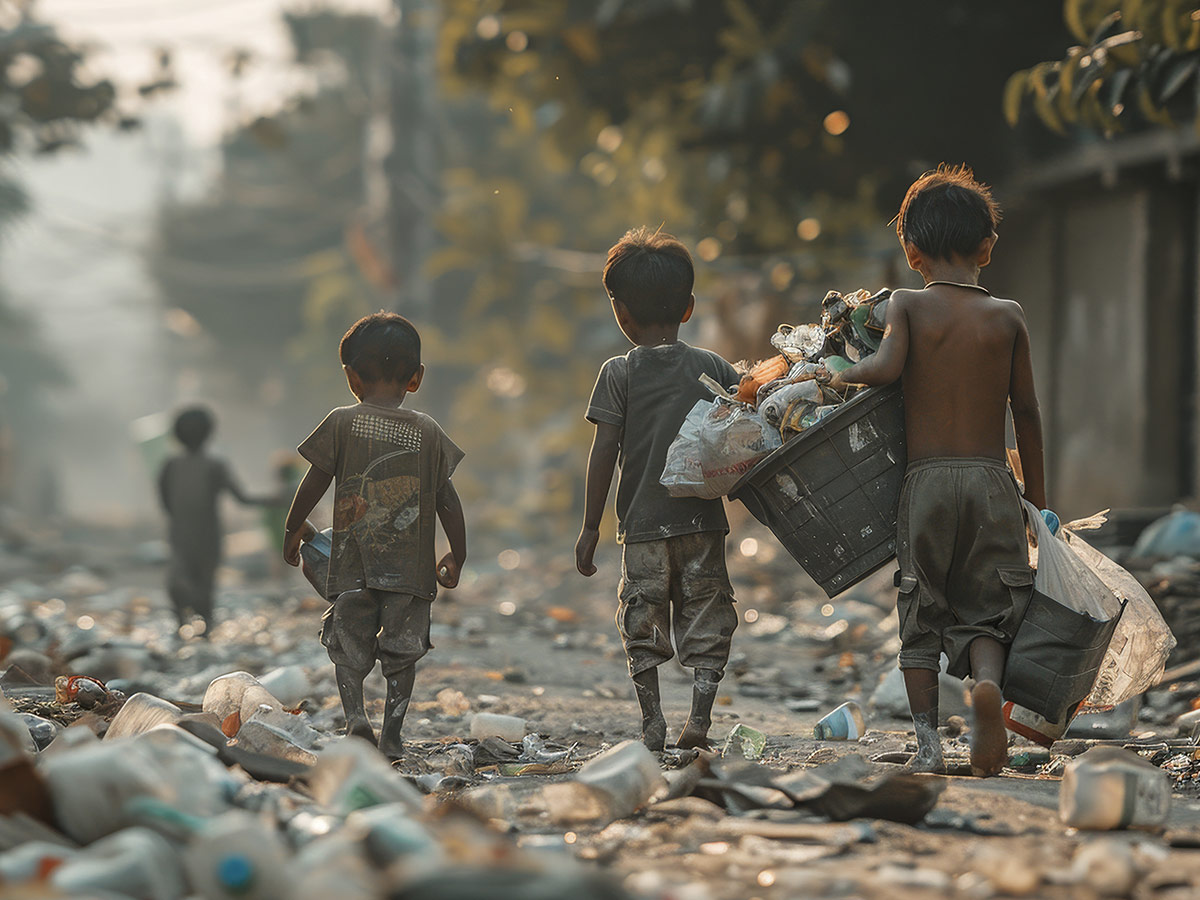
A recent Barna study found that Christians believe the US government should provide more aide to children abroad and at home than the local body of believers. The study, commissioned by the Faith to Action initiative and the Martin James Foundation, surveyed 3,351 self-identified Christian adults between September 24 through October 8. A similar study was conducted amongst 3,000 self-identified Christians from November 11 to December 3, 2020. The study found that a higher percentage believe the U.S. government should care more for vulnerable children worldwide. A lower percentage believe that churches and believers have a responsibility to help care for orphans.
Eighty-eight percent of respondents agreed with the phrase “National governments should take more responsibility to see that children in their own countries are cared for in families.” was embraced That’s an increase from 84% in 2020. Almost three quarters of respondents (74%) agreed with the statement “The U.S. government should take more responsibility to see that children around the world are cared for in families,” up from 69% of Christians in 2020. This belief was highest amongst younger Christians, with 84% of Gen Z Christians agreeing, versus 79% of Millennials, 78% Generation X Christians, and 65% of Baby Boomers.
The results were somewhat inversed when respondents were asked if they agreed “Christians have a responsibility to help care for orphans and vulnerable children around the world.” Eighty-two percent of Gen X agreed, 81% of millennial Christians, 78% of Generation Z, and 72% of Baby Boomers. Regarding their own personal responsibility, younger Christians had high agreement, with 78% of millennial Christians agreeing and 72% of Gen Z. The number was lowest amongst Baby Boomers at 56%. Overall, 74% believed that churches and Christians should take more responsibility for vulnerable children, down from 80% in 2020.
Seventy-two percent of those surveyed stated they believe poverty is a major factor in how a child winds up in an orphanage, although only 23% correctly identified it as the most common factor. Other factors they attributed to a child’s placement in an orphanage included abuse and neglect or the death of parents. While views on individual and church support for vulnerable children had gone down since the last survey, more Christians were personally giving to orphanages than in the past. According to the report, 28% were financially supporting an orphanage, up from 19% in 2020. That giving accounted for $4.5 billion in 2025.
 Read Previous Post