
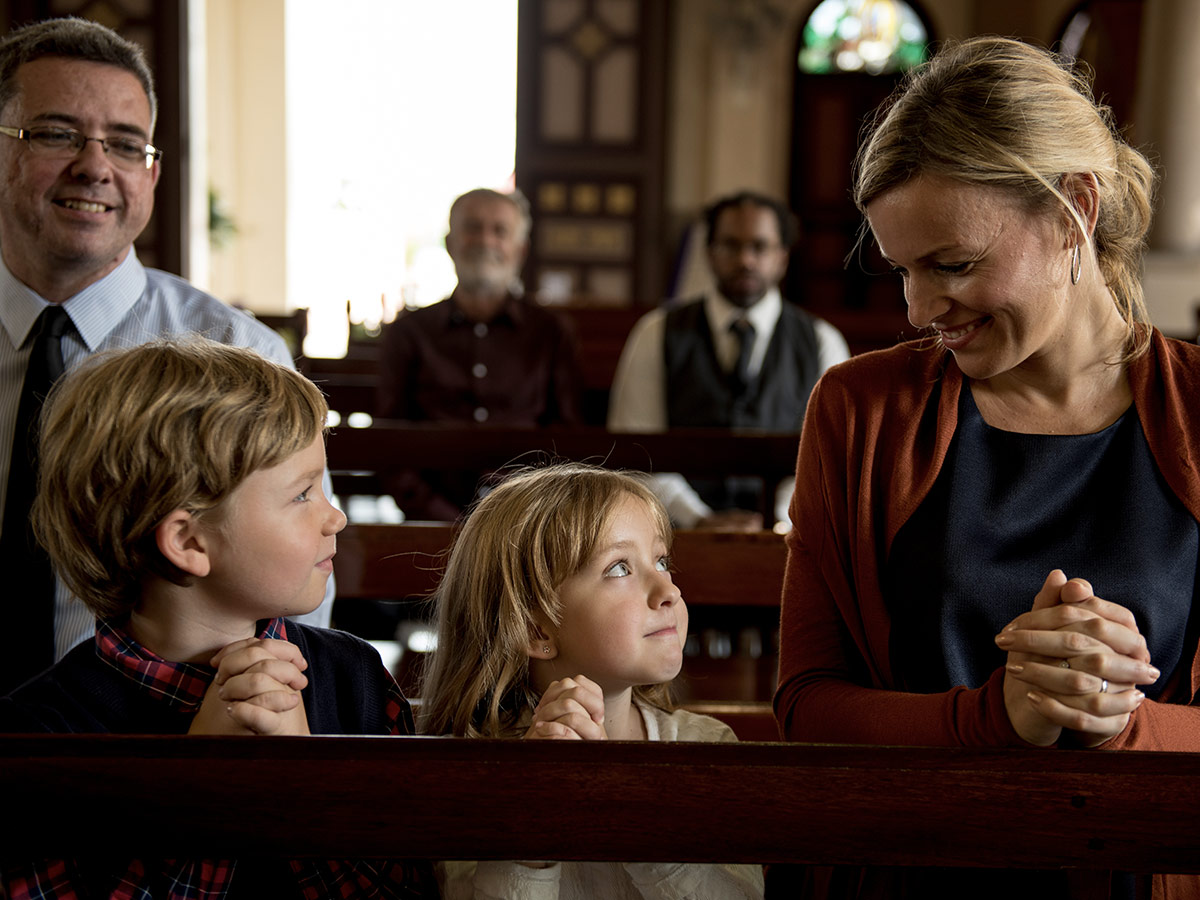
A Pennsylvania church is sparking a nationwide conversation after its joyful message welcoming “loud” children in worship went viral online.
Mt. Washington United Brethren Church in York, Pennsylvania, recently shared a memo outlining what it called its “official notice of policy clarification” regarding children in the sanctuary. But instead of asking families to keep kids quiet, the message did the opposite—it warmly invited them in.
The church’s memo listed several “options” for families who have children who might be noisy during the service.
“Option 1. The family should bring the kid.
Option 2. The family should make sure they bring the kid.
Option 3. The family is to see that the child is brought to church.
Option 4. The kid is absolutely welcome and expected.”
The message then explained the heart behind the policy.
“We believe the sound of children in worship is not a distraction. It is evidence of life, growth, and the future of the church,” the memo read.
“If your child makes noise, you are not bothering us,” the church continued. “You are blessing us. Policy enacted. No exceptions.”
Once shared on social media, the statement quickly spread across platforms, prompting thousands of comments and reactions. Many people celebrated the church’s welcoming spirit, while others argued that children should be taught to remain quiet during worship.
Pastor Alan Harbold of Mt. Washington UB Church told Fox News Digital he has been thrilled to see the message resonate with so many people.
“We were thrilled to see the idea of this post gaining so much traction not just from our posting, but the sharing and re-creations of the post,” Harbold said. “It’s drawing the attention of many people to the idea of how important it is to have families worship together.”
He pointed to Jesus’ own words as the inspiration behind the church’s approach.
“Jesus Himself in the book of Matthew says to let the little children come to Him,” Harbold said.
While the church affirms that parents should teach their children appropriate behavior, Harbold emphasized that creating a welcoming environment is the most important step.
“Parents should be parenting their kids, helping them to learn and pay attention,” he said. “But the most important part is getting the kids to church in the first place, and we want to have an atmosphere that welcomes families to come and worship without fear of being ‘annoying’ or ‘too much.'”
The viral message struck a chord with many families who often feel anxious about bringing young children into quiet church services.
Dr. Steve Grcevich, a retired child and adolescent psychiatrist who writes the “Child Psychiatry for Christians” Substack, said the church may have tapped into a larger need within the Christian community.
“The church in Pennsylvania has clearly touched upon an issue that resonates for many families,” Grcevich wrote. “Their invitation to families raising kids who may struggle managing big emotions and behaviors reflects the attitude most Christians would expect to see from their leaders.”
Grcevich also pointed out that many families facing challenges such as behavioral struggles, developmental disabilities, or trauma often feel overlooked by churches.
“I’d argue families impacted by mental illness represent the largest underserved population by the church in North America,” he wrote. “The traction this letter is getting… is indicative of the need for us to do better in welcoming them.”
At the same time, not everyone agreed with the policy’s tone. Some critics argued that while children should certainly be welcomed, they must also be taught how to behave respectfully in shared spaces.
Turning Point USA spokesperson Andrew Kolvet wrote that there is “a big difference between having a reasonable tolerance for the sound of children knowing they’ll sometimes be loud or cry, and just embracing chaos and disruption.”
Others said the church could balance both compassion and discipline. Writer Jack Wilkie noted that learning to sit quietly in church is something children gradually develop with guidance from parents.
Pro-life advocate Samuel Sey offered a similar perspective, writing that church leaders should be patient with children while parents continue teaching them how to behave during services.
Yet many parents defended the church’s approach, saying that judgmental attitudes are among the main reasons families sometimes stop attending church altogether.
“You think anyone in that church wants that child to be quiet more than their parent?” one commenter wrote online. “This is why so many parents just give up trying to go.”
For Pastor Harbold and his congregation, the message remains simple: children belong in church.
And if their voices occasionally echo through the sanctuary, the church sees that not as a disruption—but as a sign of life, hope and the next generation growing in faith.
 Read Previous Post