
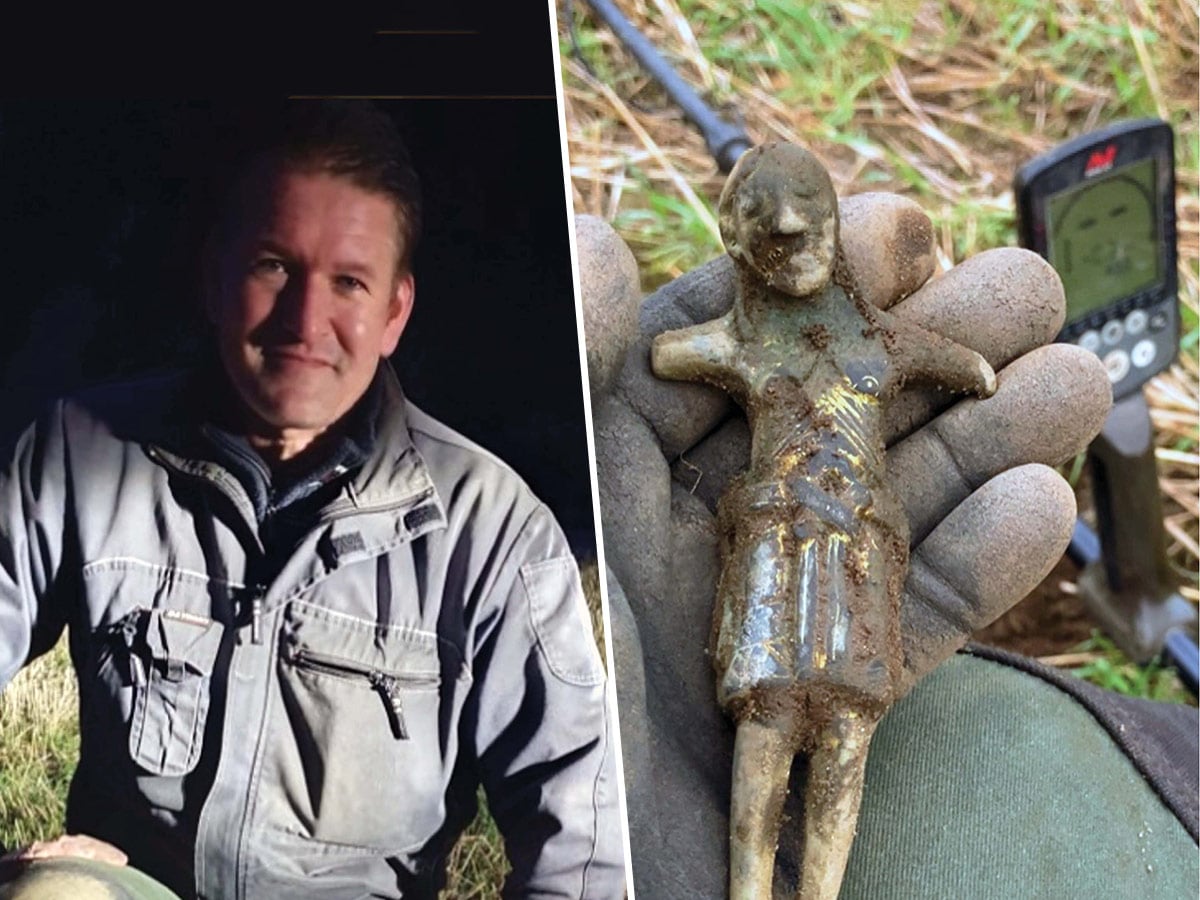
A metal detectorist in Norway made an incredible discovery: a 900-year-old figurine of Jesus Christ. Metal detectorist Kim Erik Dybvik’s hobby began as a child while living in a remote part of Norway where his father worked as a lightkeeper. The islet where he grew up was filled with volcanic rock, which sparked his imagination about the types of rare rocks he might find, including possibly gold. His childhood dream of becoming an archaeologist eventually gave way to a career in healthcare, but Dybvik’s childhood hobby continued into his adulthood, with Dybvik and fellow metal detectorist Warren Schmidt uncovering the small, gilded figurine on November 1st in a field in Åndalsnes.
“It was extremely windy — so windy that at times we struggled to stay on our feet. But we persevered… We found 78 buttons, some coins, buckles, a medieval weight and a lot of the usual finds,” Dybvik told Fox News. “Warren was almost at the car, and I was a bit behind, when I suddenly got a strong signal from my detector. A strong signal usually indicates a large object and is often not a good sign — it can easily be trash. I bent down, and right beneath the surface, he revealed himself to me — I looked Jesus straight in the eyes,” he said. As an experienced detectorist, Dybvik could tell he had something special “I quickly dismissed the idea that it could be modern — I recognized the medieval style and remains of gilding. I carefully set it down and ran to Warren, saying, ‘I want to share this moment with you — I may have just made my best find ever.’ Warren was also completely blown away.”
Field archaeologist Aaron Johnston examined the figurine. It was dated to around 1100 AD with county archaeologist Kristoffer Dahle now overseeing its conservation. Dybvik stated it’s the first discovery of its kind that has been uncovered in Norway in such a way. The discovery is extra special given the significance of the date it was found on. November 1st is known as “All Saints’ Day,” a day meant to honor Christian martyrs and saints. The exact nature of the figurine has yet to be determined, with Dybvik hoping it will be put on display for the public in the future. “That’s why I am passionate about this — to help ensure that pieces of our cultural heritage can contribute to a clearer picture of who we are and where we come from.”
 Read Previous Post