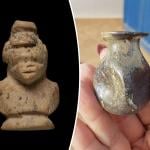
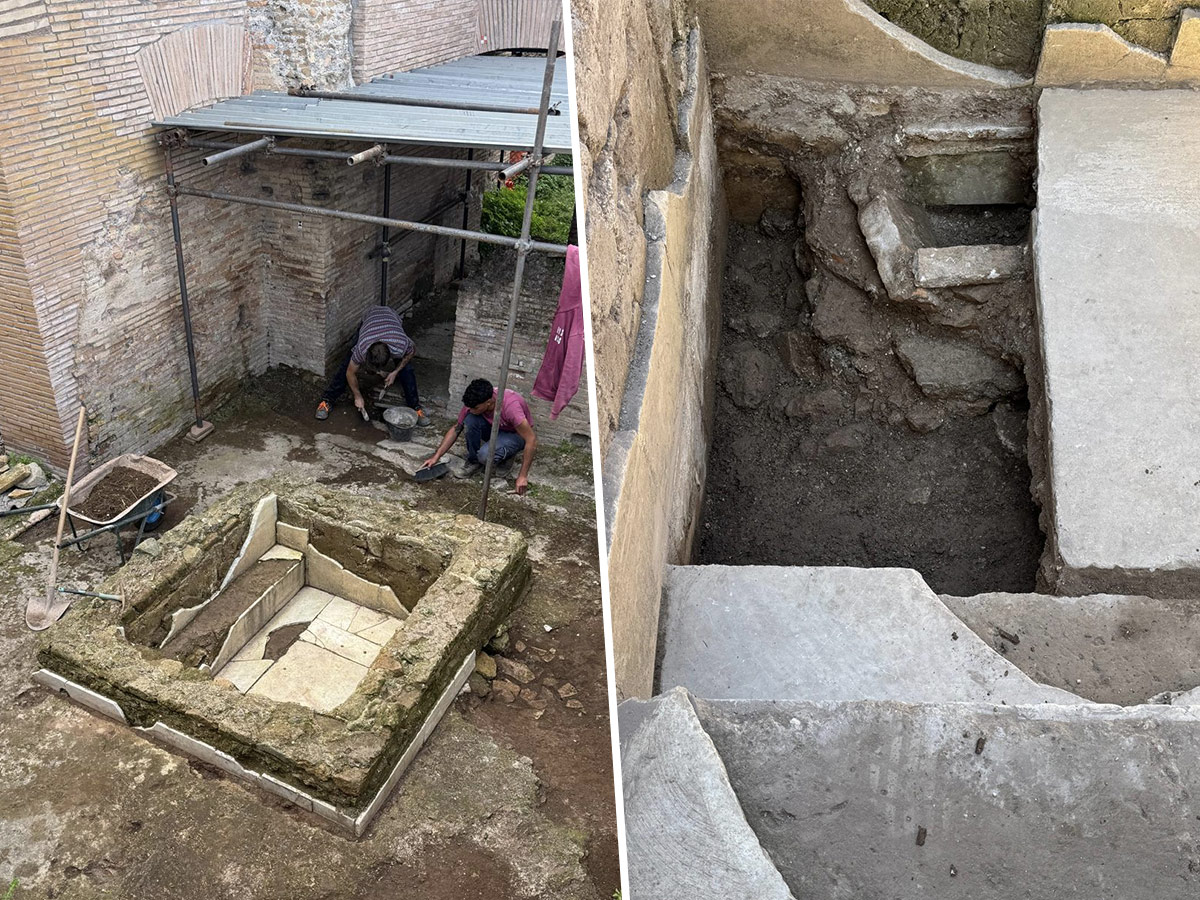
Archaeologists have announced the discovery of an ancient Christian church and former bathhouse. Staff at the Appian Way Regional Park in Rome shared that an ancient Roman bathhouse had been discovered at the Triton Baths in the Villa di Sette Bassi. There was also evidence that the space had later been converted into a church. Archaeologists estimated the bath to date from around the second century AD, with the church coming sometime after that in Late Antiquity, while the baths were used for baptismal purposes. “The rite of baptism, which in larger basins involved a full immersion of the believer, represented – especially in earlier times – the most important sacrament for adhering to the new religion,” the archaeologists stated. “[This is] a discovery that opens new scenarios on the Christianization of the territory near Rome.”
The find helps give the archaeologists a clearer picture of how Christianity spread across the Roman Empire, requiring residents to repurpose certain spaces like the bathhouse for religious reasons. Even the depths of the pools give archaeologists more insight into the ways the space was used. Deeper depths indicated the baths may have been used for full-immersion baptisms, while a raised pool floor indicated a shift to less physically demanding immersion. The Villa di Sette Bassi was a significant Roman estate, while the inclusion of burial grounds indicated the former bathhouse-turned church was more than just a baptismal site.
Archaeologists have believed the site could have also housed a bishopric, with this latest find making that seem like an even more plausible possibility. The use of Christian elements side-by-side with the Roman items also indicates a steady immersion of Christianity that would ultimately take over the empire. The existence of the pools or “vascas” as they were called “reinforce the hypothesis that we are dealing with a proper baptismal church, that is, a place with the authority to confer the sacrament of baptism and with burial rights,” the archaeologists stated. Archaeologists affirmed their continued interest in the site as such discoveries like this enhance the understanding of how ancient people’s views of faith and faith practices evolved and led to the types of practices that are performed today. The site will continue to undergo further analysis, particularly after an ancient deity’s head was also recently discovered near the site.
 Read Previous Post