
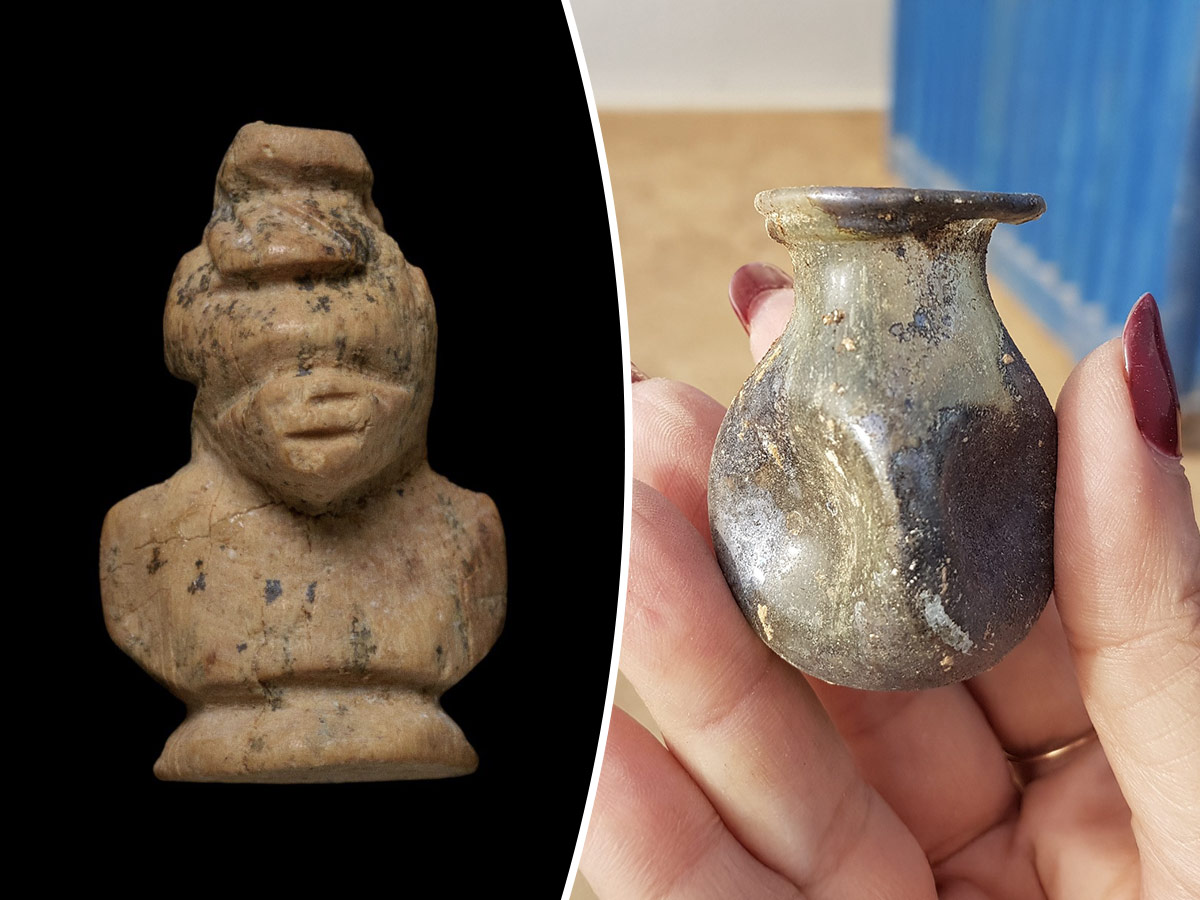
Archaeologists from the Israel Antiquities Authority (IAA) have revealed the discovery of 1,500-year-old graves containing African figurines made from rare black wood. “The figurines show that a Christian community lived in the south of the country about 1,500 years ago, possibly with some of its members coming from Africa,” archaeologists concluded from the unique find. They described the figurines as “Carved from bone, and from ebony wood – a rare raw material originating from southern India and Sri Lanka.” Archaeologists also revealed that they “were designed in the form of women and men bearing prominent African facial features, and with a hole for the purpose of wearing them around the neck.” Archaeologists concluded the figurines not only served a decorative purpose but “also as intimate personal items carrying with them a story of identity, tradition and memory.”
A post from the IAA revealed that the figurines were uncovered during a dig at Tel Malḥata in the Negev’s Arad Valley. Researchers stressed the rarity of the find. “During the Roman-Byzantine period, Tel Malḥata served as a major crossroads, where merchants from southern Arabia, India and Africa passed. Finding African figurines in local Christian graves is a rare discovery, which deepens our understanding of the cultural diversity among the inhabitants of the country in this region about 1500 years ago.” The find may give some interesting insight on the moving patterns of ancient Christians, with these particular finds possibly coming from Ethiopia before making their way to Israel. “While bone figures were common from the Neolithic period onward, and used in domestic rituals as well as in burials, ebony figurines are very rare,” the IAA said in its journal, ‘Atiqot. “The two ebony figurines are among the most interesting finds in our excavation.”
Of the graves that have been uncovered at the site, this is the first with such ebony figurines. The two graves with the figurines contained a woman and boy, possibly a mother and son. According to Eli Escusido, Director of the Israel Antiquities Authority, this possibility makes the discovery even more moving. “The finds from Tel Malḥata are moving not only from an archaeological perspective, but also on a human level. They serve as a reminder that the Land of Israel has always been a crossroads of cultures and peoples—individuals arrived here, integrated into the local population, and yet still carried with them traditions and beliefs from distant lands.”
 Read Previous Post