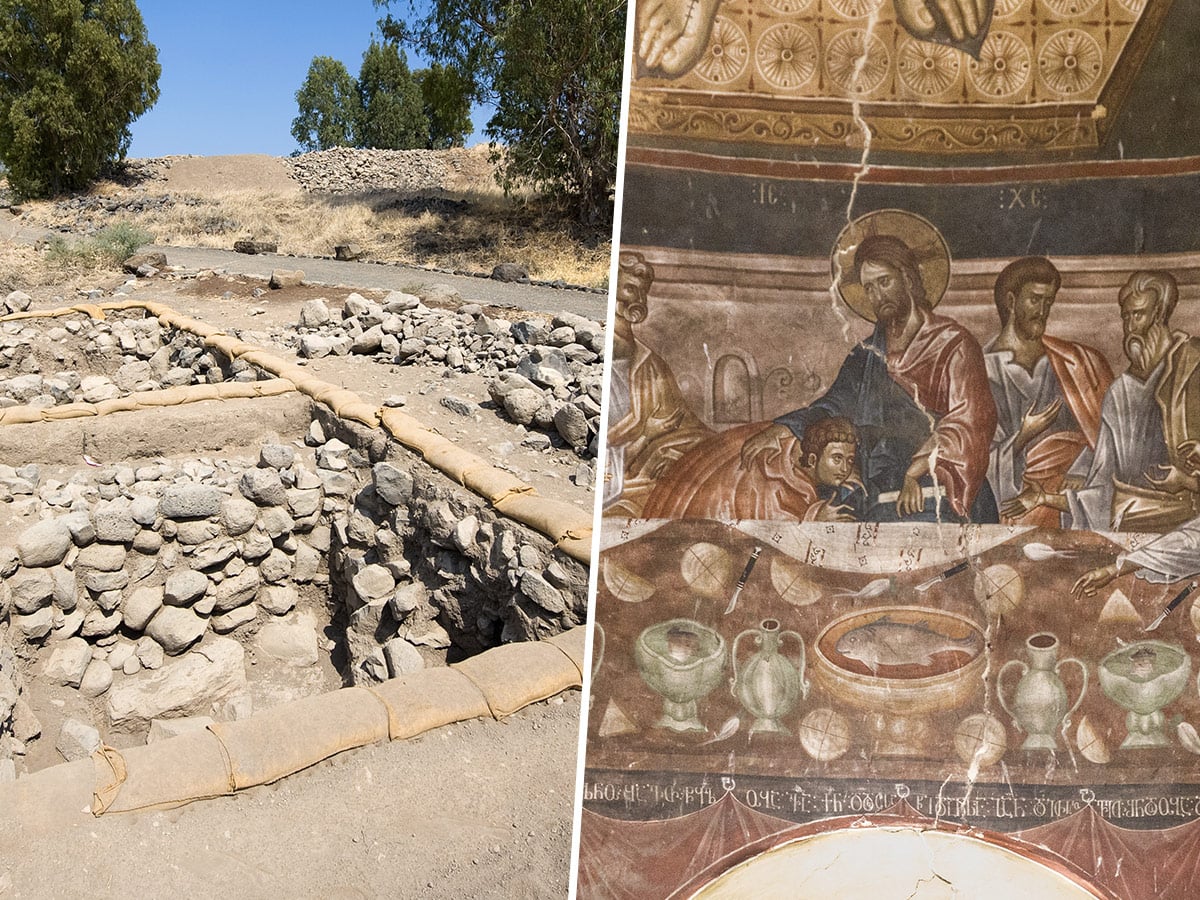
After a decade of excavations along the Sea of Galilee, archaeologists say they have identified the long-lost biblical city of Bethsaida, the setting of several events recorded in the Gospels and the hometown of three of Jesus’ apostles.
Steven Notley, a biblical scholar and academic director of the El-Araj Excavation Project, says he is now “100%” confident that the archaeological site of El-Araj is ancient Bethsaida.
Bethsaida holds an important place in the New Testament. The Gospel of John identifies it as the hometown of the apostles Peter, Andrew and Philip. Jesus also performed miracles in and around the city, including healing a blind man. The feeding of the 5,000 is traditionally associated with the area near Bethsaida.
“At least one quarter of Jesus’ disciples come from Bethsaida,” Notley told Fox News Digital. “So it’s an important site in his life, in his ministry.”
Researchers have been excavating El-Araj since 2016, gradually uncovering evidence that matches ancient descriptions of Bethsaida. Rather than one dramatic discovery settling the question, Notley said the identification rests on years of accumulating archaeological evidence.
“It’s [the] accumulation of evidence that you continually find,” he said.
Researchers looking for Bethsaida would expect to find evidence of an ancient Jewish fishing village that later developed into a small Roman city. According to Notley, El-Araj has produced evidence of both.
Excavations have uncovered thousands of lead fishing weights, Jewish stone vessels, Roman-era buildings and a bathhouse — signs of both a fishing community and later Roman urban development. More than 200 coins have also been recovered and are being studied to help date the settlement.
An unexpected wildfire last year also gave researchers a clearer picture of the ancient city’s size. While initially viewed as a setback, the fire cleared the vegetation surrounding the site, allowing archaeologists to conduct a broader survey.
“It actually cleared the underbrush and allowed us to do an extended survey to determine the size of the settlement,” Notley said. “It’s at least 15 acres.”
One of the site’s most intriguing discoveries is a Byzantine-era basilica containing an inscription referring to “the Chief of the Apostles and the Keeper of the Keys of Heaven” — a reference to Peter.
Archaeologists also discovered Roman-period homes beneath the church. Christian tradition held that a church in Bethsaida was built over the home of Peter and Andrew, although Notley cautioned that archaeology cannot prove that either home belonged to the apostles.
“Can you be absolutely certain this is Peter’s home? No, I can’t say that,” he said. “You’re not going to find a plaque that says, ‘Peter slept here, Peter lived here.’ But in archaeological terms, it’s about as good as you can get.”
Notley said the evidence supporting El-Araj as Bethsaida has only grown stronger with each excavation season.
“Since 2016, we have not uncovered a single thing that would challenge or question the identification of the site as Bethsaida,” he said. “Instead, everything we find each season, the evidence gets stronger and stronger.”
And researchers aren’t finished.
“I’m looking forward to what lies ahead,” Notley said.
 Read Previous Post