
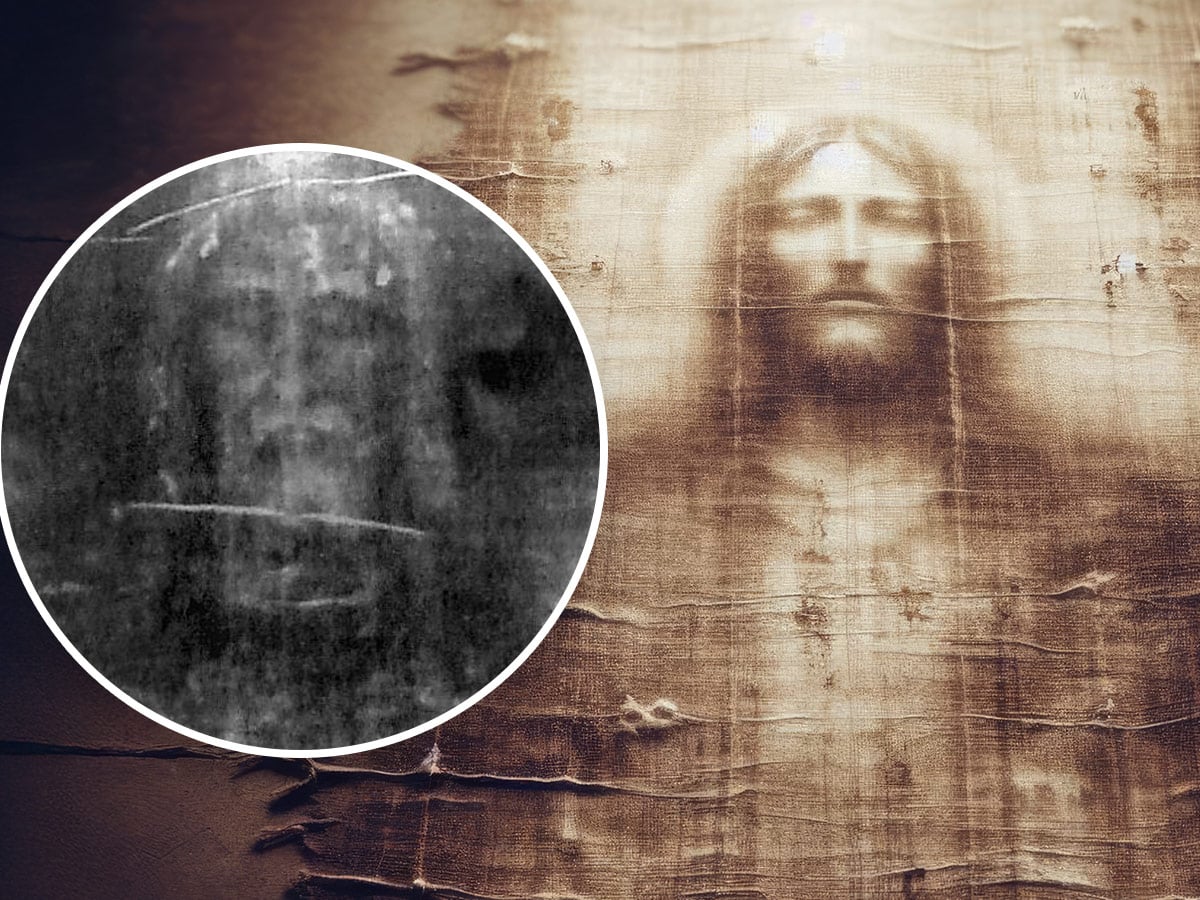
The mysterious Shroud of Turin has left researchers stumped with yet another mystery. The Shroud is revered by Catholics worldwide, with true believers claiming the supposed burial cloth of Christ bears his image. Skeptics, however, have pointed out conflicting evidence, with a 1998 radiocarbon dating the cloth to between 1260 and 1390 A.D., long after Christ walked amongst men. A 2024 analysis by Italy’s Institute of Crystallography, however, dated the cloth to around 2,000 years old, placing it firmly within the Christian tradition. Now researchers have uncovered trace bits of food DNA evidence, meaning the cloth could have been contaminated.
The discovery comes after an international team analyzed samples from the Shroud dating from 1978. By sequencing microscopic fragments of extracted DNA from dust and fibers on the sacred cloth, researchers detected plant material on the cloth. The findings included a strong presence of carrot DNA, along with bread wheat, peanuts and even melons. The carrot DNA belonged to cultivated varieties rather than wild varieties. Weaker signals came from perennial ryegrass, bluegrass, fescue, oats and clovers. Several of the species detected appeared to have originated from the Americas, pointing to the possibility of contamination. The contamination would have occurred sometime around 1492 when such crops like corn would have arrived from the Americas to Europe during the days of Columbus’s travels.
The discovery does not offer insight on the Shroud’s age. “The Shroud’s age cannot be determined through metagenomics because this methodology is unable to provide any robust evidence supporting either a medieval origin or a history dating back two millennia. Nevertheless, our findings constitute a novel and significant contribution to the field, thoroughly elucidating the biological traces left by centuries of social, cultural and ecological engagement,” the study added. “Collectively, our findings illuminate important aspects of the Shroud’s preservation history.” The study’s final results have yet to be published, leaving researchers mum on any additional commentary on their findings.
While some skeptics will see the finding as further proof of the Shroud’s inauthenticity, supporters will see a history of handling and potential mishandling throughout the centuries. Early medieval methods of preservation would certainly have been less stringent than the methods of modern-day scientists and the Shroud’s earliest documented history begins around the mid- 14th century, when it was first unveiled in Chambery, France in 1354. It is just another unanswered question in one of histories most mysterious relics.
 Read Previous Post