
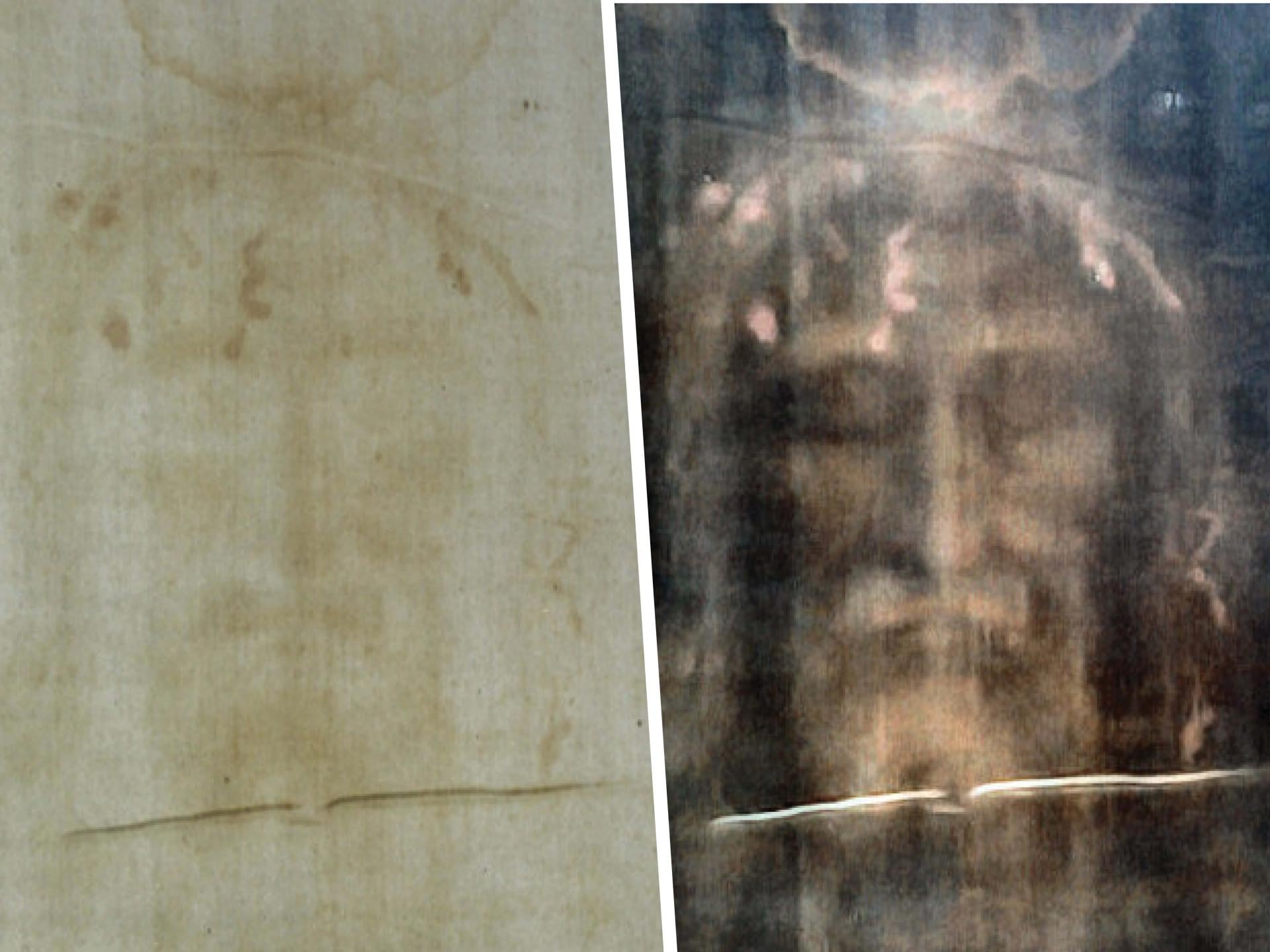
For centuries, the Shroud of Turin has captivated believers and skeptics alike. Revered by many as the burial cloth of Jesus Christ, the ancient linen has long been at the center of debate. Now, a surprising new DNA analysis is adding another layer of mystery—while also reminding many that faith is not built on physical evidence alone.
In a recent study published on Bioarxiv, researchers examined genetic material collected from the shroud decades ago and discovered traces of DNA from a wide range of sources, including plants, animals, and humans from different parts of the world. Among the most intriguing findings was evidence suggesting that some of the DNA may be linked to individuals of Indian descent.
“Our findings highlight its preservation conditions and environmental interactions,” said researcher Gianni Barcaccia of the University of Padova. The team noted that the cloth appears to have been exposed to multiple regions and populations over time, raising the possibility that the material itself—or those who handled it—may have connections far beyond Europe.
The Shroud of Turin, first documented in France in 1354, has been housed in Italy for centuries and remains one of Christianity’s most well-known artifacts. Measuring over 14 feet long, the linen bears the faint image of a man many believe resembles Jesus following His crucifixion.
However, scientific studies over the years have produced mixed conclusions. A widely cited 1988 carbon dating analysis suggested the cloth originated between 1260 and 1390, placing it in the medieval period. That finding led some to conclude the shroud could not be authentic. Still, many Christian scholars have questioned those results, pointing to potential contamination or flawed sampling methods.
This latest DNA study adds to the complexity. Researchers found genetic traces from animals such as cats, dogs, cattle, and deer, as well as plant material ranging from wheat to potatoes—the presence of such diverse DNA points to centuries of handling and environmental exposure.
At the same time, the abundance of human DNA—likely from those who have touched or studied the cloth over the years—makes it nearly impossible to determine any original genetic material. “The presence of skin bacteria on the shroud also hints at the intense handling over the years,” researchers noted.
Not all experts are convinced by the study’s implications. Anders Götherström of Stockholm University, who was not involved in the research, said he sees “no reason to doubt that the shroud is French and from the 13th-14th century.”
Adding to the debate, a separate study last year used 3D modeling to suggest the image on the cloth may have been created using a low-relief carving rather than an actual human body, pointing again to a possible medieval origin.
For Christians, the ongoing discussion about the Shroud of Turin can be fascinating—but it also serves as a reminder of where true faith rests. While artifacts can inspire awe and curiosity, belief in Jesus Christ ultimately does not depend on physical proof.
Whether the shroud is authentic or not, the Gospel message remains unchanged. The life, death, and resurrection of Jesus continue to transform lives—not because of relics, but because of the truth found in Scripture and the personal relationship believers have with Him.
As discoveries emerge, the mystery of the shroud may deepen. But for many, the greater certainty lies not in a piece of cloth, but in a living Savior.
 Read Previous Post