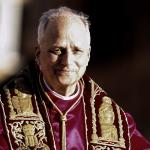
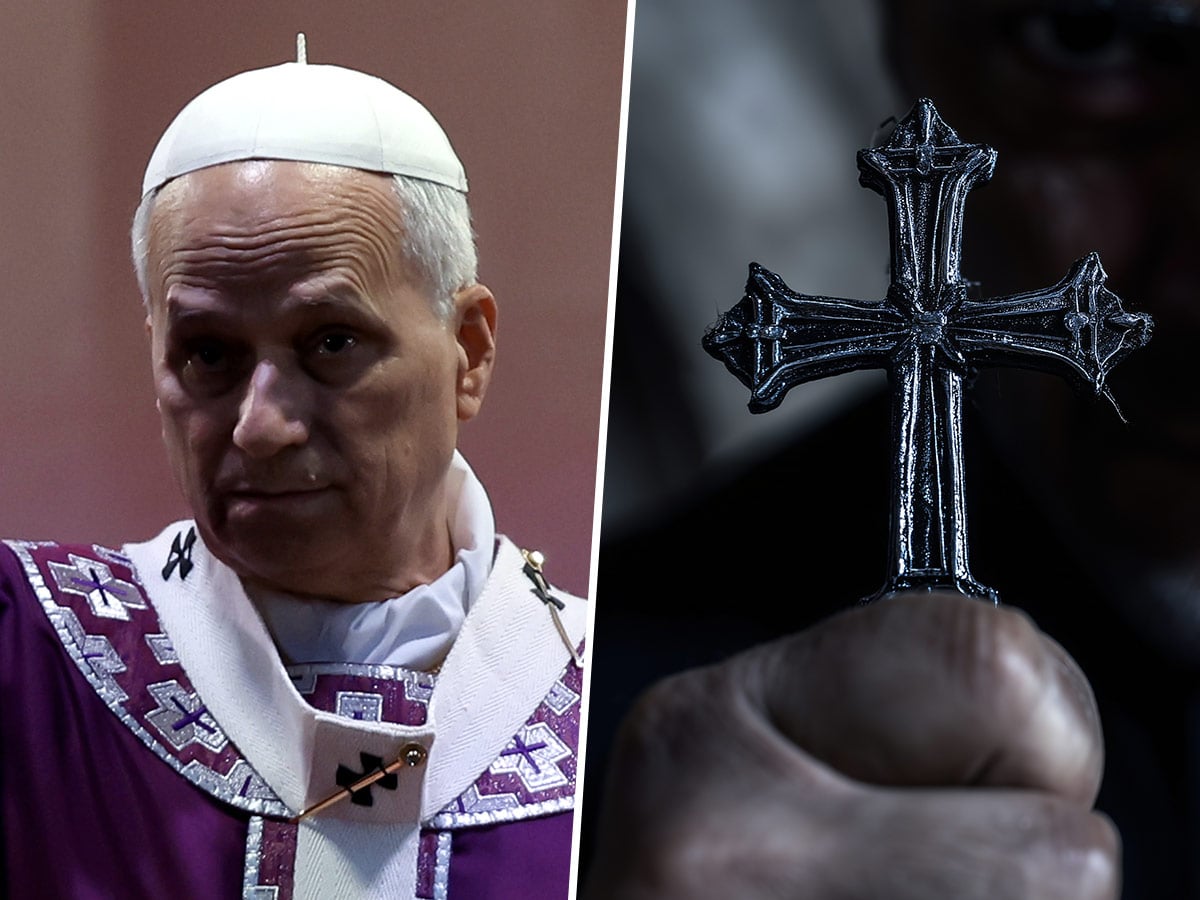
On Friday, March 13, Pope Leo XIV conducted a private audience with representatives from the International Association of Exorcists (AIE, Associazione Internazionale Esorcisti). Details from the meeting were shared with EWTN Vatican. Pope Leo, who became the first American pope chosen by the papal conclave on May 8, 2025, was warned by AIE representatives of a rise in occultism, esotericism, and Satanism around the world.
In their report to the pope, representatives from the association claimed that increasingly, Catholics are requesting exorcisms. But despite this uptick in spiritual needs among the Catholic faithful, the AIE told the pope that there are not enough priest exorcists to meet this growing concern. Furthermore, representatives claim that practices related to the occult and Satanism are on the rise. This rise, says the AIE, is exacerbated when Catholics seek out spiritual guidance and can only turn to alternative spiritual methods when there is no priest exorcist available.
The AIE recommended that each Catholic diocese worldwide should have at least one properly trained priest exorcist. They also suggested that seminaries should teach more about spiritual warfare and demonic possession. Broadening the church’s capacity for the ministry of exorcism has long been the AIE’s advocacy.
Those who engage in demonic or spiritually dangerous practices, according to the association, often do so because they need healing, are seeking meaning and fulfillment in life, or simply want solutions to their personal difficulties. By cultivating and training priest exorcists, the AIE seeks to build the Catholic Church into a ready and secure spiritual refuge for Catholics and any others who may be dealing with spiritual disturbances or demonic attacks. Although claims of demonic possession or influence remain matters of religious interpretation rather than established scientific fact.
Exorcism in Catholicism has been widely misunderstood outside of the Catholic world. Organizations like the AIE stress that their ministry is pastoral, not sensationalistic. This is seen, for example, in their literature and public engagement. The 300-page book that the international association presented to Pope Leo, Guidelines for the Ministry of Exorcism, was initially a private guidebook for priest exorcists. But in July of 2020, the book was sold in order to push back against sensationalistic narratives of Catholic exorcism.
The Guidelines for the Ministry of Exorcism lays out an official Catholic understanding of the ministry of exorcism and provides a perspective that avoids the sensationalism of Hollywood depictions like The Exorcist (1973), The Exorcism of Emily Rose (2005), The Conjuring (2013), The Pope’s Exorcist (2023), and The Ritual (2025). While some horror movies have managed to depict exorcisms accurately, the AIE insists that exorcism has been too sensationalized in secular media and that these depictions differ from a deeper Catholic understanding of exorcism.
In the Catechism of the Catholic Church, an important document for educating Catholics about their faith, exorcism is defined as a type of prayer. “When the Church asks publicly and authoritatively in the name of Jesus Christ that a person or object be protected against the power of the Evil One and withdrawn from his dominion,” the Catechism reads, “it is called exorcism.” One type of exorcism, referred to as “major exorcisms” or “solemn exorcisms,” can be performed only by a priest with a bishop’s permission. The theological focus of the exorcism in Catholic teaching is on God, rather than on the exorcist.
In this ministry, it is necessary and important to discern between what priests would recognize as authentic cases of demonic possession, on the one hand, and psychosomatic experiences, on the other hand. As such, the Catholic Church takes care to distinguish between cases of demonic possession and cases of mental or psychological illness. “Illness, especially psychological illness, is a very different matter; treating this is the concern of medical science,” the Catechism continues. “Therefore, before an exorcism is performed, it is important to ascertain that one is dealing with the presence of the Evil One, and not an illness.” (Catechism of the Catholic Church, 1673).
During his meeting with the AIE, Pope Leo was given an icon of Saint Michael the Archangel from the Sanctuary of Monte Sant’Angelo. Saint Michael has a long history in the ministry of exorcism in Catholicism. In 1886, Pope Leo XIII reportedly had a vision of demonic spirits gathering to attack Rome. Afterward, Leo XIII instituted what are known as the Leonine prayers, including one prayer to Saint Michael. This prayer, which has multiple versions for laity and clergy, asks Saint Michael to cast out evil spirits by the power of God. The longer version of the prayer to Saint Michael is sometimes called the exorcism prayer.
The association between Saint Michael and exorcism has biblical roots, as Michael the Archangel is depicted in Revelation fighting against the dragon and his angels (Revelation 12:7-9).
In his meeting with AIE representatives, Pope Leo XIV also expressed his high esteem for the association’s founder, Father Gabriele Amorth. Father Amorth had long been an advocate of the importance of the exorcist ministry in Catholicism. He often spoke out against the practice of magic, like Ouija boards and astrology. But his deeper understanding of exorcism as a ministry was that those who needed exorcism also needed the love of the church. Father Amorth passed away on September 16, 2016. He and Father René Chenesseau founded the AIE in 1994.
The AIE’s call for increased spiritual vigilance comes as Christians of other traditions are discussing spiritual warfare. The spiritual, political, and cultural ramifications of these discussions hinge very much on how evil spirits are understood, as well as whether those in need of spiritual help are seen as vulnerable and truth-seeking, or malicious and antagonistic.
 Read Previous Post