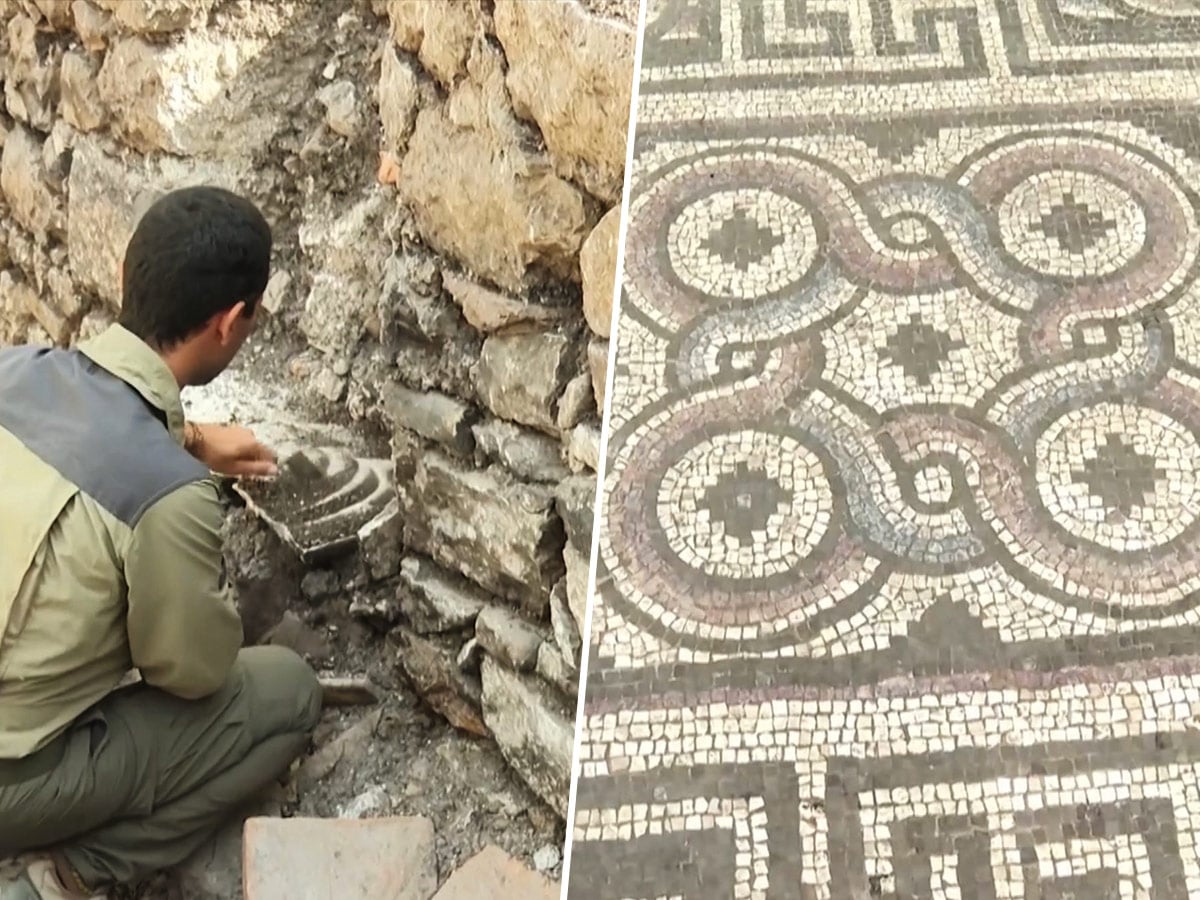
Archeologists excavating Olympos, an ancient Lycian port city in the Turkish province of Antalya, uncovered a lavish bathhouse that was most likely used for the private use of the Byzantine bishop as well as a public service to locals. The site has been regularly excavated since 2006, leading to finds from the Hellenistic, Roman, and Byzantine periods. This year’s excavation has already featured the discovery of a 5th century church that had an inscription that had been lost for over 1,000 years. The church’s inscription reads, “Only those on the righteous path may enter here.”
Associate Professor Gökçen Kurtuluş Öztaşkın of Pamukkale University, who leads the excavations, informed Tukiye Today that current work focuses on uncovering such structures as bathhouses and churches. The bathhouse uncovered during this most recent excavation dates to around the 5th or 6th century AD and is attached to the church bishop’s private bathhouse, a rare luxury at the time. Speaking to Anadolu Agency (AA) Öztaşkın, described the bathhouse as a “rather large and elaborate complex.” It measures around 2,150 square feet, quite large for a bathhouse attached to a private residence.
The bathhouse also has some impressive features given the time it was functioning. It sports a full heating system which involved a kullan (furnace) and wall heating installations. And while a private bathhouse might seem like quite the perk, Öztaşkın stressed that the bishop had particular civic duties as a steward of the city’s resources. “The bathhouse was not only for the bishop’s private use,” said Öztaşkın “It had entrances both from the main street and from the house. On certain days of the week, the bishop allowed ordinary townspeople to use it free of charge, both for hygiene and for health purposes.”
While the bathhouse had a private entrance connecting it to the bishop’s residence, it also featured outside doors accessible to the public. Such access would be quite a luxury to the general population, where such baths would be a rarity. The find offers a rare look into the day-to-day living of ancient Christian settlements as Christianity spread through the Middle East. Further excavations will continue in the area, as well as restoration efforts on the remnants of two sarcophagi, which had been smashed to pieces as part of the team’s attempt to uncover remnants of the city’s funerary monuments.
 Read Previous Post