A mine in the Egyptian desert could hold the first-ever extra-biblical evidence of Moses’s existence. Moses is a key figure in both Jewish and Christian faiths, credited for helping bring the nation of Israel out from slavery under a tyrannical Egyptian Pharoah. It’s the stuff of cinema and has been the source of inspiration of such cultural classics like The Ten Commandments starring Charlton Heston and the surprise animated hit, The Prince of Egypt. Moses’s existence, however, has never been confirmed beyond the pages of the Bible. That is, until now.
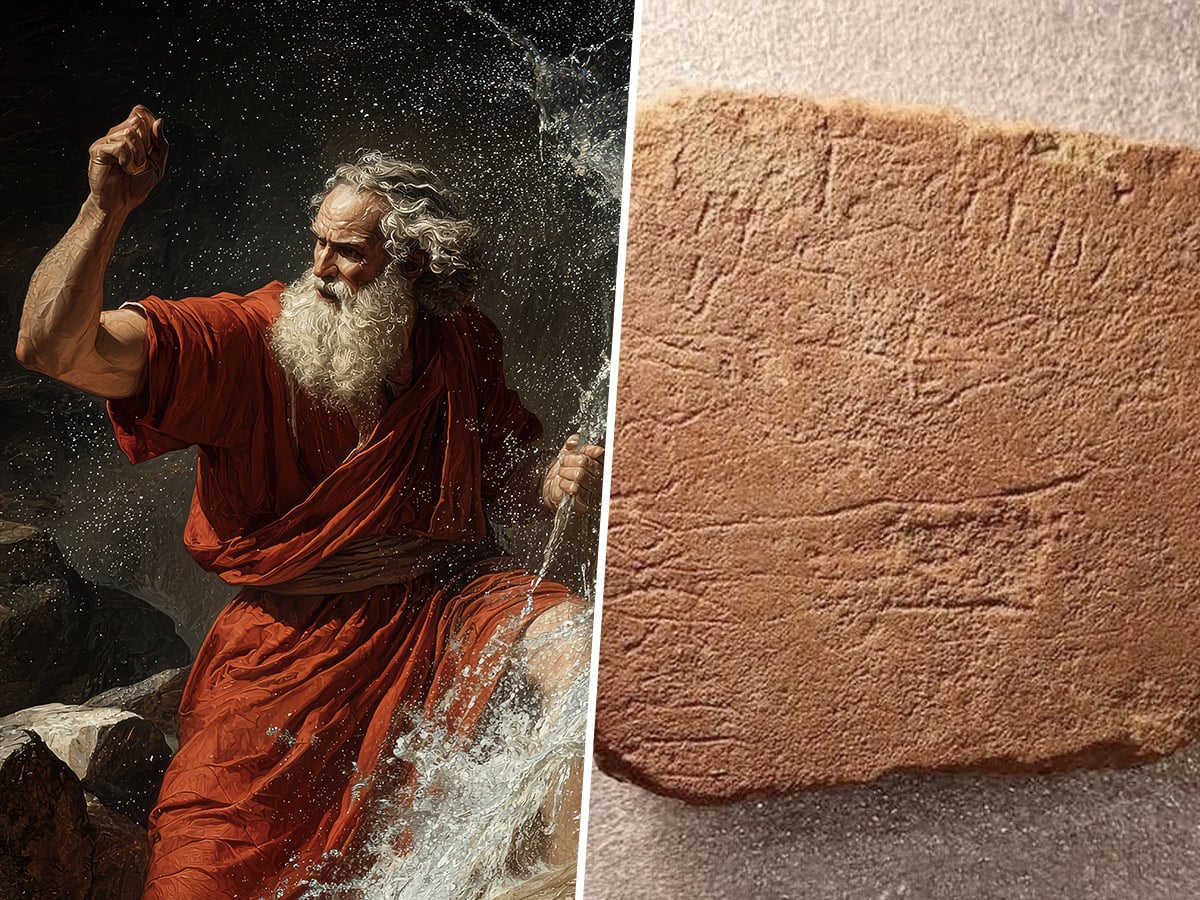
Two etchings found at Serabit el-Khadim, an ancient turquoise mining site in the Sinai Desert, could hold the key to extra-biblical proof of Moses’s existence. Semitic laborers once worked the mines during the Middle Bronze Age, leaving behind Proto-Sinaitic inscriptions that date back between 1800 and 1600 B.C. Researcher Michael Bar-Ron has claimed that one of the inscriptions may read, ‘zot m’Moshe,’ Hebrew for “This is from Moses.” Another inscription could read “Ne’um Moshe,” which means “Declaration of Moses.” Bar-Ron believes the inscriptions could date during the reign of Pharaoh Amenemhat III, who some believe could have been the biblical Pharoah mentioned in Exodus.
Bar-Ron arrived at the conclusion by using high-resolution images and 3D casts at Harvard’s Semitic Museum. He grouped the inscriptions into five overlapping categories, or “clades.” There are inscriptions that reference “El,” the God of the Hebrews and mentions of the Egyptian goddess Baʿalat. References to Baʿalat appear to have been defaced by followers of El, indicating tension between the Semitic workers and the faith of the Egyptians. There are also references to slavery and overseers, which could reflect events mentioned in Exodus. The nearby Stele of Reniseneb and a seal of an Asiatic Egyptian high official give indications of a Semitic presence and may point to the existence of Joseph, Moses’s predecessor mentioned in the book of Genesis.
Speaking to Fox News, Bar-Ron described his decade-long process in translating the inscriptions. “I spent eight years actively involved in the painstaking, oft-frustrating reconstruction of some 23 wordy Proto-Sinaitic inscriptions. That is, based on the principles of the foremost greats in the field, and informed by the work of my distinguished colleagues in the field,” he said. There are some, however, that have pushed back at Bar-Ron’s assertion. Dr. Thomas Schneider, an Egyptologist at the University of British Columbia, called Bar-Ron’s claims “completely unproven and misleading.” Bar-Ron’s academic advisor, Dr Pieter van der Veen, however, agreed with the reading. Bar-Ron’s work is awaiting to be published in a peer-reviewed paper.
 Read Previous Post