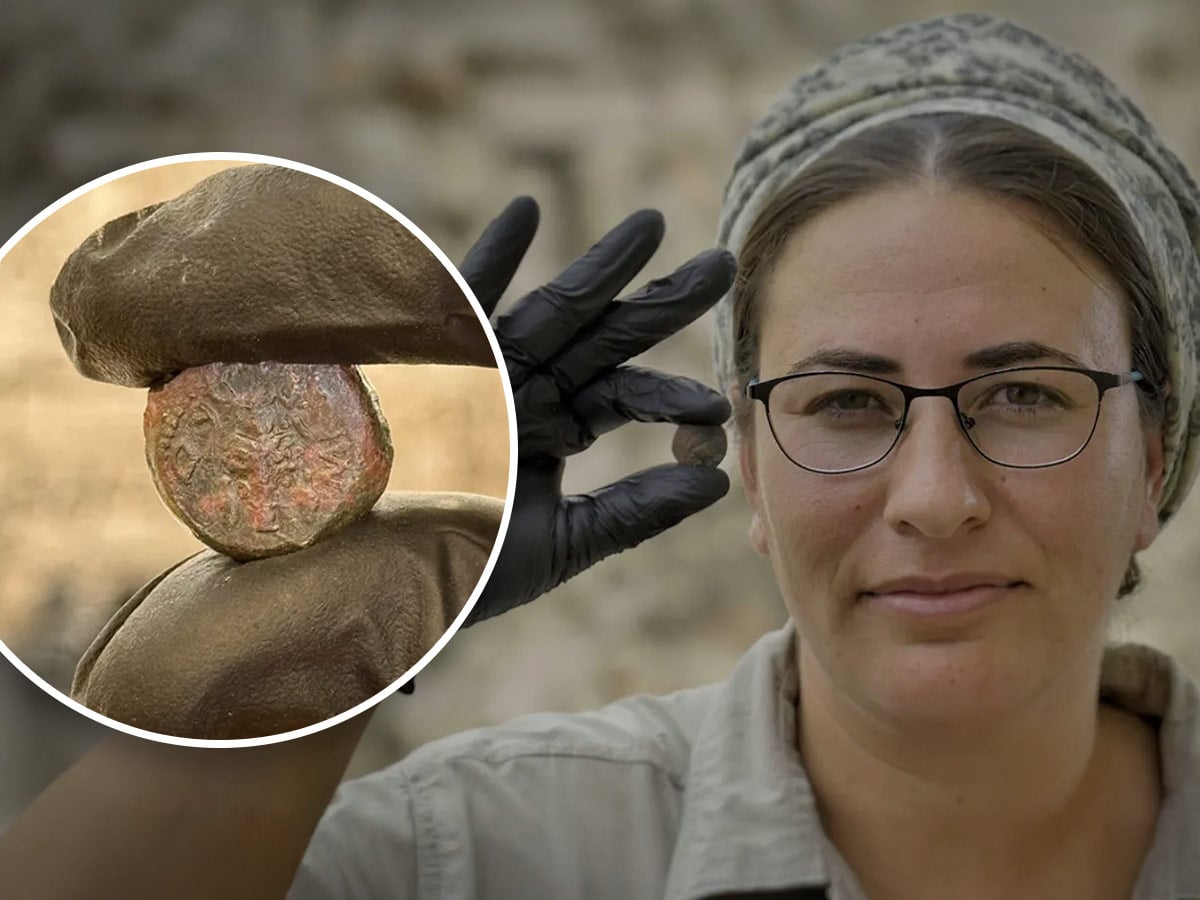
Archaeologists announced the discovery of an ancient coin minted in the decades following Christ’s resurrection. The Israel Antiquities Authority (IAA) announced that a “Redemption of Zion” coin was found near the Temple Mount. The coin would have been minted around the fourth year of what is known as the Jewish Great Revolt. The coin features a goblet and the inscription “For the Redemption of Zion” on one side. On the other side is a lulav and two etrogim (palm fronds and citrons used ceremonially on the festival of Sukkot) and the words “Year Four.” This means the coin was made in the final days of the Jewish rebellion against Roman rule, which would eventually lead to the destruction of the Temple, as foretold by Jesus in Mark 13.
Yanniv David Levy, a researcher and curator in the IAA Coin Department, said the coin’s design hints that the rebels knew their time was nearly up. “What’s unique about the coins minted in that final year is the shift in language. In earlier years, the inscription read ‘For the Freedom of Zion,’” he said. “This change suggests a shift in the atmosphere in Jerusalem. Although the Romans had not yet taken the city, it’s likely that people already sensed the end was near.” Levy suggested the change in tone might indicate that the Jewish rebels were looking for help from above. “Freedom is something people can strive for through their own human actions. But a plea for redemption suggests they were no longer relying on themselves — it was a cry for divine intervention,” he said.
The coins were designed to help rebels operate their own parallel economy apart from Rome. Levy noted the coins are especially rare. “Only some 400 of these coins have been found across Israel, which for bronze coins is quite a small number. Most of the coins were found in Jerusalem, but some have also been unearthed in Masada, which testify to another part of the story, that of the refugees who fled the city after it was destroyed,” he said. The coins weren’t just for economic means, however. “We shouldn’t think of coins just as money, but as a form of mass communication — like a newspaper or a social media feed,” he said. “To sustain a rebellion, the first step is to convey your message, both to your own people and to your enemy. These coins declared the cause of the Revolt and projected an image of strength.”
 Read Previous Post